
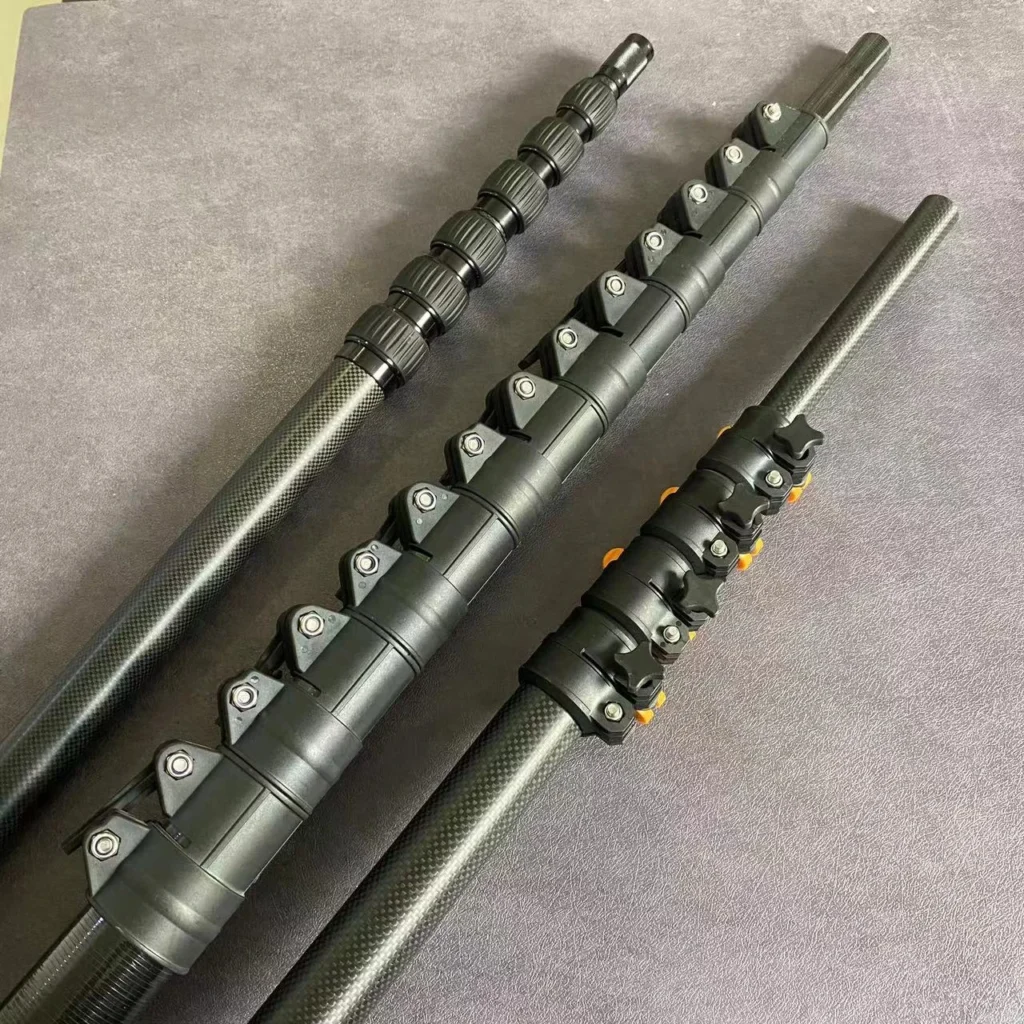
A practical guide for buyers who need a lightweight, stiff, and reliable telescoping pole for camera, cleaning, rescue, inspection, GPS, or custom OEM use.
Why Carbon Fiber Telescoping Poles Are Used
A carbon fiber telescoping pole is used when a project needs long reach without too much weight.
For many buyers, the real problem is simple. They need a pole that can extend far, stay light, and still feel stable during use. This is why carbon fiber is often chosen for camera systems, window cleaning tools, rescue tools, inspection equipment, GPS RTK poles, and outdoor field devices.
Compared with aluminum, carbon fiber can offer better stiffness-to-weight performance. Compared with fiberglass, carbon fiber is usually stiffer and easier to control at longer lengths. This matters a lot when the pole is used at 30 ft, 40 ft, 50 ft, or longer.
A good carbon fiber telescopic pole is not just a long tube. It is a working structure. The tube diameter, wall thickness, number of sections, locking method, connector, and top load all affect how the pole performs in real use.
For OEM projects, the best solution is often not a standard pole. It is a custom carbon fiber telescoping pole designed around the final application.
Carbon Fiber Telescopic vs Telescoping Pole
Both terms are used by buyers.
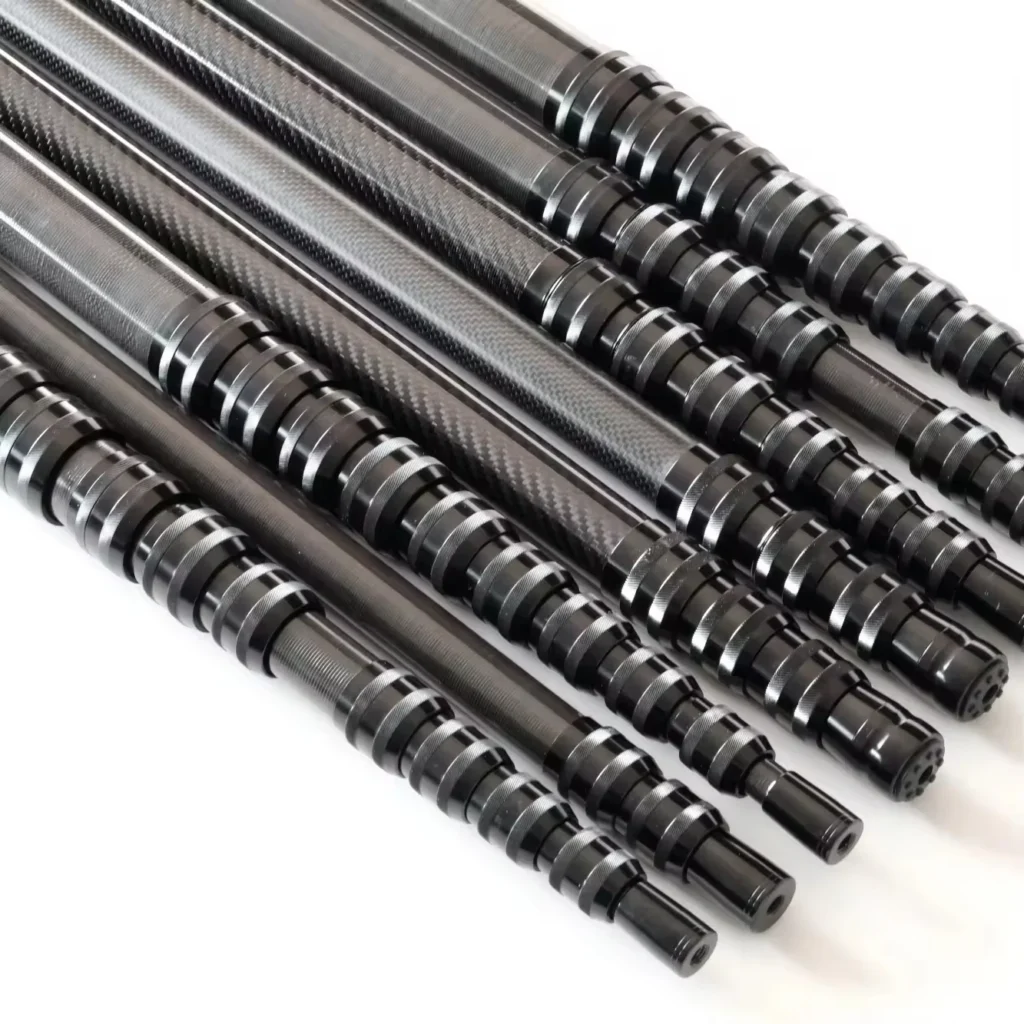
Some buyers search for “carbon fiber telescopic pole.” Others search for “carbon fiber telescoping pole,” “telescoping carbon fiber pole,” or “telescopic carbon fiber pole.” In most cases, these terms describe a pole made from several sliding sections. The pole can be extended for use and shortened for storage or transport.
The wording is different, but the buyer questions are usually the same:
- How long does the pole need to extend?
- How short should it be when closed?
- How much weight will be placed at the top?
- Will the pole bend too much at full extension?
- Does it need anti-spin or anti-rotation design?
- What locking method is best?
- What connector or tool head is needed?
These questions are more important than the name itself. A professional carbon fiber telescoping pole manufacturer should not only ask for the total length. They should also understand how the pole will be used.
How Long Should a Carbon Fiber Telescopic Pole Be?
Length is important, but longer is not always better.
Many buyers start by asking for a 40 ft carbon fiber telescopic pole, a 50 foot carbon fiber telescopic pole, or even a carbon fiber telescopic pole 60 feet long. This is normal for cleaning, camera, inspection, rescue, and field tool applications. But as the pole gets longer, stiffness and control become more difficult.
A longer pole usually needs a larger base diameter, stronger section design, better locking parts, and a suitable carbon fiber layup. If the pole is too thin or has too many sections, it may feel soft at full extension.
| Pole Length | Algemeen gebruik | Main Design Focus |
|---|---|---|
| 10–20 ft | Camera pole, GPS pole, small field tools | Light weight and easy carrying |
| 20–30 ft | Inspection, cleaning, outdoor tools | Balance of stiffness and portability |
| 30–40 ft | Camera systems, window cleaning, rescue tools | Better bending control and stronger locks |
| 40–50 ft | Long-reach inspection, cleaning, rescue use | Larger tube sections and stable structure |
| 50–60 ft | Special OEM projects | Custom layup, stiffness review, and careful testing |
| 15m–20m | Industrial or field applications | Design review based on load and working method |
For a short pole, weight and portability may be the main concerns. For a long pole, stiffness becomes more important. A 60 ft telescopic carbon fiber pole cannot be designed in the same way as a 12 ft camera pole.
This is why buyers should not only ask, “Can you make this length?” A better question is, “Can this length stay stable with my tool head?”
Where Carbon Fiber Telescoping Poles Are Used
Carbon fiber telescoping poles are used in many industries. The best design depends on the application.
Carbon Fiber Telescopic Camera Pole
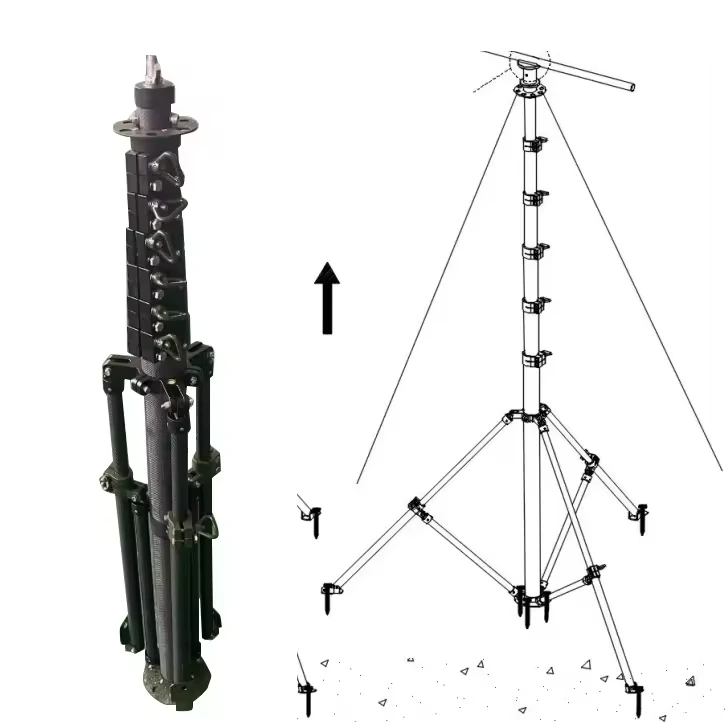
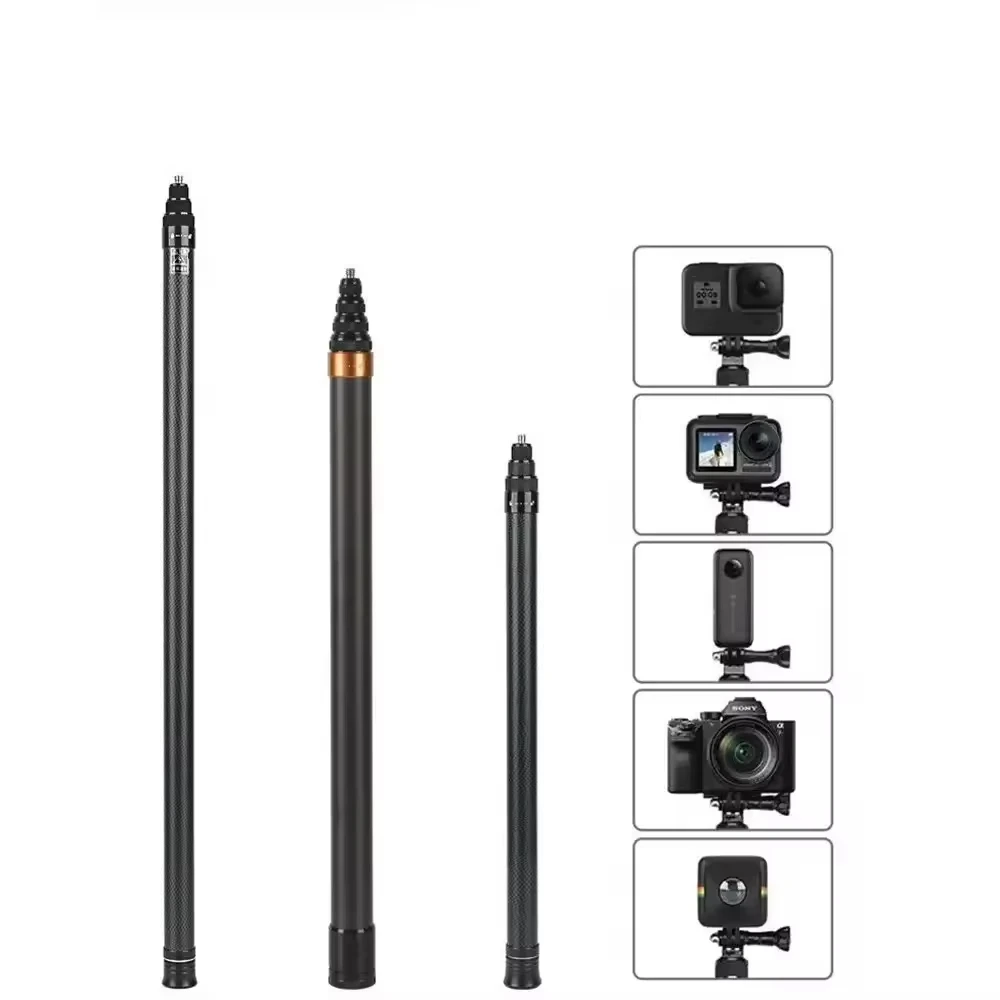
A telescopische camerastang van koolstofvezel needs to be light, stiff, and stable. If the pole shakes too much, the video image may not be clear.
For camera use, buyers should consider:
- Verlengde lengte
- Gesloten lengte
- Camera weight
- Top connector type
- Anti-rotation design
- Surface grip
- Transportation size
For sports filming, building inspection, event recording, or remote video systems, a custom carbon fiber camera pole can be designed with threaded aluminum parts, quick locks, or special mounting heads.
Carbon Fiber Telescopic Pole for Window Cleaning
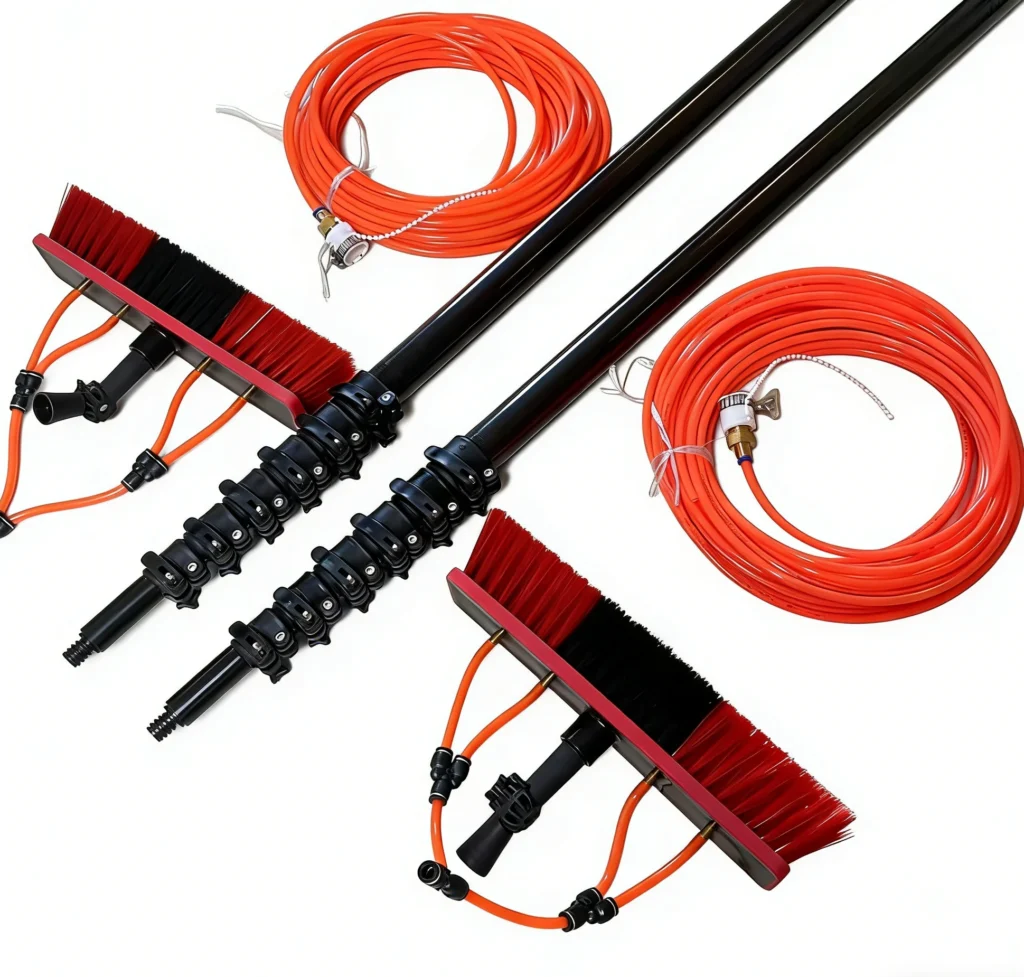
Window cleaning poles need long reach and repeated daily use. Weight matters a lot because workers may hold the pole for long periods.
A carbon fiber telescopic pole for window cleaning should focus on:
- Low weight
- Good bending stiffness
- Comfortable handling
- Durable lock system
- Water resistance
- Tool head connection
For commercial cleaning buyers, the pole should not only be long. It should also be easy to control at full extension.
Carbon Fiber Telescopic Rescue Pole
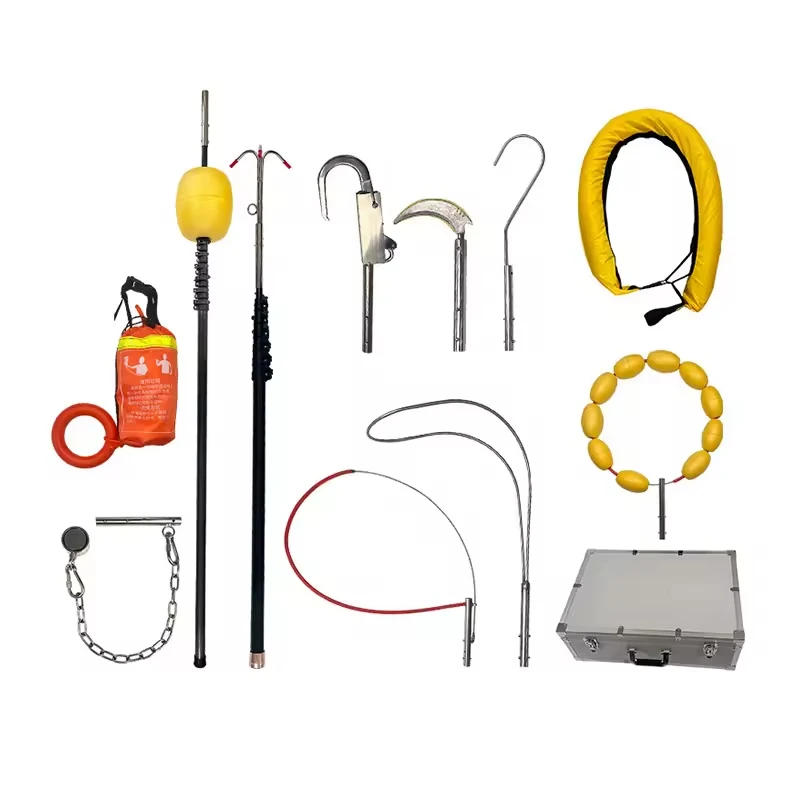
A rescue pole may be used in emergency or field conditions. In this case, the pole needs stronger structural reliability.
Important design points include:
- Stronger wall thickness
- Secure locking system
- Anti-slip surface
- Custom end fittings
- High visibility finish if needed
- Stable performance under load
A rescue pole may also need special connectors for hooks, cameras, ropes, or other tools.
Carbon Fiber Telescopic Inspection Pole
Inspection poles are often used for buildings, roofs, tanks, bridges, utilities, underwater inspection, and hard-to-reach areas.
For inspection use, the pole may need to carry:
- Camera heads
- Lights
- Sensors
- Wireless devices
- Testing tools
If the pole is used near water or outdoors, the surface finish and metal parts should also be considered. Stainless steel or aluminum connectors may be selected depending on the environment.
Carbon Fiber GPS and RTK Pole
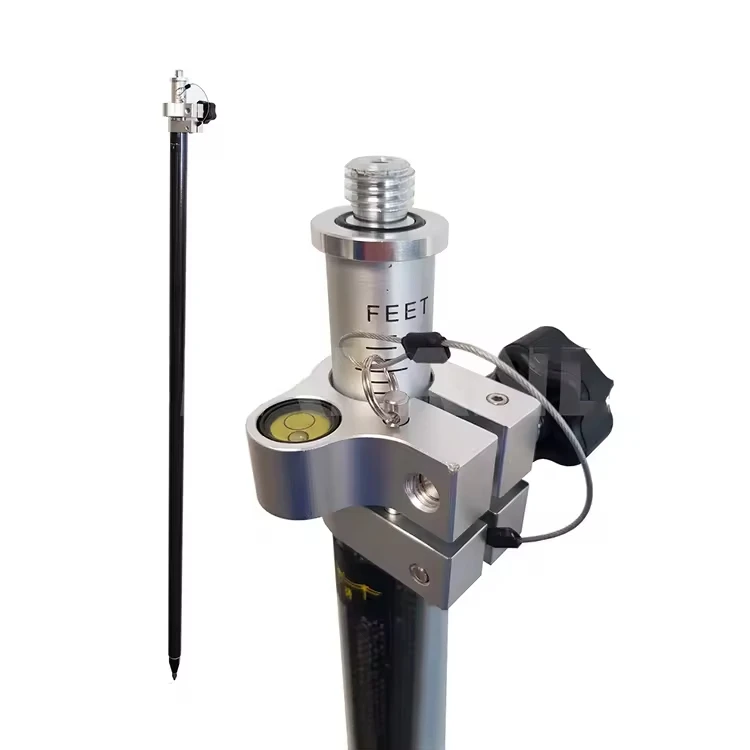
For GPS and RTK survey work, the pole needs stable alignment. Anti-spin or anti-rotation design can be useful when the device must stay in the correct direction.
A telescopic carbon fiber pole for GPS RTK should be designed for:
- Accurate extension length
- Low weight
- Good straightness
- Stable locking
- Suitable mounting thread
- Easy field operation
Anti-Spin and Anti-Rotation Design
Some carbon fiber telescopic poles can rotate between sections. This may not matter for simple use, but it can be a problem for camera, inspection, rescue, and survey applications.
An anti-spin carbon fiber telescopic pole helps keep the top tool in the same direction. This can improve control and reduce adjustment time.
Anti-rotation can be achieved through different designs, such as:
- Non-round tube sections
- Special inner profiles
- Guide grooves
- External locking structures
- Custom connector design
For OEM buyers, anti-spin design should be discussed early. It may affect tooling, cost, production time, and minimum order quantity.
Locking Methods for Carbon Fiber Telescoping Poles
The locking system affects safety, speed, and user experience.
A telescoping pole needs a way to hold each section in place. The right lock depends on the application, load, and working environment.
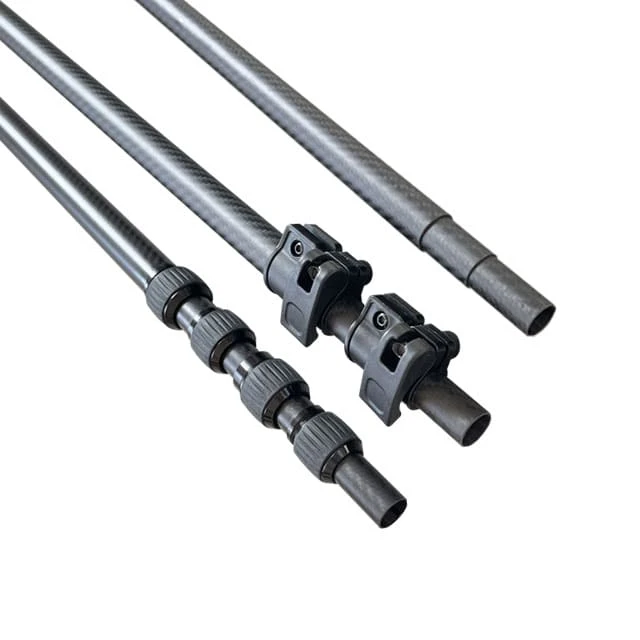
Common options include clamp locks, twist locks, spring buttons, and custom locking structures.
Clamp locks are easy to operate and are often used for cleaning, camera, and inspection poles. They are fast and simple, but the lock quality must be good enough for repeated use.
Twist locks can give a clean appearance and compact structure. They may be suitable for some portable poles, but they may not be ideal for heavy top loads or dirty working conditions.
Spring buttons are simple and useful when fixed length positions are needed. They are often used for outdoor tools and poles that need quick positioning.
Custom locks may be needed for rescue tools, special industrial poles, or OEM projects where standard parts cannot meet the requirement.
When choosing the lock, buyers should think about these points:
- Is the pole handheld or fixed?
- How often will the pole be extended and closed?
- How much load is on the top?
- Will the pole be used in water, dust, or outdoor conditions?
- Does the user wear gloves?
- Does the pole need fast length adjustment?
A strong carbon fiber tube is not enough if the lock is weak. The lock must match the structure and the working use.
You can learn more about carbon fiber lock methoding here :
https://lhcarbonsolutions.com/blog-list/how-to-connect-carbon-fiber-tubes/
Carbon Fiber vs Aluminum Telescoping Pole
Many buyers compare carbon fiber and aluminum before choosing a telescoping pole.
Aluminum is often cheaper and easy to machine. But for long poles, carbon fiber has a clear advantage in weight and stiffness.
A carbon fiber telescoping pole is usually better when:
- The pole needs to be used for long periods
- The working length is long
- Lower weight is important
- Less bending is needed
- The tool head needs better control
- Corrosion resistance matters
Aluminum may still be suitable for short poles or low-cost tools. But when the pole reaches 30 ft, 40 ft, or more, weight and bending can become a serious issue.
This is why many OEM projects choose carbon fiber for camera poles, window cleaning poles, rescue poles, inspection poles, and field tools.
Common Mistakes When Buying Carbon Fiber Telescoping Poles
Many problems happen because buyers only check the total length.
A telescopic pole may look simple, but a poor design can create real problems during use. Here are common mistakes buyers should avoid.
1. Only Asking for the Longest Length
A longer pole is not always better. If the pole is too long for the tube diameter and section design, it may bend too much at full extension.
The better approach is to define the working height, top load, and acceptable stability.
2. Ignoring the Top Load
The weight at the top has a big effect on pole performance. A small camera, a heavy camera, a brush head, a rescue hook, and a sensor all create different loads.
Before production, tell the supplier what will be mounted at the top.
3. Choosing Too Many Sections
More sections can make the pole shorter when closed. But too many sections may reduce stiffness and increase movement between joints.
The number of sections should balance storage size and working stability.
4. Using the Wrong Locking System
A lock that works well for a light camera pole may not be suitable for a rescue tool. A lock used for dry indoor use may not work well in wet cleaning conditions.
The locking method should match the real working environment.
5. Forgetting Connector Compatibility
The end connector is often a small part, but it is very important. Wrong thread size, weak inserts, or poor bonding can cause problems.
Buyers should confirm the connector type, thread, tool head, and load direction.
6. Not Discussing Anti-Spin Design
If the top device must stay in one direction, anti-spin design may be needed. It is better to confirm this before tooling or production begins.
7. Buying Only by Price
A low price may come with thinner tubes, weak locks, poor fittings, or unstable section design. For professional use, the real cost is not only the pole price. It also includes performance, safety, and replacement risk.
Custom Carbon Fiber Telescoping Pole Manufacturing
For standard retail use, buyers may choose an off-the-shelf pole. But for OEM or industrial projects, a custom carbon fiber telescoping pole is often a better choice.
At LongHe Composite, we manufacture custom carbon fiber tubes and telescoping pole solutions for different applications. The design can be adjusted based on length, stiffness, tube diameter, wall thickness, layup, locking parts, and end connectors.
Aangepaste opties kunnen onder meer zijn:
- Roll-wrapped carbon fiber tube sections
- Custom tube diameter and wall thickness
- 3K twill, plain weave, or matte finish
- Aluminum threaded interfaces
- Spring button connection
- Clamp or lock system support
- Anti-spin design discussion
- Custom length and section layout
- OEM production for long-term projects
For special long poles, the design should be reviewed from both product use and production feasibility. A 60 ft carbon fiber telescopic pole, for example, cannot be treated the same as a short camera pole. It needs stronger design control and more careful testing.
What Information Should You Send to a Manufacturer?
When contacting a carbon fiber telescopic pole manufacturer, do not only ask for price. A useful inquiry should include the real working requirements.
You can send:
- Vereiste verlengde lengte
- Required closed length
- Number of sections if known
- Top load weight
- Toepassing
- Working environment
- Required connector type
- Locking method preference
- Oppervlakteafwerking
- Estimated order quantity
- Drawing or sample photos if available
This helps the manufacturer judge whether the design is practical and how to improve it.
For example, if you need a carbon fiber telescopic inspection pole for underwater use, the material, finish, connector, and sealing details may be different from a normal camera pole.
If you need a carbon fiber telescopic pole for window cleaning, the supplier should consider weight, bending, repeated operation, and lock durability.
Afsluitende gedachten
A carbon fiber telescoping pole should be selected based on real use, not only length.
For short poles, portability may be the main concern. For long poles, stiffness, bending, locking strength, and top load become more important. For camera, inspection, rescue, GPS, window cleaning, and wireless equipment, the pole must match the tool and the working environment.
The best carbon fiber telescoping pole is not always the longest one or the cheapest one. It is the one that is light enough, stiff enough, and reliable enough for the job.
If you are developing a carbon fiber telescopic pole for camera systems, window cleaning, rescue tools, inspection equipment, GPS RTK devices, wireless equipment, or other OEM applications, you can send us your required length, closed length, top load, connector type, and application. Our team can help review the structure and suggest a practical custom carbon fiber telescoping pole solution.
You can contact us HERE.
