Waarom klanten voor ons kiezen:
- Rechtstreekse aansturing door de fabrikant
- Technische ondersteuning
- Constante kwaliteit
- Betrouwbare levertijd
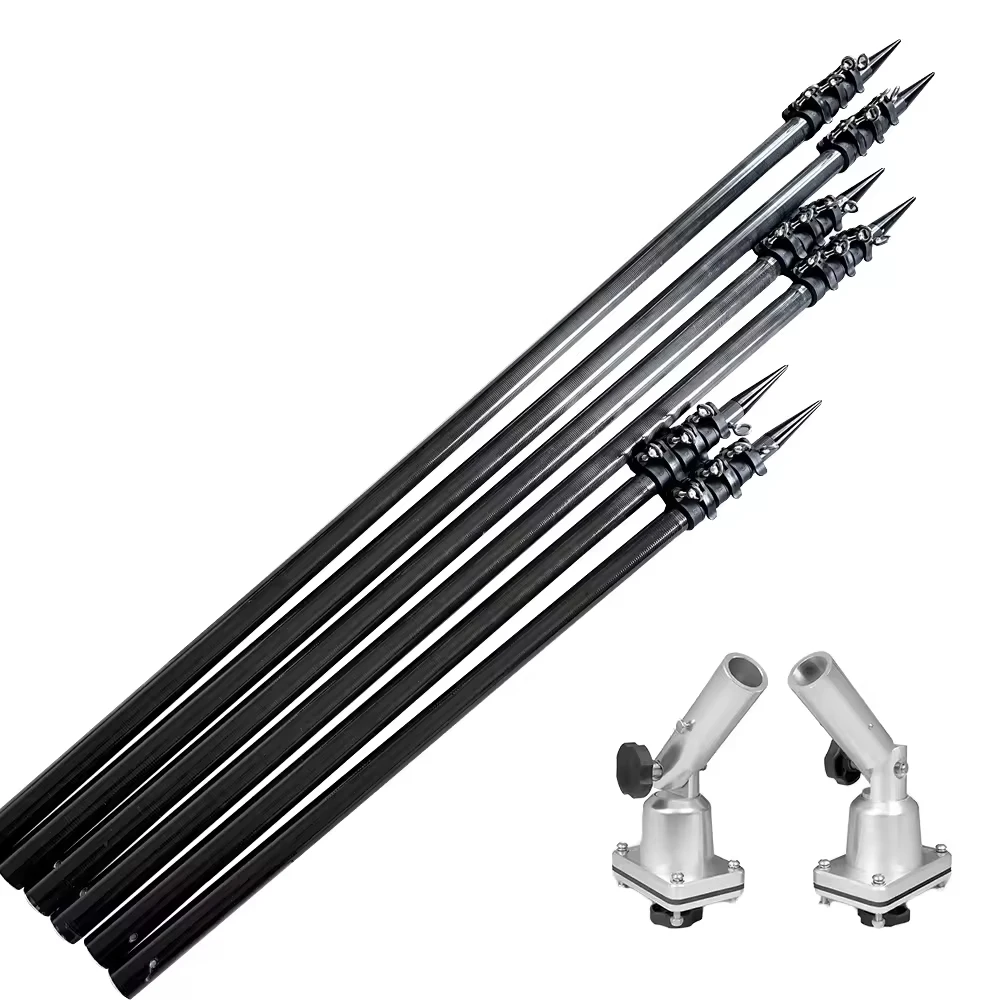
A carbon fiber telescopic pole uses two or more nested tube sections to provide adjustable working length and compact storage. It is also commonly called a carbon fiber telescoping pole or carbon fiber extension pole.
Compared with standard retail poles, our OEM telescoping systems can be customized around the required extended length, collapsed size, top load, stiffness, locking method and equipment interface. We supply matched carbon fiber tube sets or complete assemblies with clamps, guide bushings, anti-rotation features and custom end fittings.
Our custom telescoping poles are used in sports equipment and professional outdoor tools where low weight, adjustable reach and reliable section control are required.
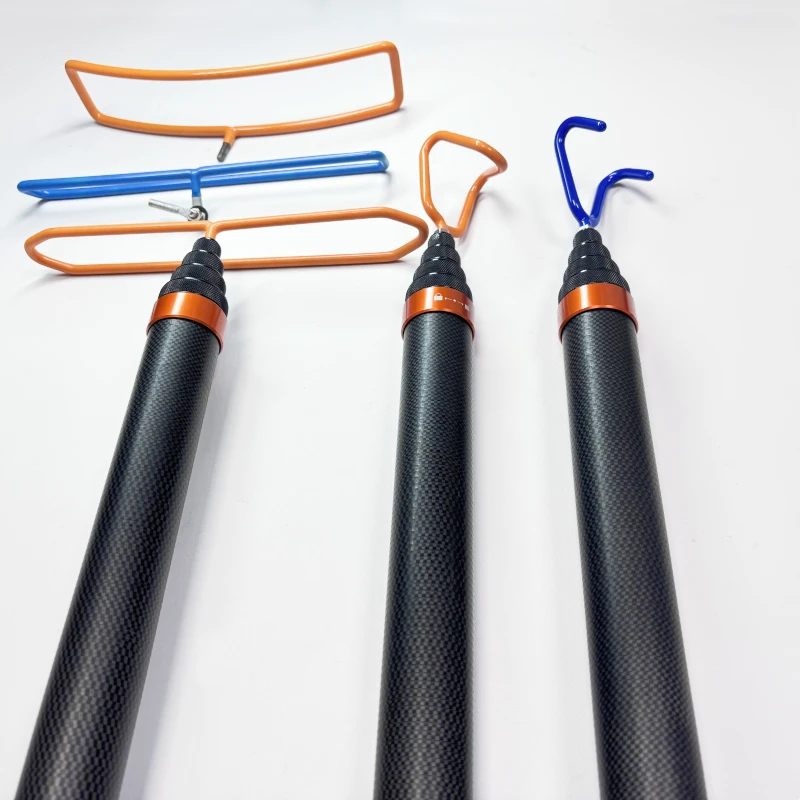
A carbon fiber telescopic disc golf retriever provides extended reach for retrieving discs from water, trees and difficult terrain while remaining compact for transport.
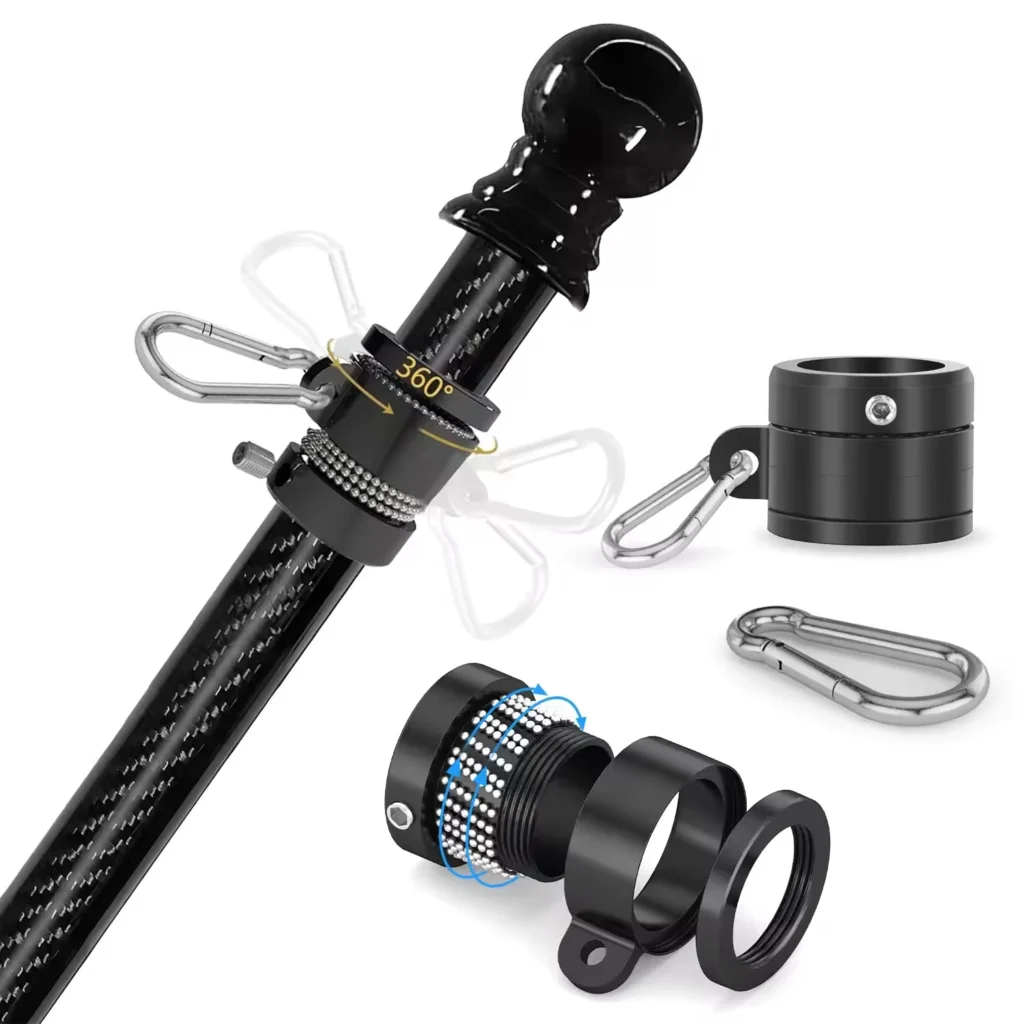
Lightweight telescopic carbon fiber poles are used for beach flags, event banners, course markers and portable sports-event infrastructure.
Adjustable carbon fiber poles can be integrated with landing nets and other marine-sport attachments where low weight and corrosion resistance are important.
Explore more applications in [Carbon Fiber for Sports Equipment].
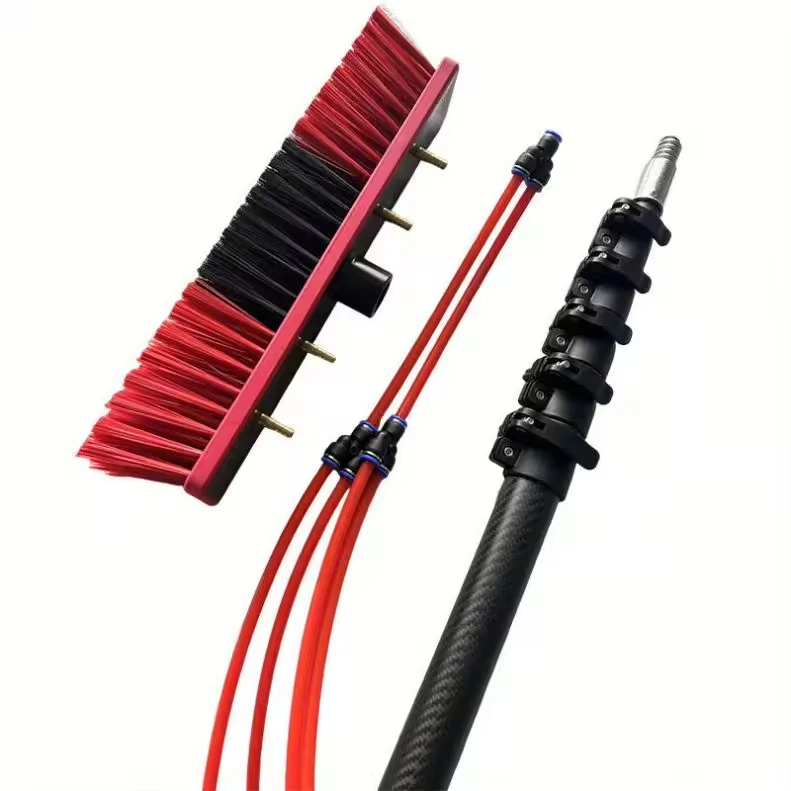
Carbon fiber telescopic cleaning poles support brushes and water-fed tools used for windows, façades, solar panels and other high-reach maintenance work.

Custom carbon fiber rescue poles can carry hooks, loops, cameras and retrieval attachments for water rescue, flood response and field safety equipment.
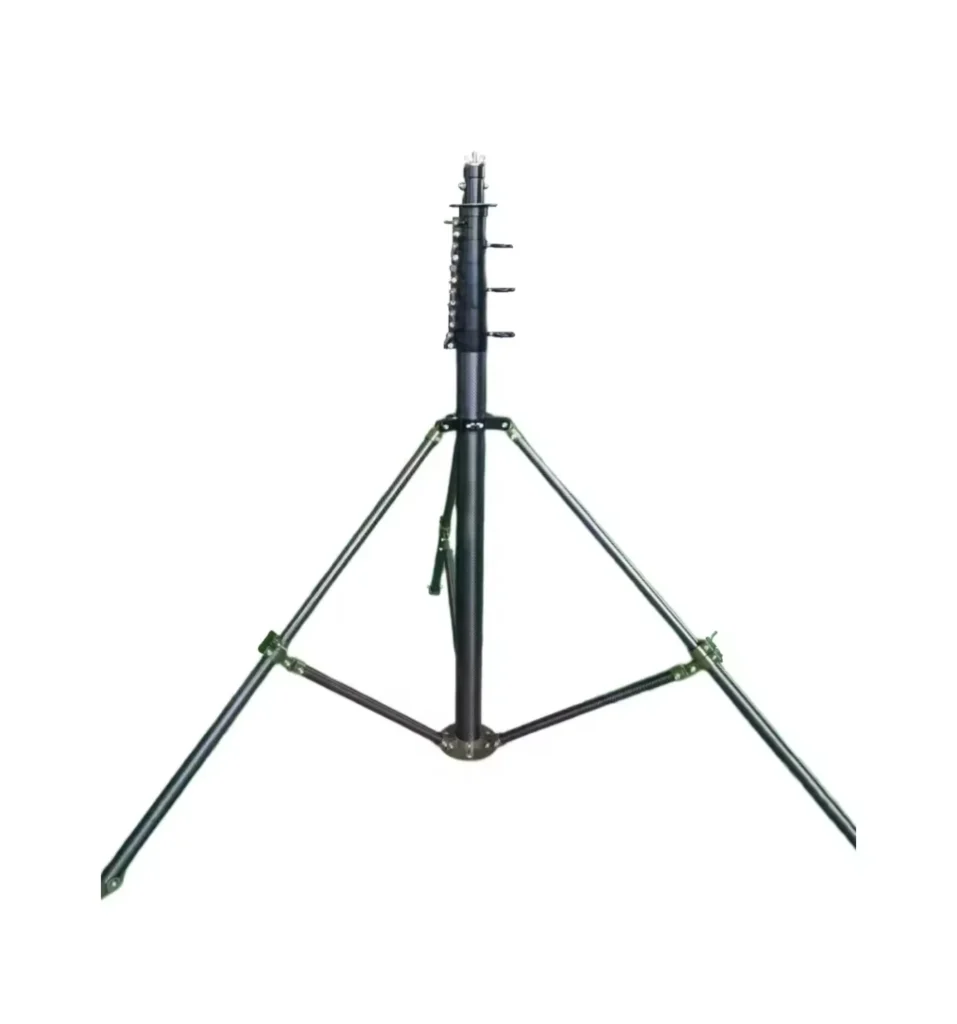
Telescoping carbon fiber poles provide adjustable support for inspection cameras, CCTV equipment, GPS devices, sensors and field-measurement tools.
Explore more solutions in [Carbon Fiber for Outdoor Tools].
Choose individual tubes, matched telescoping sections or a complete OEM pole assembly customized around your application.
| Design Item | Aangepaste opties | Engineering Consideration |
|---|---|---|
| Supply format | Individual carbon fiber tubes, matched telescoping tube sets or complete pole assemblies | Depends on whether you install the locks and fittings yourself |
| Pole structure | Standard round, heavy-duty, anti-rotation or modular extension design | Selected according to load, torque and operating method |
| Verlengde lengte | Custom working length, including long-reach OEM structures | Determines tube diameter, overlap and overall stiffness |
| Ingeklapte lengte | Customized for storage, transport or equipment integration | A shorter packed size usually requires more sections |
| Aantal secties | Two-stage or multi-stage telescoping construction | More sections reduce collapsed length but add joints and locks |
| Tube dimensions | Custom OD, ID, wall thickness and section length | Must balance nesting clearance, weight and structural load |
| Buisvorm | Round, keyed, D-shaped, square or rectangular | Non-round profiles can provide natural anti-rotation |
| Carbon fiber layup | Axial, circumferential and angled fiber reinforcement | Optimized for bending, torsion and clamp-compression loads |
| Section overlap | Customized engagement length between adjacent tubes | Greater overlap improves alignment and load transfer |
| Sliding surface | As-molded, ground or controlled-diameter finish | Affects bushing fit, friction and extension consistency |
| Vergrendelingssysteem | External clamp, flip lock, twist lock, spring button or threaded connection | Selected according to holding force and adjustment frequency |
| Guide bushings | POM, nylon or other engineering-plastic guides | Reduce wear, control clearance and improve section alignment |
| Anti-rotation design | Key and groove, shaped bushing, tube flat or non-round profile | Prevents cameras, brushes and tool heads from spinning |
| Clamp reinforcement | Additional circumferential carbon fiber around locking zones | Helps resist repeated radial pressure from clamps |
| End fittings | Threaded inserts, bonded connectors, handles or custom tool interfaces | Designed around the attachment, thread and load direction |
| Oppervlakteafwerking | UD carbon, 3K twill, plain weave, matte, glossy or painted | Selected according to appearance, grip and outdoor exposure |
| Merkopbouw | Logo printing, decals, colored graphics and custom packaging | Suitable for OEM and private-label product lines |
Final specifications are confirmed after reviewing the extended length, collapsed length, mounted load, operating angle, allowable deflection and required locking force.
In dit hoofdstuk worden de meest voorkomende verbindings- en vergrendelingssystemen voor telescopische stangen gebruikt in outdoor-gereedschap van koolstofvezel, waarbij de nadruk ligt op stabiliteit, gebruiksgemak en betrouwbaarheid in de praktijk.
Read All Systems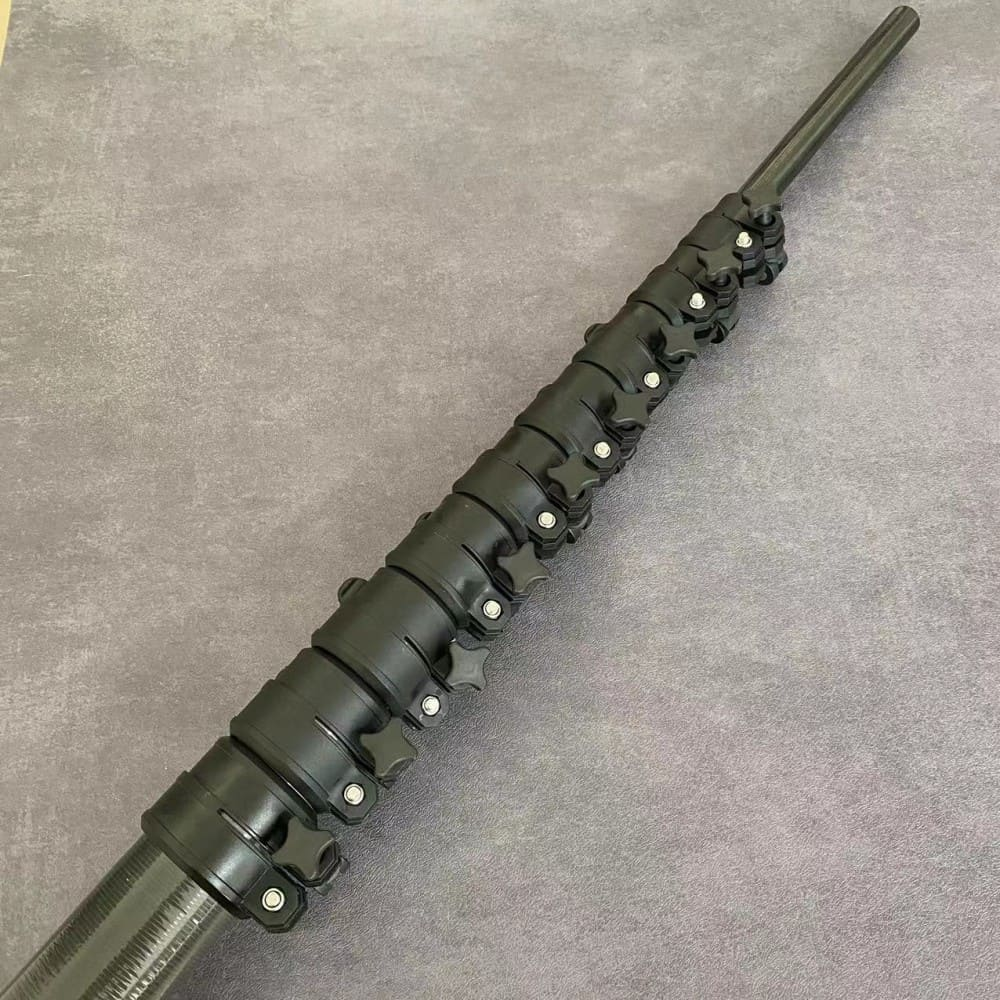
Bij klemmen voor koolstofvezelbuizen worden externe mechanische klemmen gebruikt om telescopische secties vast te zetten door middel van gecontroleerde radiale samendrukking.
Ze bieden een hoge klemkracht en uitstekende stijfheid bij volledige uitschuiving, waardoor ze geschikt zijn voor gereedschap dat zwaardere belastingen moet dragen.
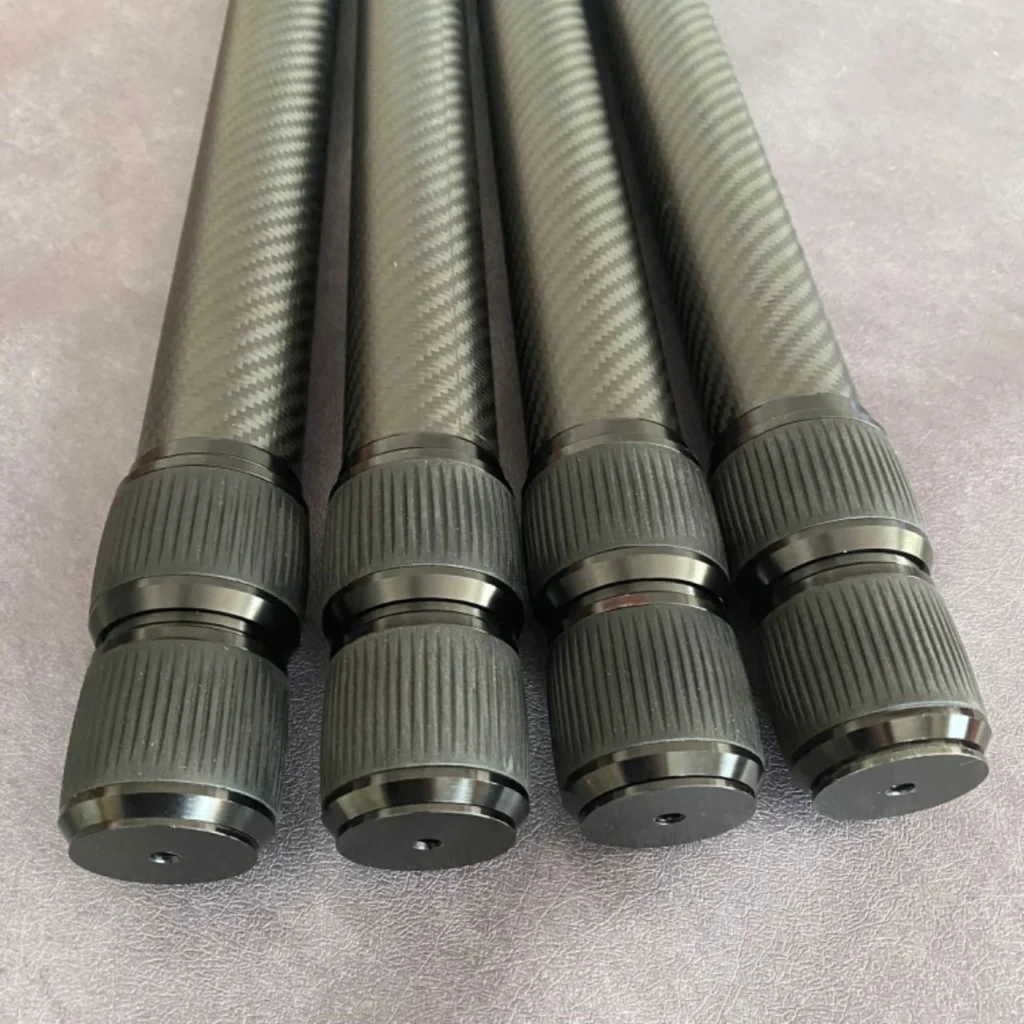
Bij twist-lock-systemen wordt gebruikgemaakt van interne wrijvingsuitbreiding die in werking treedt door het draaien van het buisdeel.
Deze aanpak zorgt voor een strak uiterlijk en een lager gewicht, wat ideaal is voor gereedschap dat vaak moet worden afgesteld en dat draagbaar moet zijn.
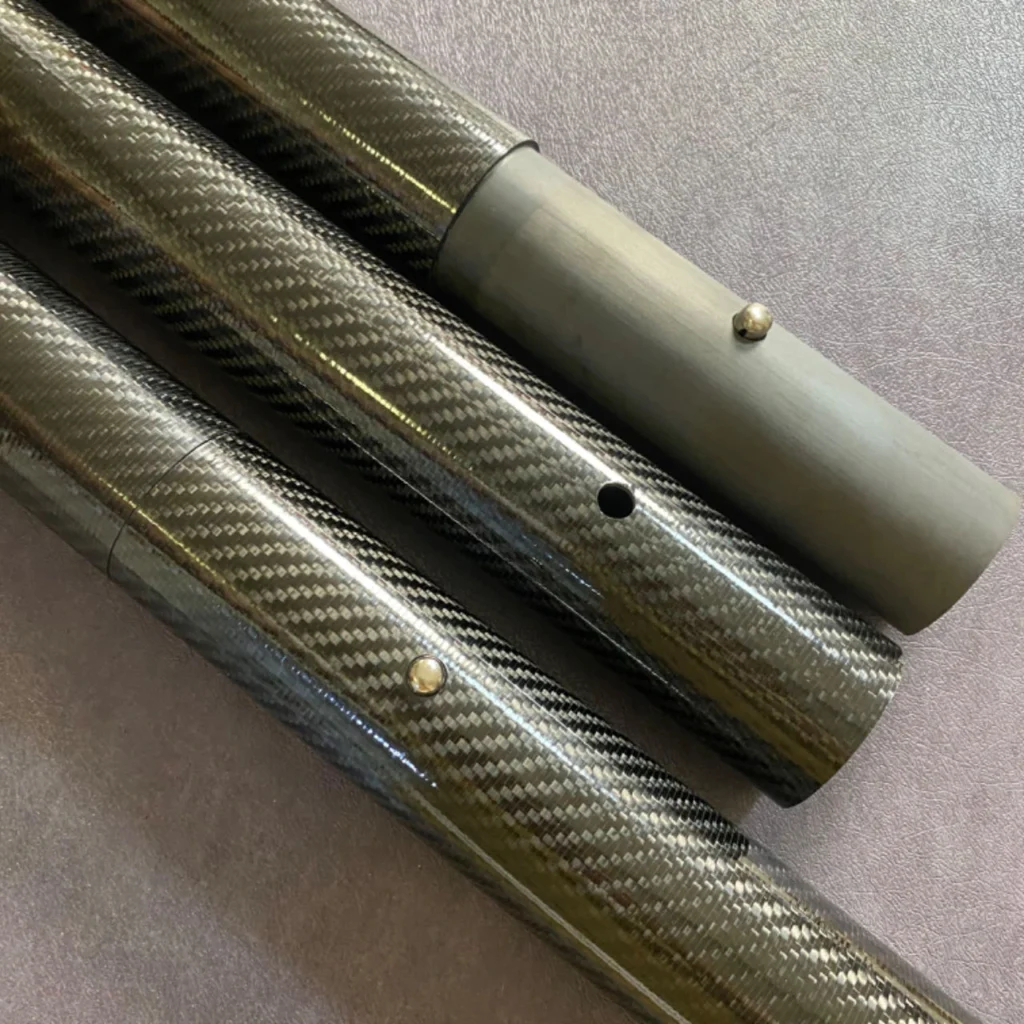
Vergrendelingssystemen met veerknop maken gebruik van een met een veer belaste metalen knop die in voorgeboorde gaten grijpt om vaste lengteposities te vergrendelen.
Ze zorgen voor een snelle, stevige vergrendeling met een duidelijke tactiele en visuele bevestiging.
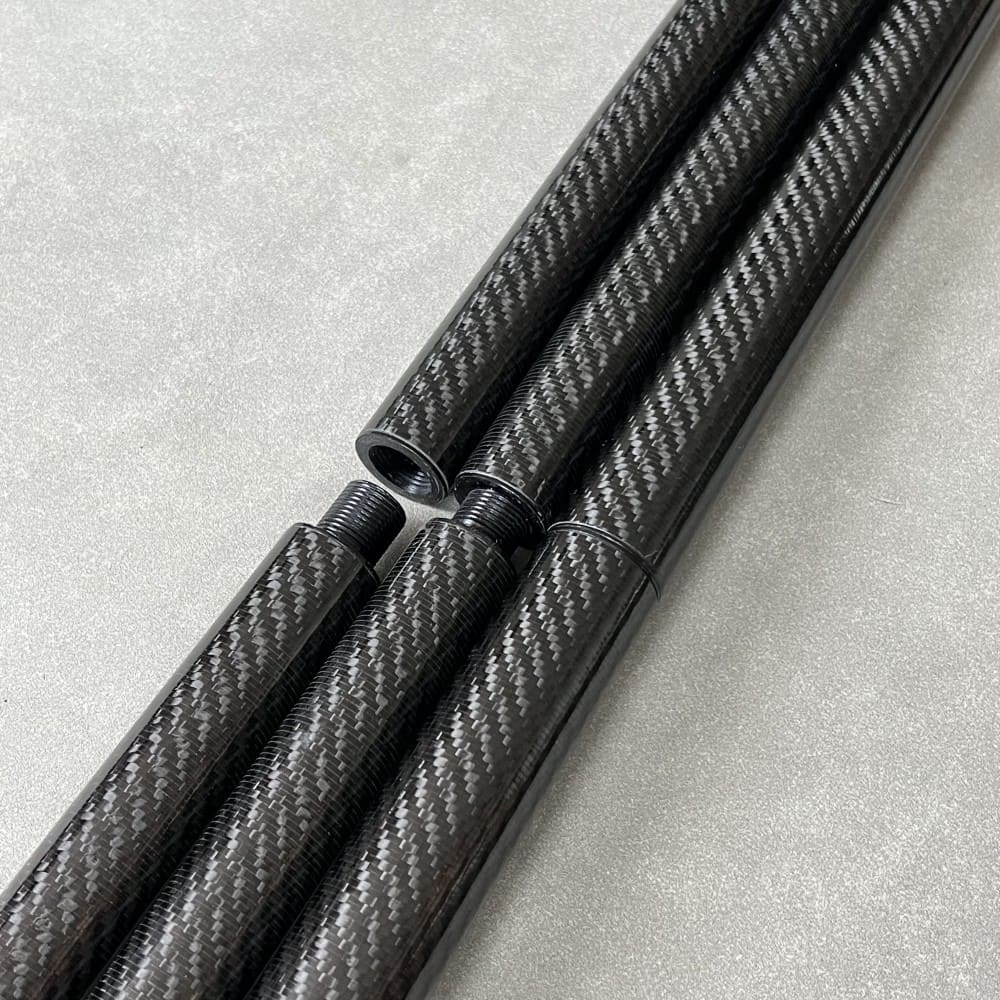
Bij aluminium schroefdraadverbindingen wordt gebruikgemaakt van nauwkeurig bewerkte schroefdraden of verlijmde schroefdraadinzetstukken om stijve, belastingsbestendige verbindingen te creëren.
Ze worden gekozen wanneer een stevige bevestiging en uitlijning belangrijker zijn dan een snelle afstelling.
Pole length must be evaluated together with the mounted load, collapsed size, section count and allowable deflection.
| Typical Extended Length | Veelvoorkomende toepassingen | Main Design Considerations |
|---|---|---|
| 9–15 ft | Camera mounts, GPS equipment, sampling and portable inspection tools | Compact storage, low tip weight and quick adjustment |
| 15–24 ft | Window cleaning, photography, surveying and maintenance tools | Balance between working reach, stiffness and collapsed length |
| 24–30 ft | Façade cleaning, solar-panel cleaning, rescue and elevated inspection | Larger base diameter, secure locks and sufficient section overlap |
| 30–40 ft | Professional cleaning, camera and industrial inspection systems | Deflection control, operator handling and reinforced locking zones |
| 40–60 ft | High-reach rescue, inspection and specialized OEM equipment | Larger tube sections, fewer joints and application-specific laminate design |
| 15–20 m | Specialized deployment, monitoring and industrial access systems | Full structural review based on tip load, wind load and operating angle |
A 30-foot carbon fiber extension pole and a 40-foot carbon fiber telescopic pole may require very different tube diameters and section structures, even when they carry the same attachment.
Projects involving a 50-foot or 60-foot carbon fiber telescoping pole, as well as 15 m or 20 m systems, require individual engineering review. Please provide the tool-head weight, operating angle, maximum collapsed length and acceptable tip movement before the structure is confirmed.
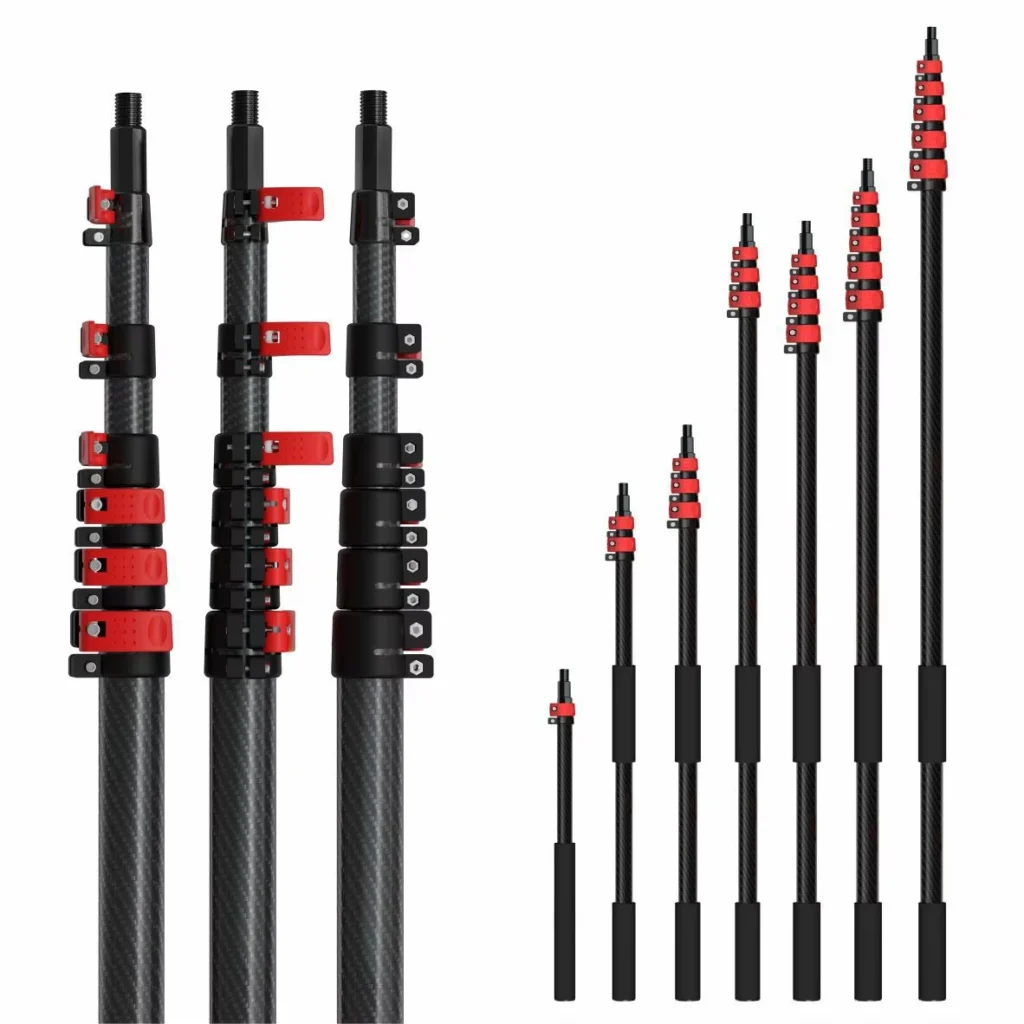
We manufacture matched carbon fiber tube sections and complete telescopic pole assemblies based on your required length, load and connection method.
Tube OD, ID, wall thickness, overlap and fiber layup are matched to achieve the required stiffness, weight and sliding fit.
Clamps, guide bushings, threaded inserts, handles and custom tool connectors can be integrated into the pole assembly.
Prototype poles can be checked for extension movement, locking force, anti-rotation performance, alignment and deflection.
After approval, the confirmed dimensions and assembly requirements are used to maintain consistent quality across repeat orders.
We can supply individual tubes, matched telescoping tube sets, semi-assembled structures or complete OEM pole systems.
Compare weight, stiffness, corrosion resistance, durability and customization before selecting a material for your telescopic pole.
| Vergelijking | Koolstofvezel | Aluminium | Glasvezel |
|---|---|---|---|
| Gewicht | Lightweight for long and multi-section pole structures | Becomes heavier as diameter and length increase | Usually heavier for similar bending stiffness |
| Buigstijfheid | High stiffness-to-weight performance helps control deflection | Suitable for shorter poles but less efficient at long reach | More flexible under the same working load |
| Operator handling | Easier to lift and control during repetitive or overhead work | Added weight can increase fatigue | Weight and flexibility may reduce tip control |
| Structural design | Fiber layup, wall thickness and clamp reinforcement can be customized | Standard profiles are easy to machine and assemble | Wall thickness and profiles can be customized |
| Corrosiebestendigheid | Carbon fiber tubes do not rust, but metal fittings require protection | Requires anodizing, coating or corrosion-resistant alloys | Generally resistant to moisture and outdoor exposure |
| Anti-rotation options | Keyed, D-shaped, square and guided structures are available | Square and keyed profiles are widely available | Shaped profiles are possible |
| Electrical properties | Elektrisch geleidend | Elektrisch geleidend | Commonly selected when electrical insulation is required |
| Initial cost | Higher, but advantageous for long-reach and weight-sensitive tools | Lower and suitable for cost-focused applications | Usually between aluminum and carbon fiber |
| Best suited for | Professional cleaning, inspection, rescue, camera and sports equipment | Shorter poles and cost-sensitive products | Electrical-access and insulation-sensitive tools |
Koolstofvezel is recommended when low weight, stiffness and operator control are more important than the lowest initial material cost. It is electrically conductive and should not be used as an insulating material near live electrical systems.
A European design studio approached us to evaluate a lightweight three-stage telescopic support for a deployable indoor lighting and mirror structure.
The proposed tube dimensions were:
Upper section: 45 mm OD / 41 mm ID
Middle section: 40 mm OD / 36 mm ID
Lower section: 35 mm OD / 31 mm ID
Nominal wall thickness: 2 mm
Two POM guide bushings per sliding stage
External quick-release cam locks
M10 aluminum foot connection
Anti-rotation required
During the preliminary review, three options were compared: round carbon fiber tubes with an anti-rotation guide, square carbon fiber tubes and square aluminum tubes.
Square profiles provided natural anti-rotation, but square carbon fiber required additional consideration for corner reinforcement, sliding wear and tooling cost. Aluminum was simpler to source and assemble, but increased the total structure weight.
The preferred development direction was round roll-wrapped carbon fiber tubes with matched POM bushings, controlled sliding clearance, external cam locks and a separate anti-rotation feature. Additional circumferential reinforcement was also recommended around the clamping zones.
The final tube layup, clearance and locking structure would be confirmed through prototype fitting and functional testing before production.
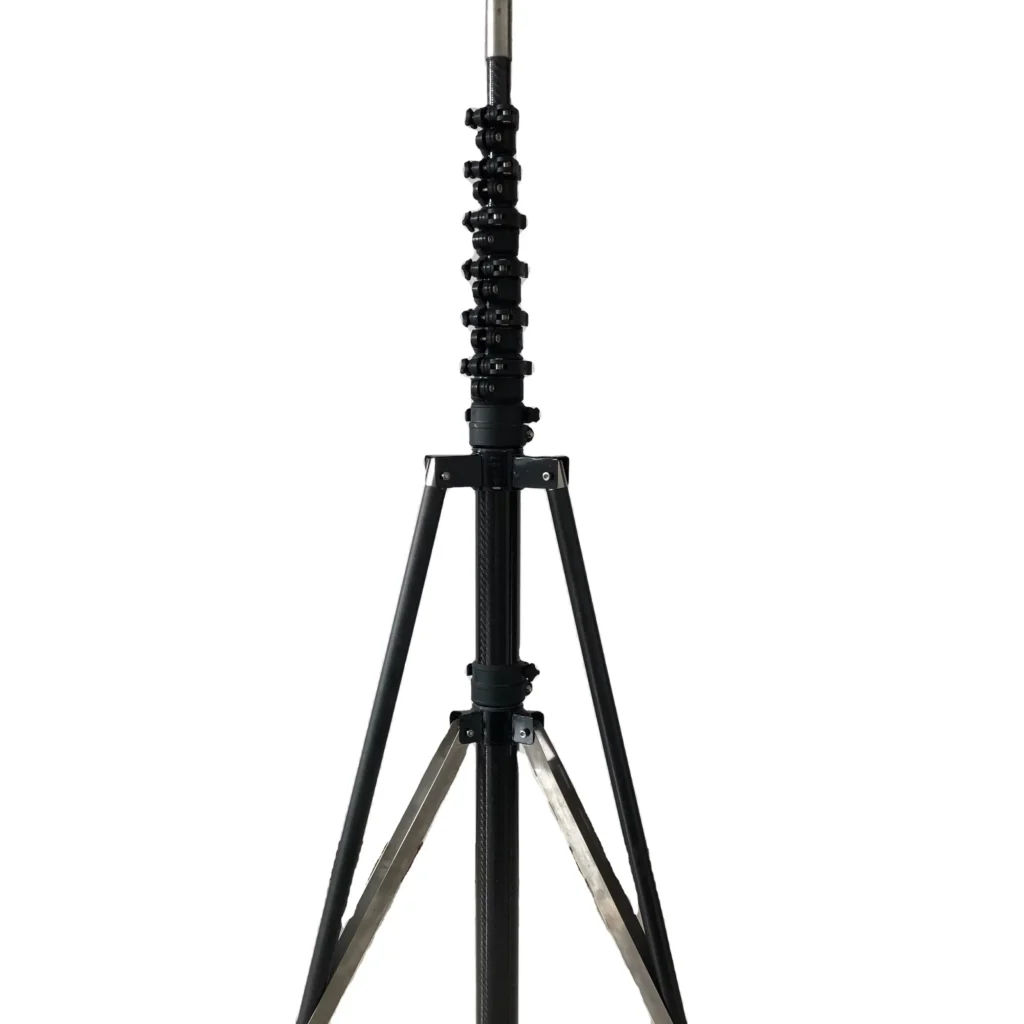
There is no major structural difference. “Telescoping” is more common in American English, while “telescopic” and “carbon fibre telescopic pole” are widely used in international and UK markets.
Yes. Working length, collapsed length, section length and section count can be developed around the product and transport requirements.
Long-reach poles can be evaluated, but they require appropriate tube diameters, overlap, locks and laminate design. The required length alone is not sufficient to confirm feasibility.
External clamps are suitable for fast adjustment and higher holding force. Twist locks provide a cleaner exterior, while spring buttons provide fixed extension positions.
The shorter phrase “carbon telescopic pole” is often used to describe a carbon fiber pole with nested adjustable sections. Buyers should confirm whether the product is full carbon fiber or a carbon-composite construction.
Yes. A 30 foot carbon fiber extension pole or 40 ft carbon fiber telescopic pole can be evaluated after confirming the top load, operating angle and allowable deflection.
Yes. Anti-spin and anti-rotation options include keyed guides, shaped bushings, D-shaped tubes, square tubes and external guide structures.
Yes. Please provide a drawing or physical sample showing the thread, insertion depth, load direction and installation dimensions.
Wij bieden een compleet assortiment composietproducten: