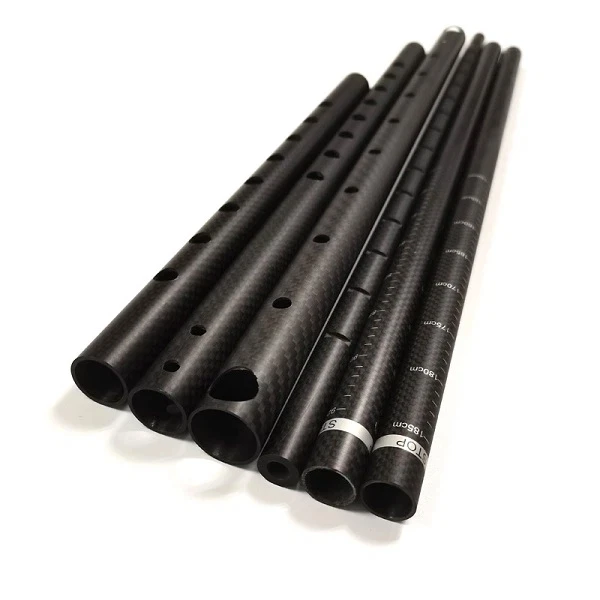
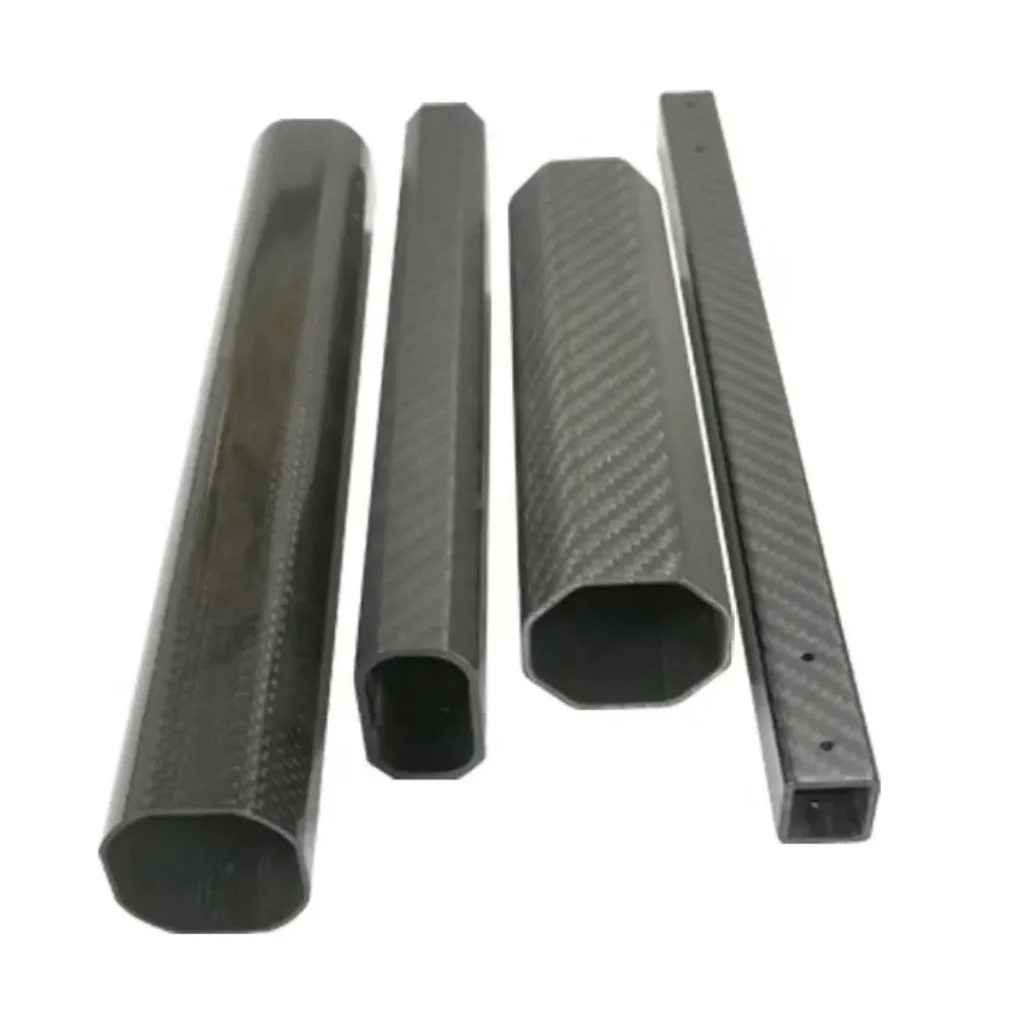
Choosing a carbon fiber tube sounds easy at first. Many buyers start with one goal: make the product lighter. That is important, but it is not enough. A good tube also needs the right shape, the right size, the right wall thickness, and the right structure for the real job.
This matters because carbon fiber tubes are used in many different products. A tube for a UAV arm is not chosen the same way as a tube for an inspection pole, a robot arm, or an automotive support part. Some projects need the best weight-to-stiffness ratio. Some need easy mounting. Some need anti-rotation. Some need better fit in a tight space.
That is why the best way to choose a carbon fiber tube is not to start with price. It is to start with function.
This guide will help you compare tube shapes, sizes, and structures in a simple way. It is written for buyers, engineers, and product teams who want to make a better decision before sampling or ordering.
What Should You Check Before Choosing a Carbon Fiber Tube?
Before you choose a round tube, square tube, or rectangular tube, first look at how the part will be used. A carbon fiber tube is a structural part, so the selection should start with the working condition.
There are four basic questions to answer first.
1. What kind of load will the tube carry?
Some tubes mainly carry bending. Some carry compression. Some see torsion. Some deal with vibration or repeated movement. If the tube is part of a frame or boom, bending stiffness may be the key point. If it is used in a moving assembly, low weight and stable control may matter more.
2. How much installation space do you have?
The shape of the available space changes the best tube option. A round tube works well in many designs, but not every design has enough room for a round profile. In some products, a rectangular tube or oval tube fits the layout better.
3. How will the tube connect to other parts?
This is one of the most common mistakes in sourcing. Some buyers choose the tube first and think about the joint later. In real products, the joint often decides the best tube shape and wall thickness. A tube that is bonded, clamped, bolted, or fitted with inserts may need a different structure from a tube that only supports a simple load.
4. What is the real weight target?
Everyone wants a light part, but the lightest tube is not always the best one. If the wall is too thin, the tube may fail at the connection area, feel weak in use, or become hard to process. A better goal is not “lowest weight.” It is “lowest weight that still works safely and consistently.”
When these points are clear, tube selection becomes much easier. When they are not clear, even a good material can become the wrong part.
Round, Square, Rectangular, or Oval: Which Tube Shape Is Best?
Tube shape is one of the most important decisions because it affects stiffness, installation, rotation control, and how the finished product fits together.
Here is a simple comparison table:
| Tube Shape | Am besten für | Hauptvorteil | Main Limit |
|---|---|---|---|
| Round carbon fiber tube | Poles, shafts, UAV arms, lightweight supports | Best all-around balance of strength, stiffness, and low weight | Can rotate if the joint is not locked |
| Square carbon fiber tube | Frames, supports, mounting systems | Easy alignment and better anti-rotation | Less natural for rotating or telescopic movement |
| Rectangular carbon fiber tube | Flat structures, rails, space-limited designs | Good directional stiffness and flat contact surfaces | Not as balanced as a round tube under all load directions |
| Oval carbon fiber tubing | Aerodynamic parts, ergonomic products, special layouts | Good for drag control or unique shape requirements | More custom and less standard |
| Hexagonal carbon fiber tube | Special tools and anti-rotation uses | Helps control rotation without extra features | Lower demand and more custom work |
Round carbon fiber tube
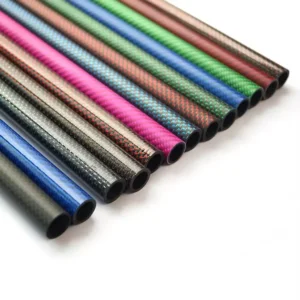
A round tube is the most common choice for a reason. It gives a strong mix of light weight, stiffness, smooth surface, and easy manufacturing. It works well in many industries because the shape handles general structural loads efficiently.
Round tubing is often the first choice for long poles, drone arms, sports parts, and lightweight industrial structures. If the design does not need flat mounting sides or built-in anti-rotation, round is usually the safest place to start.
Square carbon fiber tube
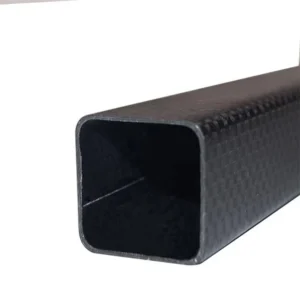
A square tube is helpful when the product needs the tube to stay in one position. The flat sides make alignment easier and reduce rotation in the assembly. That is why square carbon fiber tubes are often used in frames, supports, guards, and structural layouts with brackets.
If your product includes flat joints, simple mounting, or a fixed position requirement, square tubing may be a better option than round.
Rectangular carbon fiber tube
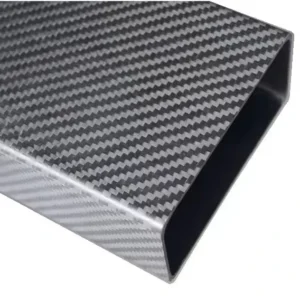
Rectangular tubing is useful when the design needs more stiffness in one direction than the other, or when space is limited. It also works well in products that use flat plates, flat supports, or narrow installation areas.
This shape is often a smart choice for industrial assemblies, automotive supports, and some automation systems where product packaging matters.
Oval carbon fiber tubing
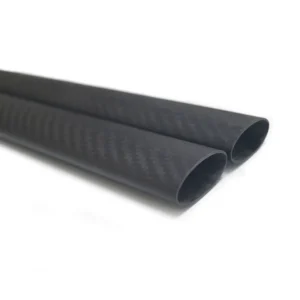
Oval tubes are more specialized, but they solve real design problems. They can improve airflow, create a better hand feel, or fit into spaces where round and rectangular tubes do not work well. Oval profiles are common in products where shape and performance both matter.
The best tube shape is not the most popular one. It is the one that matches how the product works.
How Do Tube Diameter, Wall Thickness, and Length Affect Performance?
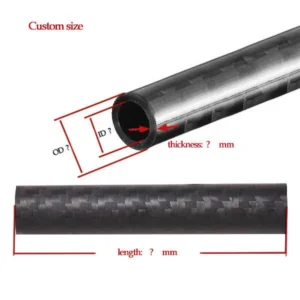
After shape, the next important step is size. Many buyers ask for one common size, such as a 1 inch carbon fiber tube, but real performance depends on more than one number.
Durchmesser
Diameter strongly affects bending stiffness. In simple terms, a larger tube diameter usually makes the tube stiffer in bending. That is why larger tubes are often used in long spans, support arms, and poles.
A 1 inch carbon fiber tube is a very common size because it works well in many lightweight structural designs. It is large enough for many products, but still easy to package and fit.
A large diameter carbon fiber tube may be a better option when the project needs:
-
longer reach
-
lower deflection
-
high stiffness with low weight
-
a main structural tube in a large assembly
Still, a larger diameter also takes more space and may increase tooling, handling, and packaging needs.
Wandstärke
Wall thickness affects crush resistance, local strength, clamp safety, and how the tube behaves at the ends or joint areas. A thin wall may save weight, but it can become weak in bonded, drilled, or clamped zones.
A thicker wall may be the better choice when:
-
the part sees higher load
-
hardware or inserts will be added
-
the tube is often clamped
-
impact or repeated use is expected
-
a more solid feel is needed
The best wall thickness is the one that supports the real load and joint style without adding unnecessary weight.
Länge
Length matters because deflection increases as the span gets longer. A tube that works well at a short length may bend too much when the length changes. That is why suppliers should not recommend a tube based only on diameter.
For a good quote or recommendation, the basic size set should include:
-
outer diameter
-
inner diameter or wall thickness
-
total length
Without all three, it is difficult to select the right carbon fiber tube.
Pultruded vs Roll-Wrapped Carbon Fiber Tubes: What Is the Difference?
Many buyers compare pultruded carbon fiber tubes with roll-wrapped tubes. Both can be useful, but they are designed for different needs.
| Type | Am besten für | Main Benefit | Main Limit |
|---|---|---|---|
| Pultruded carbon fiber tube | Standard straight parts, repeat production, cost-focused jobs | Stable production and good consistency | Less flexibility in structure design |
| Roll-wrapped carbon fiber tube | Higher-performance parts, custom designs, more complex load cases | More control over fiber layout and part behavior | Usually higher cost |
A pultruded carbon fiber tube is often a good fit for standard straight tubing when volume, consistency, and cost control matter. It can work well in many industrial products where the design is clear and the loading is not highly complex.
A roll-wrapped carbon fiber tube is often the better choice when performance matters more. Because the structure can be adjusted more freely, this type is useful when the project needs better bending performance, better torsional control, lower weight, or a more customized layup.
A simple way to decide is this:
-
Wählen Sie pultruded when the need is standard, straight, and cost-sensitive.
-
Wählen Sie roll-wrapped when the need is more custom and performance-driven.
For demanding products, the process should be matched to the application, not selected only by price.
When Should You Choose a Tapered or Large Diameter Carbon Fiber Tube?
Some projects need more than a standard straight tube.
A verjüngtes Kohlefaserrohr changes diameter from one end to the other. This can be useful when the product needs:
-
telescopic fit
-
lower weight along the length
-
better balance in hand
-
different connection sizes at each end
-
more efficient use of material
Tapered tubes are common in poles, shafts, and long lightweight tools. They help reduce extra weight while still keeping the part strong enough where load is higher.
A large diameter carbon fiber tube is more useful when stiffness is the main problem. If the product has a long span or must resist bending with low weight, increasing diameter is often more effective than only adding wall thickness.
These tubes are often used in:
-
long support arms
-
boom structures
-
main body tubes
-
large inspection or reach systems
-
lightweight industrial frames
Both tapered and large diameter tubes need better planning than standard tubing. Tooling, packing, joint design, and process control all become more important.
How to Choose the Right Carbon Fiber Tube for Different Applications
The right tube also depends on the application. A good article should help the reader connect tube selection to real product use.
Kohlefaser für Roboter und Automation
In robot and automation products, low moving mass is a big advantage. Lighter structures can improve speed, response, and energy efficiency. Carbon fiber tubes are often used in arms, support members, and moving structural parts.
Round tubes are common when low weight and balanced stiffness matter most. Square or rectangular tubes may be better when flat mounting and anti-rotation are more important. This is a strong place to link to your Kohlefaser für Roboter und Automation page.
Carbon Fiber for Drones and UAV
In UAV structures, weight control is critical. Tubes used in drone arms and support structures must handle vibration, repeated loading, and low-weight design at the same time.
Round carbon fiber tubes are often the first choice here because they give good stiffness with low mass. Wall thickness and joint design should be checked carefully, especially in larger UAV systems. This section is a natural fit for your Carbon Fiber for Drones and UAV page.
Carbon Fiber for Outdoor Tools
Outdoor tools often use carbon fiber tubing in poles, handles, and extension parts. In these products, the tube needs to be light for easy use, but strong enough for repeated work in field conditions.
Round and tapered tubes are common in this area. If the product is telescopic, fit, straightness, and surface quality matter a lot. This is a good internal link point for your Carbon Fiber for Outdoor Tools page.
Carbonfaser für Industrie und Versorgung
Industrial and utility products often need tubes for long-reach tools, inspection systems, support arms, and lightweight structures. These jobs usually need a balance of stiffness, weight, and reliable joining.
Round tubes work well for general structures. Square or rectangular tubes may be better when alignment and flat mounting are important. This section can link to your Carbonfaser für Industrie und Versorgung page.
Carbon Fiber for Sports Equipment
Sports products often need carbon fiber tubes that feel right in real use, not only on paper. Weight, balance, stiffness, vibration, and durability all affect the final result.
Round tubes are common in shafts and poles. Oval or custom profiles may also be useful when hand feel or airflow matters. This section supports an internal link to your Carbon Fiber for Sports Equipment page.
Kohlefaser für Autos & Automotive
Automotive products use carbon fiber tubes in lightweight support parts, performance systems, and custom structural designs. In these applications, tube shape often depends on the available space and the connection method.
Round tubes are common in balanced load paths. Rectangular or oval profiles may work better in tight layouts or shaped assemblies. This paragraph works well with your Kohlefaser für Autos & Automotive page.
Kohlefaser für Schutz und Sicherheit
Protective and safety products need more than low weight. They need dependable structure and repeatable quality. In these parts, tube selection should focus on joint areas, impact zones, and local reinforcement where needed.
This is a useful place to link to your Kohlefaser für Schutz und Sicherheit page.
Common Mistakes Buyers Make When Ordering Carbon Fiber Tubes
Even experienced buyers can make mistakes when the project data is incomplete. Common problems include:
-
choosing by outer diameter only
-
ignoring wall thickness
-
selecting round tubing when anti-rotation is needed
-
selecting square tubing when smooth motion matters more
-
comparing prices without checking process type and tolerance
-
asking for low weight without defining the real load
-
forgetting the joint method until after sampling
-
treating pultruded and roll-wrapped tubes as the same product
These mistakes can waste time, delay sampling, and increase total project cost.
What to Ask a Carbon Fiber Tube Supplier Before You Buy
A better project usually starts with better questions. Before you buy, ask the supplier:
-
Which tube shape best fits this application?
-
What diameter and wall thickness do you recommend?
-
Should this part use pultruded or roll-wrapped construction?
-
What tolerance can you control for this size?
-
Can inserts, bonding, or machining be added?
-
What is the MOQ for samples and production?
-
What packaging method will be used for long tubes?
-
Do you need drawings or load data before quoting?
These questions help move the discussion from basic pricing to real product fit.
FAQ About Carbon Fiber Tubes
Is a round carbon fiber tube stronger than a square tube?
Not always. A round tube is often more efficient for general lightweight design, but a square tube can be better when the product needs flat mounting or anti-rotation.
What is the most common size for a carbon fiber tube?
There is no single best size, but 1 inch carbon fiber tube options are widely used in many structural and industrial products.
When should I choose rectangular carbon fiber tubing?
Choose rectangular tubing when space is limited, flat mounting is needed, or the design requires more stiffness in one direction.
Are pultruded carbon fiber tubes good for structural use?
Yes. Pultruded carbon fiber tubes can work very well for straight, repeatable, cost-sensitive structural parts.
Can carbon fiber tubes be made in custom sizes?
Yes. Custom diameter, wall thickness, length, shape, and finish are common in OEM and industrial projects.
Abschließende Überlegungen
The best carbon fiber tube is not chosen by material name alone. It is chosen by matching shape, size, wall thickness, process, and application need.
If you need a safe starting point, round carbon fiber tubes are often the most flexible option. If the design needs flat mounting and anti-rotation, square or rectangular tubes may be better. If the project needs telescopic fit or better balance, a tapered tube may make more sense. If the product needs stiffness over a long span, a large diameter tube may be the right answer.
The smartest approach is simple: define the job first, then choose the tube that fits that job. That is how good products are built, and that is how better sourcing decisions are made.
Das könnte Sie auch interessieren

Komposit-Rohre
Fokus auf hohe Steifigkeit und geringes Gewicht für leistungsorientierte Strukturen.
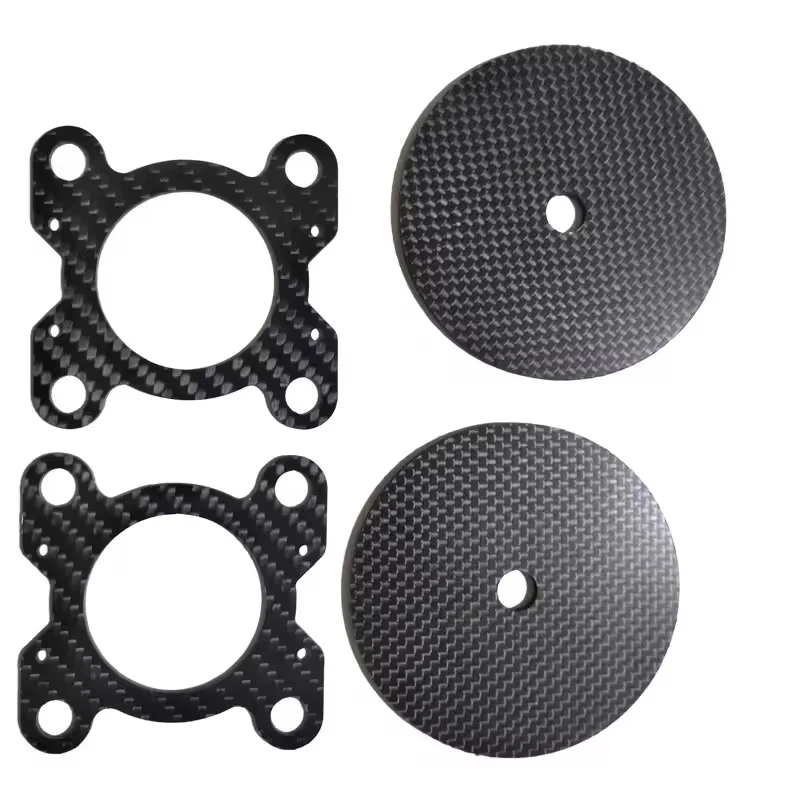
Kohlenstofffaser-Platten und -Plättchen
Flaches Laminatmaterial für den CNC-Zuschnitt und leichte Strukturbauteile.