Choosing the right carbon fiber tube size is not only about picking a diameter from a list. For many projects, the tube must fit another part, carry a load, slide into another tube, or stay light while still being strong enough. That is why buyers often search for terms like Tubo de fibra de carbono de 1 polegada, Tubo de fibra de carbono de 2 polegadas, large diameter carbon fiber tube, thin wall carbon fiber tube, ou carbon fiber tube 1000mm.
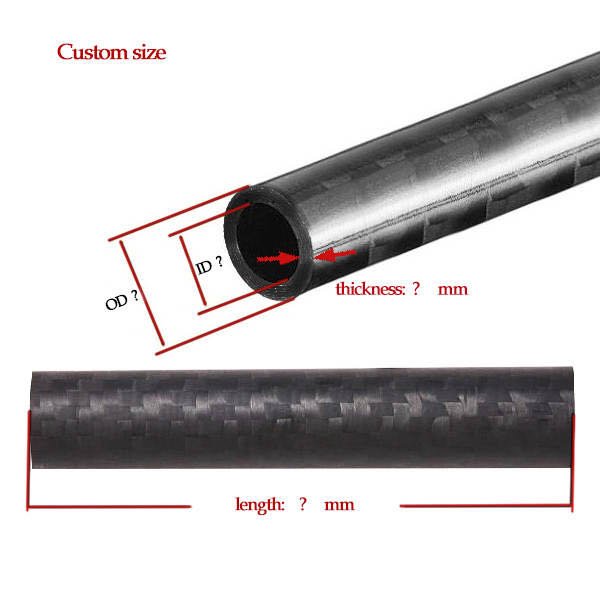
This guide explains the four key size details you should check before ordering a carbon fiber tube: outer diameter, inner diameter, wall thickness, and length. It is written for buyers, product developers, purchasing teams, and project managers who need a clear way to choose the right tube for a real application.
Visão geral dos tubos de fibra de carbono
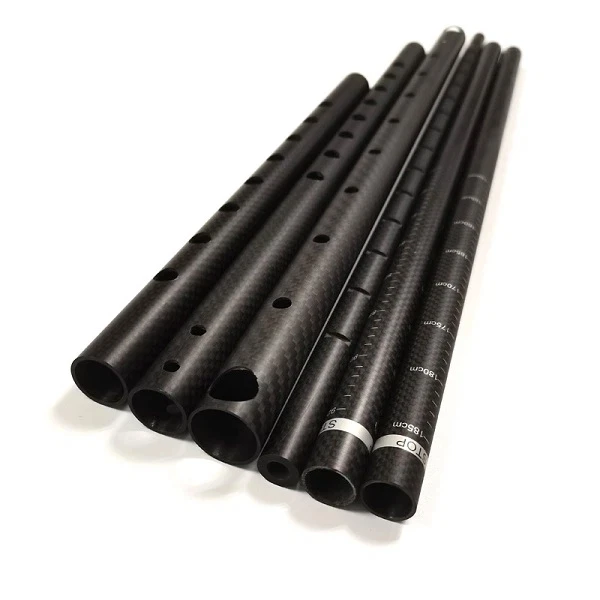
Carbon fiber tubes are used in many industries because they are light, stiff, and corrosion resistant. They can be used for drone arms, camera poles, cleaning poles, robot arms, equipamentos esportivos, automotive parts, marine structures, and many other custom products.
But the same material can perform very differently when the size changes.
Before choosing a tube, you should understand what each size means.
The most important dimensions are:
- Outer diameter
- Inner diameter
- Wall thickness
- Tube length
When these four details are clear, it is much easier to match the tube to your strength, weight, fitting, and assembly needs.
What Does OD Mean on a Carbon Fiber Tube?
OD means outer diameter. It is the outside measurement of a round tube. If a customer asks for a Tubo de fibra de carbono de 1 polegada, they usually mean the outside diameter is about 1 inch, unless they clearly say ID.
OD is important because it affects how the tube fits into clamps, brackets, holders, joints, or other parts. For example, if your tube needs to fit into a metal connector, a plastic handle, or a machined mounting part, the OD must match the mating part.
Common OD search examples include:
- Tubo de fibra de carbono de 1 polegada
- 1.5 inch carbon fiber tube
- Tubo de fibra de carbono de 2 polegadas
- 3 inch carbon fiber tube
- 4 inch carbon fiber tube
- 5 inch diameter carbon fiber tube
- 6 inch carbon fiber tube
- 8mm OD carbon fiber tube
- 10mm carbon fiber tube
- 20mm carbon fiber tube
- Tubo de fibra de carbono de 50 mm
- 100mm carbon fiber tube
- large diameter carbon fiber tube
For many projects, OD is the first size buyers check. This is because the outside size decides whether the tube can fit into the existing design.
If your drawing already has a fixed outside size, you should keep the OD as the main control dimension. Then the wall thickness and ID can be adjusted based on strength and weight needs.
What Does ID Mean on a Carbon Fiber Tube?
ID means inner diameter. It is the inside opening of the tube. ID matters when something needs to go inside the tube.
This can include:
- A smaller telescoping tube
- An aluminum insert
- A steel pin
- A threaded connector
- A cable or wire
- A rod, shaft, or bearing part
For example, a 50mm OD ,47mm ID carbon fiber tube has a 50mm outside diameter and a 47mm inside diameter. This means the wall thickness is about 1.5mm on each side.
Some customers also search for very specific ID sizes, such as 1 inch ID carbon fiber tube, 2 inch ID carbon fiber tube, 8mm ID carbon fiber tube, ou 46mm ID carbon fiber tube. These searches usually come from buyers who already have a matching part or assembly requirement.
If your project needs a part to slide inside the tube, do not only tell the supplier the OD. You should also provide the ID or the size of the part that needs to fit inside.
For telescoping tubes, ID is especially important. The inner tube and outer tube must have a good fit. If the gap is too small, the tubes may not slide smoothly. If the gap is too large, the system may feel loose or unstable.
How Wall Thickness Affects Strength and Weight
Wall thickness is the material thickness between the OD and ID. It has a big impact on tube strength, stiffness, weight, and cost.
A thin wall carbon fiber tube is lighter. It may be good for applications where weight saving is very important and the load is not too high.
A thick wall carbon fiber tube is heavier, but it can provide better stiffness, better impact resistance, and better support for demanding applications.
Common wall thickness search terms include:
- thin wall carbon fiber tube
- thick wall carbon fiber tube
- ultra thin wall carbon fiber tube
- heavy thick wall carbon fiber tube
- carbon fiber tube wall thickness
- 0.062 wall tubing
- vari wall tubing
The right wall thickness depends on how the tube will be used. A display frame, model structure, or light handle may use a thinner wall. A robotic arm, long pole, industrial support, or load-bearing structure may need a thicker wall.
Here is a simple rule:
If the tube only needs to keep shape and reduce weight, a thinner wall may work. If the tube must carry load, resist bending, or handle repeated use, a thicker wall is usually safer.
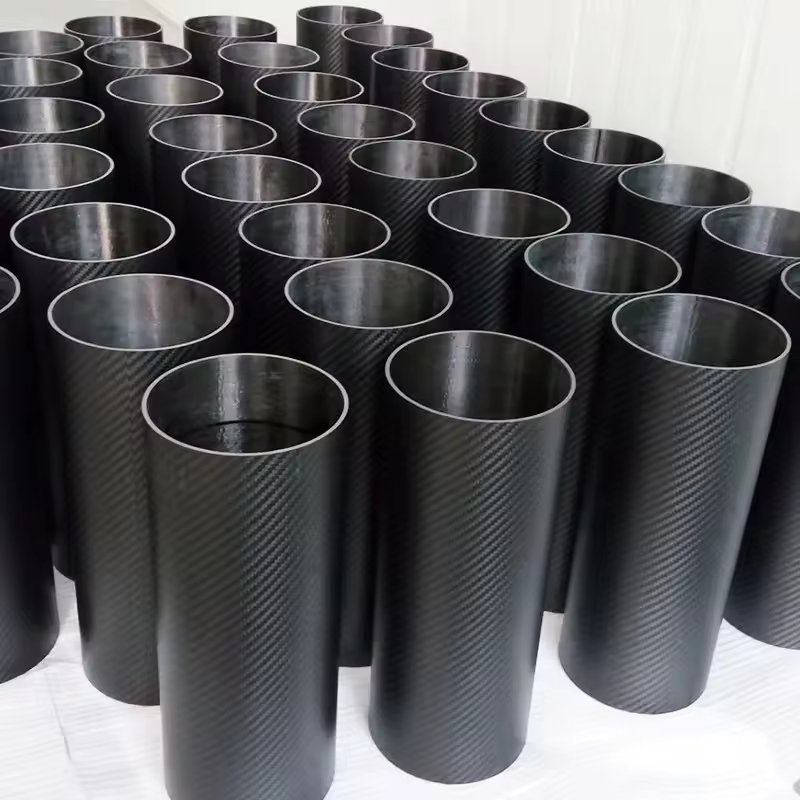
Common Carbon Fiber Tube Sizes Buyers Search For
Many buyers search by a direct size because they already have a design in mind. Some use inch sizes, while others use metric sizes. Both are common in international projects.
| Size Search Type | Common Keywords | Typical Buyer Need |
|---|---|---|
| Small metric tubes | 2mm, 3mm, 4mm, 5mm, 6mm, 8mm, 10mm carbon fiber tube | Model parts, small frames, RC parts, lightweight supports |
| Medium metric tubes | 12mm, 14mm, 16mm, 18mm, 20mm, 22mm, 25mm carbon fiber tube | Drone arms, handles, equipment frames, support rods |
| Larger metric tubes | 30mm, 35mm, 38mm, 40mm, 50mm carbon fiber tube | Poles, structural supports, industrial parts |
| Large diameter tubes | 100mm carbon fiber tube, large diameter carbon fiber tube | Rollers, marine parts, industrial structures, custom assemblies |
| Inch tubes | 1/2 inch, 3/4 inch, 1 inch, 1.5 inch, 2 inch carbon fiber tube | US market projects, brackets, poles, frames, replacement parts |
| Large inch tubes | 3 inch, 4 inch, 5 inch, 6 inch carbon fiber tube | Automotive, industrial, marine, and large custom structures |
| OD + ID tubes | 50mm OD 47mm ID, 22mm OD 18mm ID, 1/2 inch OD 0.375 ID | Projects that need exact fitting or assembly |
| Length-based tubes | 1000mm, 2000mm, 2 meter carbon fiber tubes | Stock tube cutting, poles, frames, long parts |
The best size is not always the biggest size. It should match the real load, span, connection method, and weight target.
How to Choose the Right Carbon Fiber Tube Size
Before choosing a tube, think about the job the tube must do. A tube used as a short handle has different needs from a tube used as a long pole. A drone arm has different needs from an industrial roller.
Here is a simple step-by-step way to choose:
- Start with the outside fit
Check whether the tube must fit into a clamp, bracket, connector, or mounting part. If yes, confirm the OD first. - Check the inside fit
If another part must go inside the tube, confirm the ID. This is very important for telescoping tubes, inserts, and cable routing. - Decide the wall thickness
Use a thinner wall for lightweight projects. Use a thicker wall when the tube needs higher stiffness, better strength, or better durability. - Confirm the length
Standard lengths like 1000mm or 2000mm may work for many projects. For poles, frames, and industrial parts, custom length may be better. - Choose the tube shape
Round tubes are common, but square and rectangular carbon fiber tubes can be better when you need flat mounting faces or anti-rotation design. - Confirm the production process
Pultruded tubes, roll-wrapped tubes, and custom layup tubes have different performance. The best choice depends on the load direction and application. - Send a drawing if possible
A drawing helps the supplier check OD, ID, wall thickness, length, tolerance, surface finish, and cutting requirements.
Standard Length vs Custom Long Carbon Fiber Tubes
Length is another important part of carbon fiber tube selection. Many buyers search for carbon fiber tube 1000mm, carbon fiber tube 2000mm, ou 2 meter carbon fiber tubes because these lengths are common for stock use.
For some projects, standard length is enough. The buyer can cut the tube to the required size. This is common for small frames, hobby use, test samples, and simple supports.
For OEM and industrial projects, custom length is often better. This can reduce waste, save cutting time, and improve consistency.
Long carbon fiber tubes are often used for:
- Cleaning poles
- Inspection poles
- Camera poles
- Antenna masts
- Marine parts
- Industrial rollers
- Robotic arms
- Outdoor tool handles
- Structural frames
Long tubes need more than just length. They also need good straightness, stable wall thickness, and controlled surface quality. If the tube is too long and too thin, it may bend too much. If the wall is too thick, the tube may become too heavy. This is why OD, ID, wall thickness, and length should be considered together.
For custom projects, LongHe Composite can support carbon fiber tubes in standard and long lengths, including OEM long tube production for industrial and outdoor tool applications.
Thin Wall or Thick Wall: Which One Should You Choose?
Both thin wall and thick wall carbon fiber tubes have their place. The right choice depends on your design goal.
Choose a thin wall carbon fiber tube when:
- Weight saving is the main goal
- The tube does not carry heavy load
- The tube is short or well supported
- The part is used for display, cover, or light support
- Cost control is important
Choose a thick wall carbon fiber tube when:
- The tube needs higher bending stiffness
- The tube is long and must stay stable
- The tube may face impact or repeated use
- The tube will be drilled, bonded, or connected
- The project needs better durability
A thicker wall does not always mean the best design. Sometimes a larger OD with a moderate wall can be stiffer than a smaller OD with a very thick wall. This is why it is helpful to share the application with your supplier, not only the size.
For example, a 20mm tube for a short handle and a 20mm tube for a long support pole may need different wall thicknesses. The size looks the same, but the working condition is different.
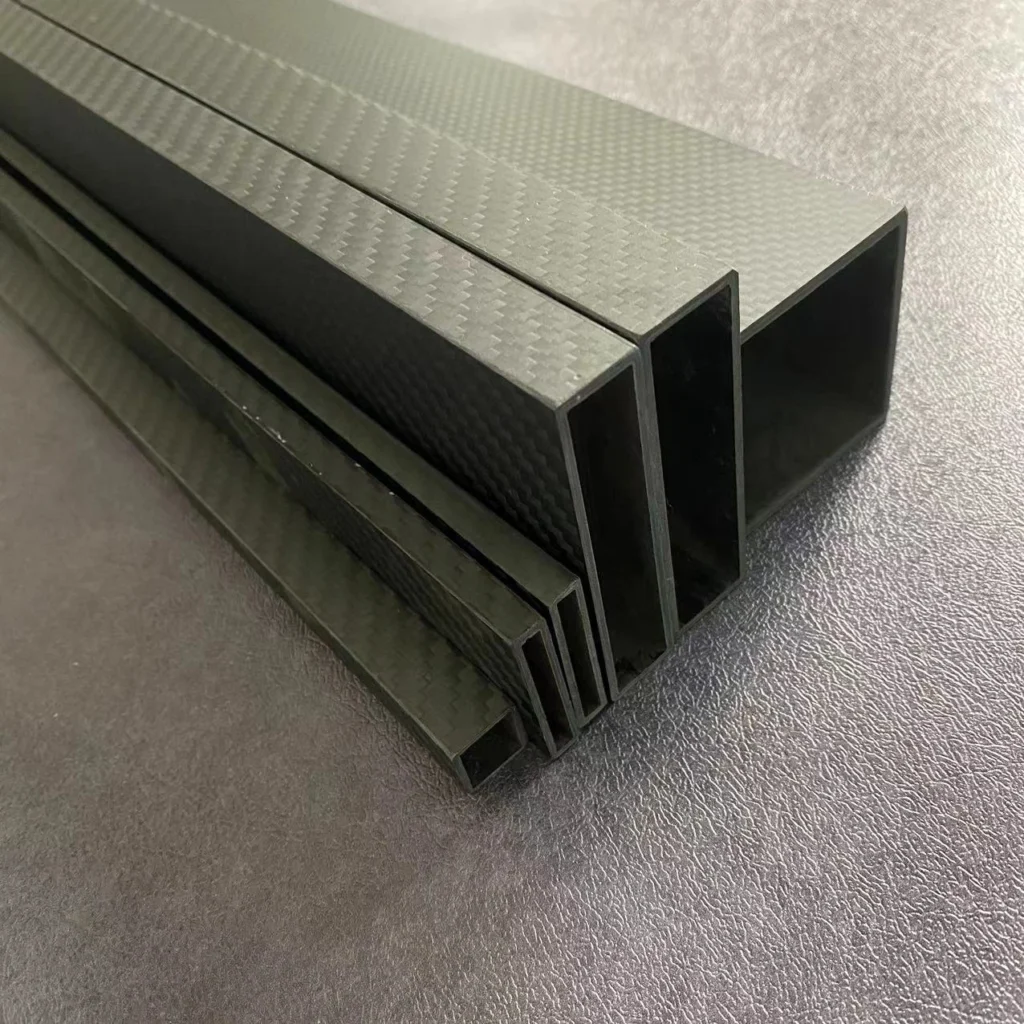
Round, Square, and Rectangular Tube Size Considerations
Most size searches are for tubos redondos de fibra de carbono, but square e rectangular tubes are also important.
A round tube is a good choice when the load can come from many directions. It is also easy to use in poles, rods, rollers, handles, and telescoping systems.
A square carbon fiber tube is useful when you need flat sides, easier mounting, or better anti-rotation performance. Common search examples include 1 inch square carbon fiber tube, 10mm square carbon fiber tube, e Tubo quadrado de fibra de carbono de 20 mm.
A rectangular carbon fiber tube is useful when the load is stronger in one direction. It can be used for frames, beams, support arms, and equipment structures.
When choosing square or rectangular tubes, you should confirm:
- Outside width and height
- Inside width and height
- Wall thickness
- Corner radius
- Comprimento
- Acabamento da superfície
- Cutting tolerance
For flat-sided tubes, the corner radius can affect how the part fits with brackets or machined parts. If your project has tight assembly needs, it is better to send a drawing.
Information Needed for a Custom Carbon Fiber Tube Quote
To get a faster and more accurate quote, prepare the main size details before contacting the supplier.
Please include:
- Tube shape: round, square, rectangular, oval, or custom profile
- Outer diameter or outside size
- Inner diameter if required
- Wall thickness
- Comprimento
- Quantity
- Surface finish: matte, glossy, 3K twill, plain weave, UD, or custom
- Aplicativo
- Required tolerance
- Cutting, drilling, bonding, or CNC machining needs
- Packing and shipping requirements
If you are not sure about the final size, you can send the application first. A good supplier can help you compare different options, such as thin wall vs thick wall, small OD vs larger OD, or standard length vs custom length.
FAQ About Carbon Fiber Tube Sizes
What is the most common carbon fiber tube size?
There is no single size for all projects, but 1 inch, 1.5 inch, 2 inch, 10mm, 12mm, 20mm, 25mm, and 50mm carbon fiber tubes are common search sizes. The best size depends on the application and load.
Is OD or ID more important?
OD is more important when the tube must fit into an outside clamp, bracket, or connector. ID is more important when another part must fit inside the tube.
What does a 50mm OD 47mm ID carbon fiber tube mean?
It means the outside diameter is 50mm and the inside diameter is 47mm. The wall thickness is about 1.5mm on each side.
Are thin wall carbon fiber tubes strong?
Yes, thin wall carbon fiber tubes can be strong for lightweight applications. But for long tubes, heavy loads, or repeated use, a thicker wall may be safer.
Can carbon fiber tubes be made in 1000mm or 2000mm length?
Yes. 1000mm and 2000mm are common tube lengths. Custom lengths can also be made for OEM projects.
Can I order large diameter carbon fiber tubes?
Yes. Large diameter carbon fiber tubes can be custom made for industrial, marine, automotive, and structural applications. The supplier needs to know the OD, ID, wall thickness, length, and application.
What size should I choose for a telescoping carbon fiber tube?
For telescoping tubes, you need to confirm the OD of the inner tube and the ID of the outer tube. A proper sliding gap is important for smooth movement and stable locking.
Can carbon fiber tubes be cut to size?
Yes. Carbon fiber tubes can be cut to custom length. For clean edges and stable quality, it is better to let the manufacturer cut them during production or finishing.
Conclusion
Carbon fiber tube size selection should not be based on diameter alone. A good tube design needs the right balance of OD, ID, wall thickness, and length.
If your project only needs a simple tube, a common size like 1 inch, 2 inch, 10mm, 20mm, 1000mm, or 2000mm may work. If your project needs a precise fit, higher strength, long length, or special assembly, custom sizing is the better choice.
The easiest way to avoid mistakes is to send your drawing, target size, application, and quantity to the manufacturer. Then the supplier can help confirm whether you need a thin wall tube, thick wall tube, large diameter tube, square tube, rectangular tube, or custom carbon fiber tube