
Panoramica
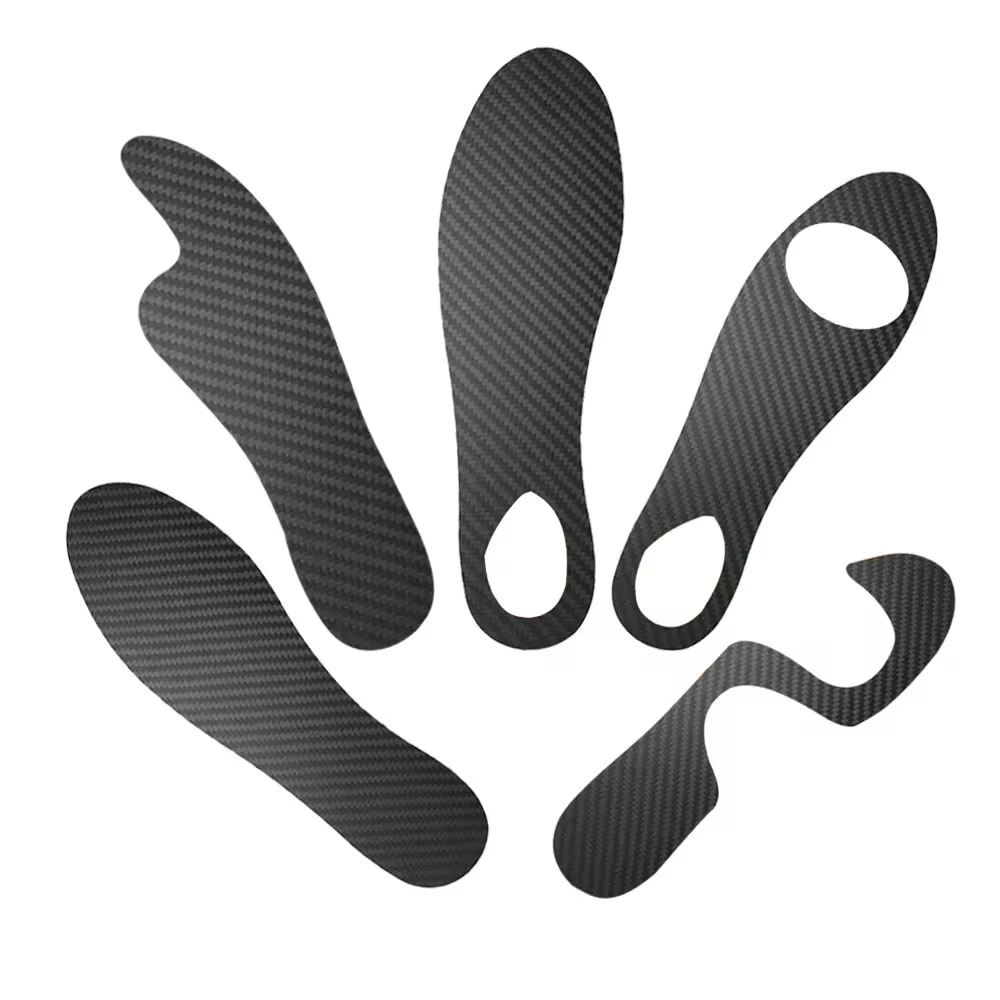
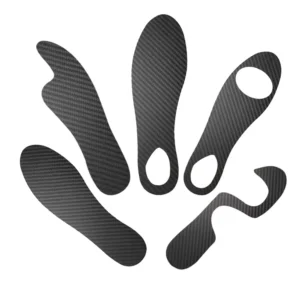
Carbon fiber insoles are no longer a niche add-on. They now sit at the intersection of sports performance, foot support, medical offloading, and premium footwear innovation. For overseas buyers, that matters because this category is no longer served by just one kind of supplier. Some companies build high-energy-return performance insoles for athletes. Some focus on rigid foot plates for clinical use. Others are true OEM or ODM partners that help brands develop private-label products from scratch.
That is exactly why this topic deserves attention in 2026. If you are a buyer, founder, project manager, orthotic distributor, or footwear brand owner, the real challenge is not finding a carbon fiber insole supplier. The real challenge is choosing the right type of supplier for the product strategy you actually have. A performance brand needs a different partner from a rehab distributor. A long-term OEM buyer needs a different kind of supplier from a company testing a small pilot run.
This article is written from that practical sourcing perspective. It is not a stock-market ranking, and it is not pretending that every company on the list plays the same role in the market. Instead, it is a buyer-focused shortlist built around publicly visible English-language information, product relevance, customization logic, and sourcing usefulness. In other words, this is meant to help you decide faster, ask better questions, and avoid wasting time on suppliers that look good on the surface but do not match your real purchasing goal.
One more thing matters here: the carbon fiber insole space is split into three lanes. First, there are consumer-facing performance brands such as VKTRY, Superfeet, e Tread Labs, which are useful as market benchmarks. Second, there are OEM and ODM makers such as Ideastep, 3BU Technology, e Nedis, which are far more relevant if you want private-label or customized development. Third, there are medical and orthotic specialists such as Ottobock, Thuasne, e Kinetic Research, where the “insole” is often closer to a carbon foot plate or orthotic support platform.
If you keep those three lanes in mind while reading, the list below becomes much more useful. You will not just see ten names. You will see which supplier type fits wholesale, which one fits custom development, which one fits medical distribution, and which one is best used as a benchmark rather than a factory partner.
Top 10 carbon fiber insole Manufacturer – Quick View
| Nome della società | Anno di fondazione | Posizione | Prodotti principali | Sito web |
|---|---|---|---|---|
| WeiHai LongHe Composito | 2009 | Weihai, Cina | Custom carbon fiber insoles, carbon composite structures, OEM carbon parts | Sito web |
| VKTRY | 2015 | Milford, Connecticut, USA | Performance carbon fiber insoles, custom orthotics | Sito web |
| Superfeet | 1977 | Ferndale, Washington, USA | Running, hockey, and performance insoles with carbon fiber technology | Sito web |
| Tread Labs | 2015 | Woburn, Massachusetts, USA | Carbon fiber insoles, arch support insoles, performance inserts | Sito web |
| Ideastep / OEM Carbon Insoles | 1989 | Jinjiang, China | OEM carbon fiber insoles, orthotic insoles, custom support systems | Sito web |
| 3BU Technology | 2012 | Dongguan, China | Carbon fiber insoles, EVA and PU insoles, OEM/ODM production | Sito web |
| Nedis Insole Manufacturing Factory | 2005 | Dongguan, China | Carbon fiber performance insoles, orthopedic insoles, ODM/OEM functional insoles | Sito web |
| Ottobock | 1919 | Duderstadt, Germany | Carbon foot plates, orthotic components, mobility devices | Sito web |
| Thuasne | 1847 | Levallois-Perret, France | Carbon-core footplates, orthopedic supports, medical devices | Sito web |
| Kinetic Research | 1994 | Tampa, Florida, USA | Carbon fiber orthotic devices, footplate-based support systems, custom orthotic solutions | Sito web |
Top 10 carbon fiber insole Manufacturer – More Details
1. WeiHai LongHe Composite

WeiHai LongHe Composito is a carbon fiber manufacturer based in China and founded in 2009. What makes it especially relevant for this list is that it is not just a footwear brand trying carbon fiber as a marketing angle. It comes from the composite manufacturing side, which means the company is naturally stronger in structure, material logic, stiffness design, process control, and OEM execution. For buyers who want a standard ready-to-sell insole, that may not sound exciting. But for buyers who need different rigidity levels, custom surface layers, dimensional control, and application-led engineering, it is exactly the kind of capability that matters.
The company mainly serves integrators, brand owners, and project customers who need customized carbon fiber insoles rather than off-the-shelf retail goods. Since its establishment in 2009, it has supported hundreds of custom projects, and helping customers grow is a core part of its business philosophy. That matters because many insole projects do not succeed on the first sample. They require structural revisions, material changes, and ongoing communication. LongHe is better positioned for that kind of development path than a consumer-facing brand that only sells finished products.
2. VKTRY

VKTRY is one of the most recognizable names in the carbon fiber insole space. Founded in 2015 by pedorthist Matt Arciuolo, the company built its identity around a very specific promise: use aerospace-grade carbon fiber to help athletes produce more force, improve stability, and reduce injury risk. From a market-reading perspective, VKTRY matters because it proved that carbon fiber insoles could move from a niche orthopedic concept into a mainstream performance product with real commercial traction.
For buyers, however, VKTRY is more useful as a benchmark brand than as a flexible OEM partner. Its product positioning is polished, its messaging is mature, and its audience targeting is clear. That makes it a strong reference point if you are building a sports-performance line and want to understand how premium carbon fiber insoles are packaged, explained, and sold to end users. But if your priority is private label, structure modification, packaging customization, or channel-specific development, you will probably need a manufacturing partner rather than a branded player like VKTRY. In short, VKTRY is excellent for learning what a strong consumer-facing carbon fiber insole brand looks like.
3. Superfeet

Superfeet has been in the insole business since 1977, which gives it one major advantage in this conversation: it understands how to turn technical support concepts into scalable retail products. The company is not exclusively focused on carbon fiber, but its Run Pacer Elite, Run Support, e Hockey Performance products show that it has brought carbon fiber technology into commercially mature insole lines rather than treating it as a limited experiment.
That is why Superfeet deserves attention from overseas buyers. If your goal is to understand how carbon fiber can be integrated into a broader performance product family, Superfeet is one of the best examples. It does not position every product as an extreme sports tool. Instead, it blends support, comfort, fit, and performance into a format that reaches a much wider audience. For private-label buyers, Superfeet is not the right factory. But for product managers, category planners, and brand founders, it is a very useful reference for translating technical material stories into more accessible products.
4. Tread Labs

Tread Labs was founded in 2015 by Mark Paigen, the founder of Chaco sandals. That background matters because the company approaches insoles more like a serious foot-support business than a trend-driven accessory label. Its Solette in fibra di carbonio e Dash series focus on ultra-firm support, precise arch fit, control, and replaceable top covers. In other words, the product logic is built around repeat wear and biomechanics, not just headline-grabbing energy return claims.
That makes Tread Labs especially relevant for brands that want to develop performance insoles with a more support-led profile. Many buyers in this category eventually discover that end users do not just want “more spring.” They want comfort that lasts, fit options that actually work, and support that feels stable across different footwear. Tread Labs is a good benchmark because it balances performance positioning with real-world wearability. If you are developing a running, walking, training, tennis, or hiking line, it offers a smart model for how carbon fiber can be framed as both technical and practical.
5. Ideastep
Ideastep is one of the more clearly OEM-oriented names on this list. Its official background traces back to Yili Shoes Materials in 1989, and its positioning is straightforward: it manufactures OEM carbon fiber insoles and orthotic solutions for global customers. From a buyer perspective, that is important because it signals a very different business model from consumer-facing brands. Ideastep is not mainly trying to persuade the end user. It is trying to support businesses that need to launch, expand, or optimize an insole line.
For ODM and OEM buyers, that is usually far more useful. You can discuss construction details, orthotic logic, custom designs, private packaging, and channel-driven requirements more directly with this type of supplier. Ideastep is especially worth considering if your business sits between medical support and commercial footwear, because that is where carbon fiber inserts often become valuable: thin structure, higher rigidity, and support without excessive bulk. If your brand wants a carbon fiber insole line but does not want to build internal manufacturing capability, Ideastep fits the shortlist much better than a retail-first brand would.
6. 3BU Technology
3BU Technology is a classic example of a China-based insole OEM and ODM supplier built for variety and execution. On its official website, carbon fiber insoles sit alongside EVA, PU, foam, heat, and orthotic categories, which immediately tells buyers something important: this is a production partner that thinks in systems, not single hero products. It is relevant for brands that need to build a product range, compare materials, test multiple structures, and move from concept to production without jumping across several different factories.
That flexibility is usually a major advantage in real purchasing work. Many new projects do not know their final insole construction on day one. They may start with a performance carbon shell idea, then change thickness, switch top covers, adjust arch profiles, or add a more comfort-led heel design. Suppliers like 3BU are useful because they are set up for those kinds of changes. They are not only selling a finished story; they are helping build one. If you are an overseas brand owner, wholesaler, or footwear factory looking for a practical insole development partner, 3BU deserves serious consideration.
7. Nedis Insole Manufacturing Factory
Nedis Insole Manufacturing Factory, founded in 2005 and based in Dongguan, is another supplier that deserves attention from the sourcing side rather than the consumer-marketing side. Its official material explicitly includes carbon fiber insoles in the product range, along with orthopedic, sports, thermoplastic, and everyday comfort insoles. That broad but functional mix is useful for buyers because it shows the company is not limited to a single trend category. It understands carbon fiber as one part of a wider product-development toolkit.
For OEM buyers, that can be more valuable than brand visibility. Nedis also presents itself in a factory-first way: production lines, daily capacity, ODM and OEM support, and functional product segmentation. That is often exactly what experienced buyers want to see. If your project needs a carbon-fiber-based performance insole but you also want the supplier to help on comfort layers, package options, or lower-cost backup versions, this kind of manufacturer is often a better fit than a pure premium brand. It is especially relevant when cost control and product flexibility matter at the same time.
8. Ottobock

Ottobock was founded in 1919 and is headquartered in Duderstadt, Germany. It is best known as a global medical technology company, not as a sports insole brand. Still, it belongs on this list because its carbon foot plates represent an important part of the carbon-fiber-insole conversation: the clinical and orthotic side. These products are used as platforms for foot orthoses or for cases where mobility must be controlled rather than amplified.
That distinction matters. A lot of buyers use the term “carbon fiber insole” broadly, but some are actually looking for a rigid foot plate to reduce excessive motion, support recovery, or redistribute pressure. In those situations, Ottobock is much more relevant than a sports brand. It may not be the supplier you choose for a trendy e-commerce launch, but it is absolutely worth studying if you work in rehab distribution, clinical foot support, or medical mobility products. Its value is in its mature medical logic, product discipline, and highly structured application thinking.
9. Thuasne

Thuasne is one of the oldest companies on this list, founded in 1847 and headquartered in Levallois-Perret, France. Like Ottobock, it comes from the medical device world rather than the consumer sports world. Its SpryStep Footplate uses a carbon core and glass fiber to deliver support, stability, and energy return in a low-profile orthotic format. That makes it highly relevant for buyers whose definition of carbon fiber insole is closer to a functional footplate than a full-cushion sport insert.
From a sourcing perspective, Thuasne helps clarify an important market truth: not every carbon fiber foot product is about performance enhancement. A large part of the category is about controlled motion, pain management, and foot stability. If your company sells into orthotic, rehab, or medical-support channels, Thuasne is the kind of benchmark you should pay attention to. Its strength is not flashy marketing. It is a combination of long-term clinical credibility, product discipline, and international scale. For medical-minded buyers, that often matters much more.
10. Kinetic Research
Kinetic Research was founded in 1994 in Tampa, Florida, and specializes in carbon fiber orthotic and prosthetic devices. It is not a mainstream retail insole name, but it still belongs on this list because it is deeply rooted in carbon fiber foot and lower-limb support structures. Its product family includes multiple footplate-based orthotic designs, and the company clearly approaches carbon fiber as a functional structural material rather than a lifestyle feature.
That makes Kinetic Research especially relevant for buyers working on professional support products or for those who want to understand how carbon fiber can be used in a more biomechanical, orthotic way. The company is particularly strong as a reference point for clinical or practitioner-led markets, where movement control, gait assistance, and structured support matter more than everyday retail appeal. If your product direction overlaps with orthotic labs, rehab programs, or specialized support devices, Kinetic Research offers a far more useful comparison point than a typical consumer insole brand.
How to Choose the Best carbon fiber insole manufacturer for You
The easiest way to make a wrong supplier choice is to compare every company using the same checklist. Carbon fiber insole sourcing does not work like that. The right choice depends first on what kind of product you are building, then on how you plan to sell it, and only after that on price. Buyers who skip those first two steps often lose time, money, and months of development.
1. Wholesale demand and custom demand are not the same business
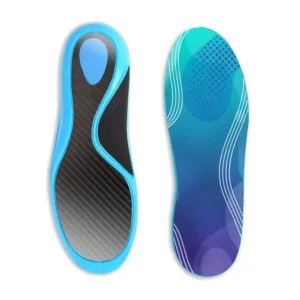
If you need a wholesale-ready line with standard specifications, then benchmark-driven companies and broad-line OEM factories make the most sense. If you need custom stiffness, unique top covers, special fit profiles, or channel-specific packaging, you should focus on OEM and ODM manufacturers, not retail-first brands. A company can be excellent in one area and still be the wrong fit for the other.
2. Project sourcing and long-term OEM need different priorities
For a project purchase, sample speed, development support, and engineering communication usually matter most. For long-term OEM, stability becomes more important: repeatability, batch consistency, long-run cost control, lead time discipline, and quality management. Buyers who expect “pilot-stage flexibility” and “mass-production efficiency” from the same setup without trade-offs are usually disappointed.
3. Price-first sourcing is rarely the same as low-risk sourcing
Carbon fiber insoles are not simple foam inserts. Material choice, rigidity, bonding, top-layer durability, fit tolerance, and comfort tuning all affect returns and user satisfaction. A cheaper quote may save money upfront, but if the product cracks, feels too harsh, or performs inconsistently, that “saving” disappears fast. For brands building long-term value, stable delivery is often worth more than shaving a few dollars off the landed cost.
4. Customization ability should be tested, not assumed
Many suppliers say they can customize. Far fewer can explain what exactly they can customize. Ask clear questions: Can you change shell rigidity? Can you adjust arch height? Can you combine carbon fiber with EVA, PU, or comfort foam layers? Can you adapt thickness for different shoe volumes? Can you support private packaging? The suppliers worth moving forward with are the ones that answer these questions specifically.
5. Medical-grade and sports-performance products must be separated
This is one of the most important buying decisions in the category. A performance carbon fiber insole is usually sold on propulsion, support, and comfort under movement. A medical foot plate is usually selected for motion control, protection, or load redistribution. If you are not clear about which one you need, you can easily end up speaking to the wrong type of company and comparing products that are not really alternatives.
A practical selection framework
- Define your lane first: sports performance, OEM/private label, or medical/orthotic support.
- Decide whether you need a standard product, a lightly modified product, or a full ODM/OEM build.
- Separate your shortlist into three buckets: benchmark brands, manufacturing partners, and medical specialists.
- Ask each company the same five questions about structure, materials, lead time, testing, and customization scope.
- Compare price only after you understand what each supplier can reliably deliver.
As a simple starting point, you can use this buyer logic:
- If you want to study the premium sports market, start with VKTRY, Superfeet, and Tread Labs.
- If you need a development-oriented OEM or ODM partner, shortlist WeiHai LongHe Composite, Ideastep, 3BU Technology, and Nedis.
- If your business is closer to orthotics, rehab, or mobility support, focus on Ottobock, Thuasne, and Kinetic Research.
That alone will save you a lot of time. It moves you away from random comparison and toward a sourcing process built around real fit.
WeiHai LongHe Composite is Your Trust carbon fiber ODM/OEM Manufacturer
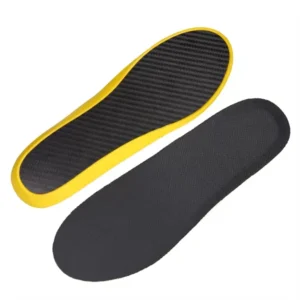
If your goal is not just to buy a finished carbon fiber insole but to build a product line, WeiHai LongHe Composite stands out as one of the most practical options in this list. The reason is simple: it is structured like a composite manufacturing partner, not like a consumer brand. That changes the conversation. Instead of forcing you into a fixed retail SKU, it gives you room to discuss rigidity, structure, layers, shape, development priorities, and long-term supply logic.
That is especially valuable for overseas customers who need ODM or OEM support. Many brands do not want to copy a generic product. They want a carbon fiber insole that fits their own market angle: sports performance, supportive everyday wear, premium orthotic support, or a niche application with unusual footwear constraints. LongHe is better suited to that kind of work because its background is rooted in carbon fiber and composite manufacturing. It understands that structural behavior matters, not just appearance.
There is also a business reason buyers should pay attention. LongHe is built around project collaboration and stable delivery rather than only one-off retail transactions. Since 2009, it has worked with a large number of custom customers, and helping those customers grow is a central part of its mission. That is exactly the mindset many B2B buyers want in an ODM supplier. A strong OEM relationship is not only about a good first sample. It is about whether the supplier can keep improving the design, solve production issues early, and support repeat orders without quality drift.
Why is WeiHai LongHe Composite worth choosing as your carbon fiber ODM/OEM manufacturer?
- It approaches carbon fiber insoles from a materials-and-structure perspective, not just a marketing perspective.
- It is suited to custom development, not only fixed standard products.
- It is aligned with B2B cooperation, including project development and repeat supply.
- It is a better fit for buyers who value engineering support, consistency, and low supply risk over simply chasing the cheapest quote.
If you are building a serious carbon fiber insole program and want a supplier that can grow with the project, WeiHai LongHe Composito is a strong partner to put at the top of your contact list.
Ti potrebbe interessare anche

Tubi compositi
L'attenzione si concentra sull'elevata rigidità e sul peso ridotto per strutture orientate alle prestazioni.
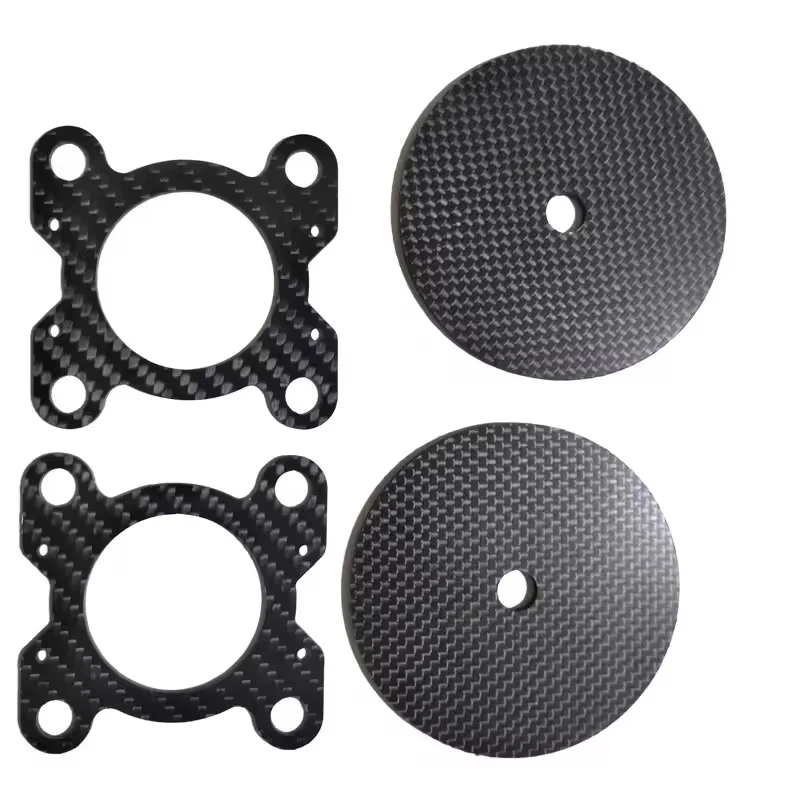
Lastre e piastre in fibra di carbonio
Stock di laminato piatto per il taglio CNC e componenti strutturali leggeri.
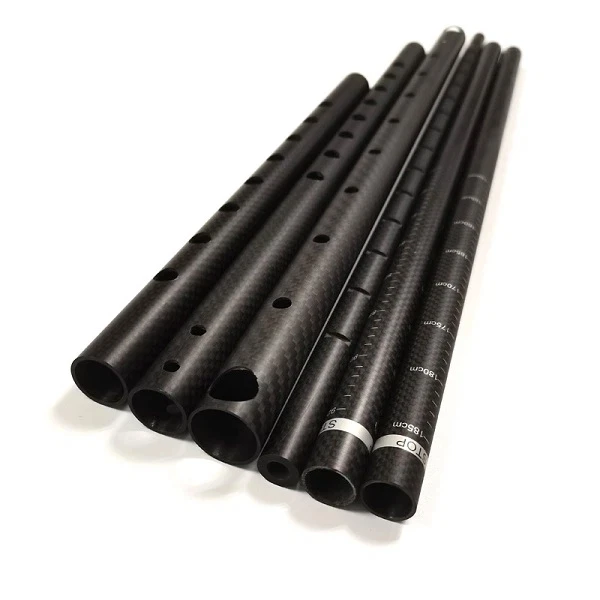
Aste in materiale composito
Prodotti compositi a forma di tondino forniti per assemblaggi industriali e OEM.
