Forged carbon fiber has become one of the most talked-about composite materials in recent years. Some people notice it because of its marbled appearance. Others are interested in it because it seems to offer a faster route to complex molded parts. But for engineers, sourcing teams, and OEM product developers, the real question is much simpler:
How does forged carbon fiber compare with traditional carbon fiber, and when is it actually the better choice?
The answer is not that one material is always better than the other. Traditional carbon fiber laminates remain the first choice for many load-oriented structural parts. Forged carbon fiber, however, solves a different manufacturing problem. It is often a smarter option when you need complex geometry, repeatable molding, and a distinctive surface finish in a scalable production program.
This guide explains what forged carbon fiber is, how it differs from traditional carbon fiber, and how to evaluate both materials from a practical OEM perspective.
What Is Forged Carbon Fiber?
Forged carbon fiber is a composite material made from chopped carbon fibers combined with resin and formed under heat and pressure in a closed mold.
Unlike traditional carbon fiber parts, which are built from woven fabrics or unidirectional layers, forged carbon uses short, randomly distributed carbon fiber pieces. These fiber chips are placed into a mold, compressed, and cured into the final shape.
That difference in fiber form changes both the appearance and the manufacturing logic.
Traditional carbon fiber is usually chosen when a designer wants to control fiber orientation carefully. By aligning fibers along a load path, manufacturers can tailor stiffness and strength in specific directions.
Forged carbon fiber works differently. Because the fibers are randomly oriented, it does not offer the same level of directional tuning. What it does offer is:
- better suitability for complex three-dimensional molded shapes
- more efficient molding of parts with ribs, bosses, thickness transitions, and curved surfaces
- a distinctive random “forged” visual pattern
- stronger repeatability for tooling-based production
In simple terms, traditional carbon fiber is often better for load-path engineering, while forged carbon fiber is often better for geometry-driven molded parts.
Is Forged Carbon Fiber Real?
Yes, forged carbon fiber is real carbon fiber.
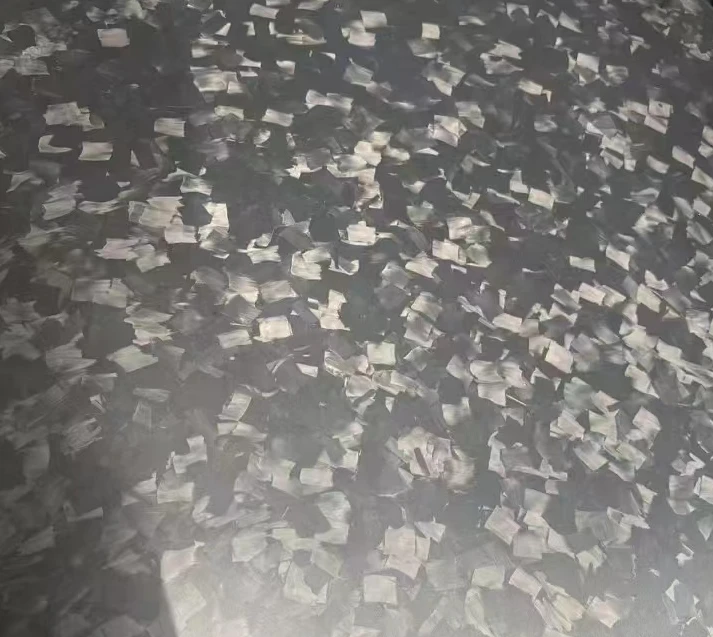
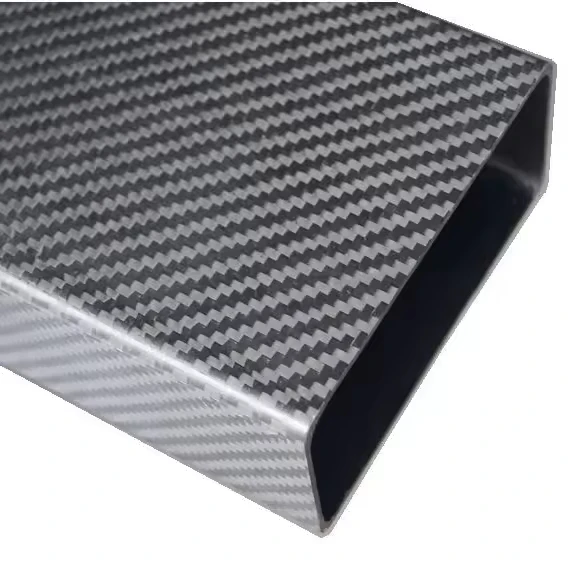
This question comes up often because forged carbon does not look like the woven checkerboard pattern many people associate with carbon fiber. Instead, it has a fragmented, marbled appearance. That look leads some buyers to assume it is decorative or fake.
It is not.
The carbon reinforcement is real. The difference is that the reinforcement is made from chopped fiber rather than continuous woven cloth.
That said, not every part sold as “forged carbon look” is true forged carbon fiber. In the market, you will also see:
- printed forged patterns
- hydro-dipped parts
- decorative laminate skins
- plastic parts with forged-style texture
So the right question is not just “Is forged carbon real?” but also “Is this specific product made from actual compression-molded forged carbon composite?”
For OEM buyers, that means you should ask for more than pictures. Ask about the molding process, base material, tooling method, thickness control, and post-processing route.
Why Is It Called Forged Carbon?
The name “forged carbon” can be confusing because the material is not forged in the same way steel or aluminum is forged.
The term comes from the way the material is compressed into shape under controlled pressure inside a mold, producing a dense, molded composite part. It is closer to compression molding than traditional metal forging, but the word “forged” helps describe the formed, consolidated nature of the material.
In the market, you may also see similar terms such as:
- fibra di carbonio forgiata
- forged composite
- forged carbon composite
- compression-molded chopped carbon composite
For SEO purposes, “forged carbon fiber” is still the clearest and most searchable phrase, so it makes sense to use it as the primary term in your article and page headings.
Which Is Better, Carbon Fiber or Forged Carbon?
The honest answer is: it depends on the part, the geometry, the load case, and the production plan.
If you are choosing between forged carbon fiber and traditional carbon fiber, this comparison table gives the fastest overview:
| Factor | Fibra di carbonio forgiata | Fibra di carbonio tradizionale |
|---|---|---|
| Fiber form | Chopped, random orientation | Continuous woven or unidirectional layers |
| Appearance | Random marbled pattern | Regular woven or laminate appearance |
| Best process fit | Compression molding | Layup, vacuum bagging, prepreg, infusion, autoclave |
| Complex 3D geometry | Excellent | More limited or more labor-intensive |
| Directional stiffness tuning | Limitato | Excellent |
| Structural optimization along load paths | Less precise | Better |
| Production repeatability | High in tooling-based molding | More dependent on layup consistency |
| Best for | Molded covers, housings, interior parts, shell-type components, complex cosmetic-structural parts | Tubes, sheets, flat laminates, load-critical structural parts, engineered stiffness applications |
So which is better?
Choose forged carbon fiber when:
- the part has complex shape and molded features
- surface appearance matters
- the program needs repeatable tooling-based production
- you want a more efficient route for shell-like or enclosure-type components
- the part is geometry-driven rather than purely load-direction-driven
Choose traditional carbon fiber when:
- fiber orientation needs to be engineered precisely
- the part is primarily structural
- the load path is predictable and important
- flat laminates, tubes, plates, or directional stiffness are critical
- you need maximum performance from continuous reinforcement
This is why forged carbon should not be treated as a replacement for all carbon fiber products. It is better understood as a different solution for a different type of part.
Is Forged Carbon Better Than Carbon Fiber?
Not in every case.
Many articles online oversimplify this comparison, but real-world part design is more nuanced. Forged carbon can be better than traditional carbon fiber in some manufacturing scenarios, while traditional carbon remains the better engineering choice in others.
A practical way to judge it is to ask these five questions:
- Is the part shape simple or complex?
If the geometry is highly three-dimensional, forged carbon often becomes more attractive. - Is the part mainly cosmetic, structural, or both?
Forged carbon works very well for structural-cosmetic parts, but continuous laminates are often preferred for primary structural members. - Do you need controlled fiber direction?
If yes, traditional carbon fiber usually wins. - Is the program prototype-only or intended for repeat production?
Forged carbon benefits more clearly when there is a tooling-based production plan. - Does visual identity matter to the final product?
Forged carbon has a premium visual signature that many brands want for visible parts.
From an OEM standpoint, forged carbon is often better for molded branded components, while traditional carbon is better for engineered load-bearing formats such as tubes, rods, sheets, and plates.
How Strong Is Forged Carbon Fiber?
Forged carbon fiber is strong, but it is important to define what “strong” means.
In composite design, people often mix up several different properties:
- tensile strength
- stiffness
- impact resistance
- fatigue behavior
- specific strength
- structural efficiency in the finished part
Forged carbon fiber can provide excellent performance for many molded components, especially where load is distributed across complex geometry. However, it usually does not match the peak directional performance of a well-designed traditional carbon laminate with continuous fibers aligned to the main load path.
That does not make forged carbon weak.
It means forged carbon is optimized differently.
A forged carbon part can still be:
- lightweight
- stiff enough for many functional applications
- dimensionally stable
- suitable for repeated production
- effective in complex molded forms that are difficult to realize with fabric layup
For buyers and product developers, the right question is not “Is forged carbon the strongest carbon fiber?” but rather:
Is forged carbon strong enough for this design, at this thickness, with this geometry, under this load case?
That is the question that should drive supplier evaluation.
Is Forged Carbon Fiber Stronger Than Steel?
This is another common question, but it needs a careful answer.
In terms of weight-to-performance, forged carbon fiber can outperform many metals in the right application. It is much lighter than steel and can provide excellent structural efficiency when the part is properly designed.
But saying “forged carbon fiber is stronger than steel” without context is too simplistic.
A steel part and a forged carbon part are not directly comparable unless you define:
- part thickness
- geometry
- load type
- mounting condition
- safety factor
- failure mode
In practice, forged carbon is often chosen instead of metal when the project needs weight reduction, corrosion resistance, and premium design freedom. But whether it is “stronger” depends entirely on the engineering context.
For an OEM buyer, the more useful comparison is:
Can forged carbon replace this metal part while meeting stiffness, durability, weight, and production targets?
That is a far better design question than a generic strength slogan.

Is Forged Carbon Cheaper?
Forged carbon can be cheaper, but only under the right conditions.
This is where many buyers make the wrong assumption. They see molded production and assume forged carbon must always reduce cost. That is not always true.
When forged carbon may cost more
- low-volume or one-off parts
- projects without a tooling budget
- parts that could be made more simply from flat laminate
- applications where the forged appearance adds value but not function
When forged carbon may become more cost-effective
- repeat production with dedicated molds
- parts with complex geometry
- products that would be labor-intensive in traditional layup
- OEM programs that need dimensional consistency across batches
- private-label or branded parts where appearance matters
A simple rule is this:
Traditional carbon fiber is often more flexible for engineering prototypes and directional structures. Forged carbon becomes more attractive when the design is mold-ready and the program needs scalable repeatability.
So the cost discussion should include more than material price. It should include:
- tooling investment
- cycle time
- labor intensity
- machining needs
- scrap rate
- surface finishing
- production volume
That is the real cost structure buyers should compare.
Does Forged Carbon Rust?
No, forged carbon does not rust like steel.
Rust is a corrosion process associated with ferrous metals. Forged carbon fiber is a composite, so it does not rust in the way steel does.
However, “does not rust” does not mean “requires no care.”
What can still happen over time includes:
- surface scratching
- clear coat wear
- UV-related aging if the surface system is poor
- edge damage from impact or abrasion
- finish degradation in harsh environments
If the part is used outdoors, in automotive settings, or in high-contact environments, the finish system matters just as much as the composite structure.
For visible forged carbon components, proper coating and finishing are part of performance, not just appearance.
Does Forged Carbon Scratch Easily?
Forged carbon can scratch, especially when the visible surface relies on a gloss clear coat.
In many products, what users perceive as “the forged carbon surface” is actually the coated outer finish. That means scratch resistance depends on factors such as:
- coating quality
- clear coat thickness
- surface hardness
- whether the part is polished, matte, or high gloss
- how the part is used in daily service
A forged carbon interior trim piece, a phone case, and an industrial housing will not behave the same way in use.
If scratch resistance is a concern, buyers should not only ask whether the base material is forged carbon. They should also ask:
- What surface finish is used?
- Is it matte or gloss?
- Is there a protective clear coat?
- Can the finish be reworked if scratched?
- Is the part designed for high-contact service?
This is especially important for branded consumer products and visible automotive components, where cosmetic durability affects perceived quality.
Can You Repair Forged Carbon Fiber?
Yes, forged carbon fiber can sometimes be repaired, but the type of damage matters.
Cosmetic damage
Minor issues such as light surface scratching, finish dullness, or clear coat wear can often be improved through:
- refinishing
- polishing
- recoating
- localized cosmetic repair
Moderate visible damage
If the surface is chipped or locally damaged, some restoration may be possible, but matching the forged visual pattern perfectly can be difficult.
Structural damage
Cracks, delamination, impact damage, or failure around mounting points are more serious. In these cases, repair may not be the best option. Replacement is often safer and more predictable, especially for production parts where consistency matters.
For OEM programs, the best approach is prevention:
- correct wall thickness
- proper rib and boss design
- controlled mold filling
- suitable inserts and mounting details
- realistic load expectations
Repairability should never be used as a substitute for good composite part design.
What Does Forged Carbon Fiber Look Like?
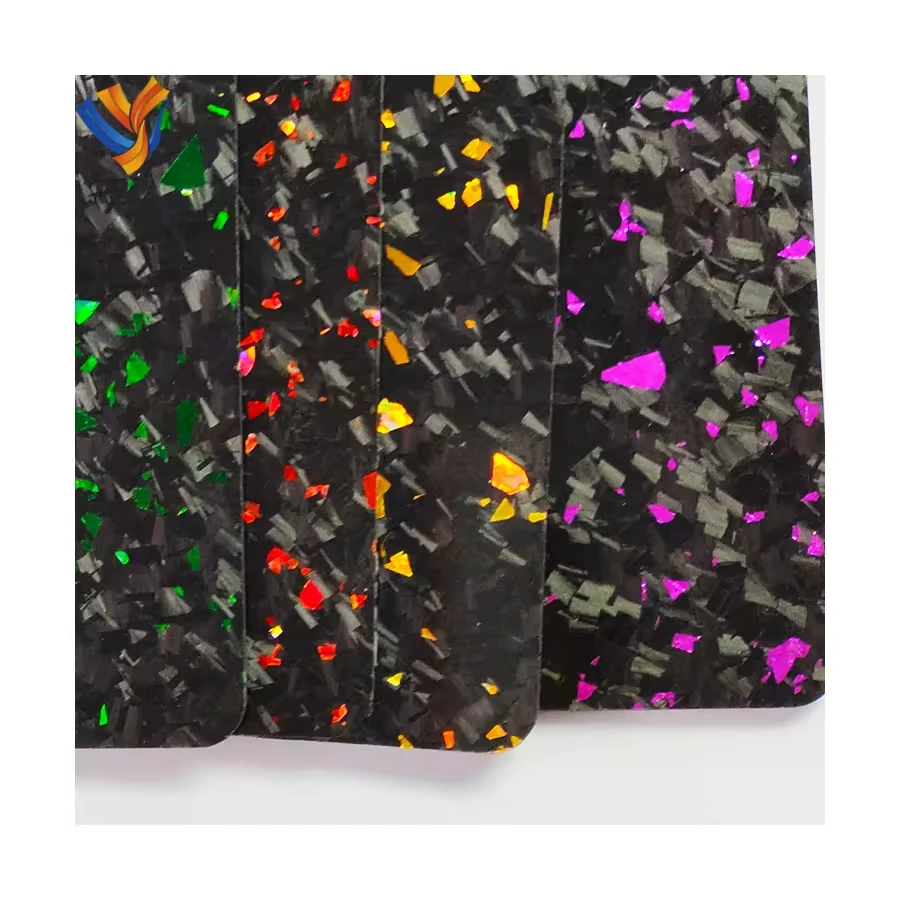
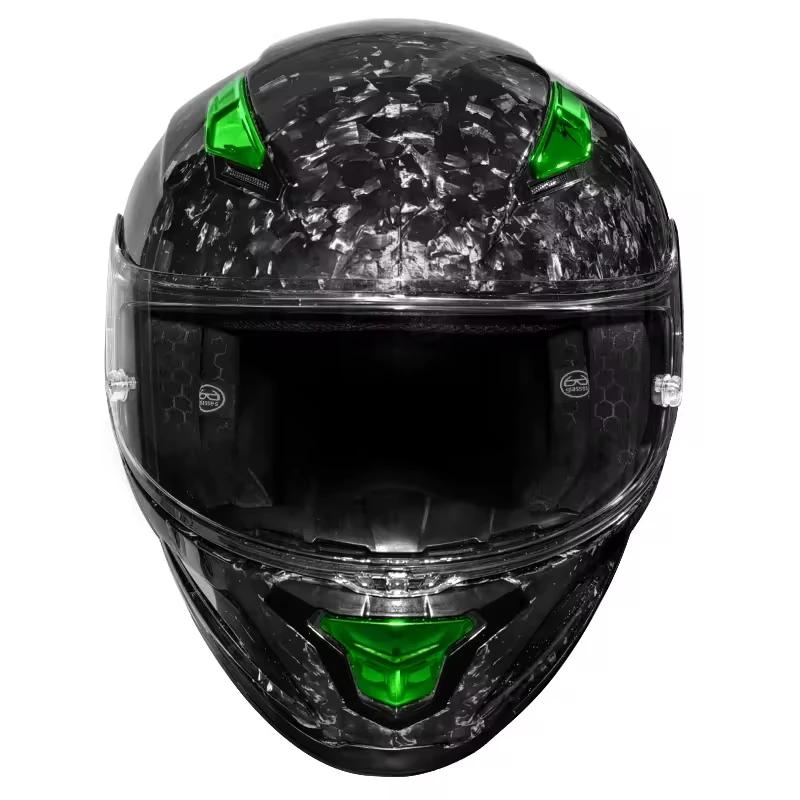
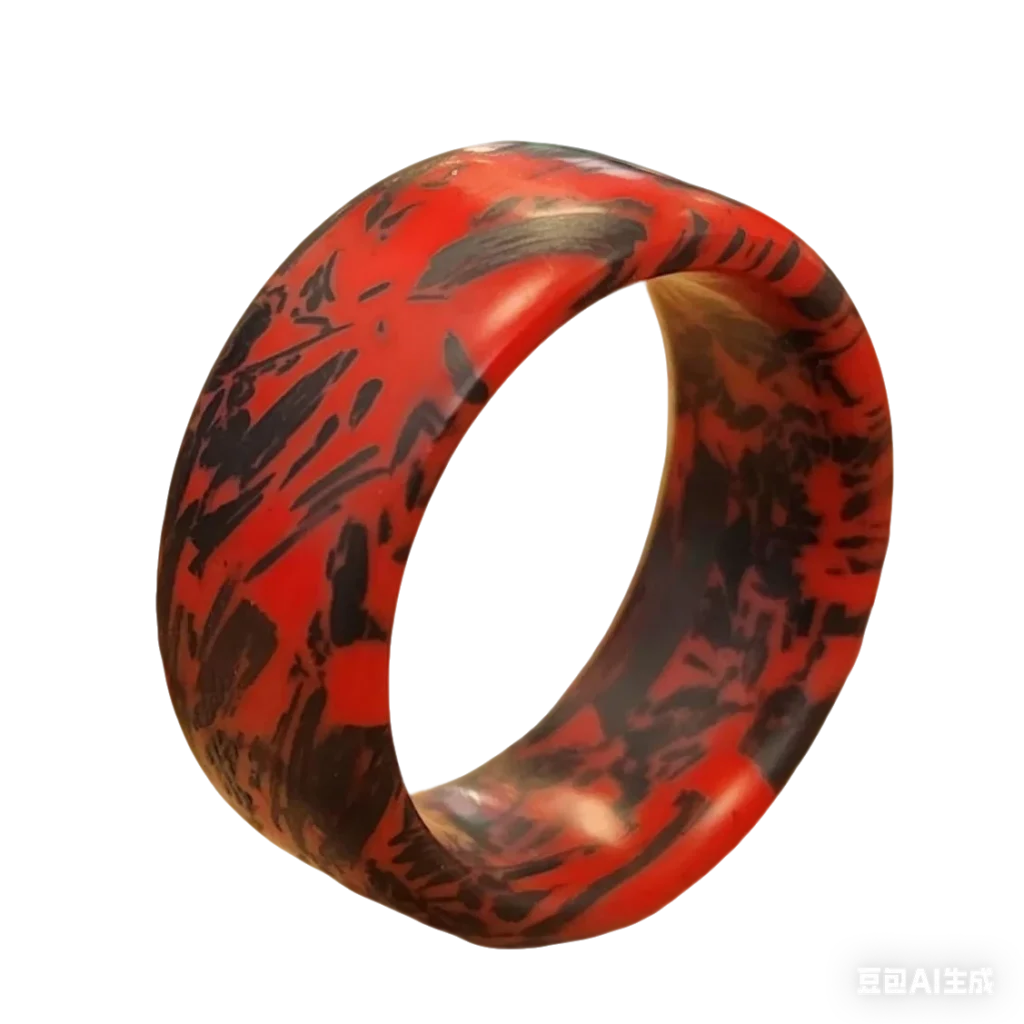
Forged carbon fiber has a distinctive random visual texture.
Unlike woven carbon fiber, which shows a regular and familiar checker or twill pattern, forged carbon looks more fragmented. The fibers appear as scattered chips or flakes within the resin matrix, creating a marbled effect.
That appearance is one of the main reasons forged carbon has become popular in:
- automotive trim
- motorcycle components
- electronics housings
- lifestyle accessories
- premium visible OEM parts
For some brands, that look is a real advantage. It feels more modern, more aggressive, and more distinctive than standard woven carbon.
But there is also a practical point here: the appearance should support the product positioning.
If a buyer wants visual consistency and a classic composite look, traditional carbon fiber may still be the better fit. If the product needs a more differentiated, molded, premium surface identity, forged carbon often stands out.
When Should You Choose Forged Carbon Fiber?
From a practical manufacturing perspective, forged carbon fiber makes the most sense when all or most of the following conditions apply:
- The part has complex 3D geometry.
- Continuous fiber orientation is not the main design requirement.
- A visible premium surface is desirable.
- The project is moving toward repeat production.
- Tooling-based consistency matters.
- The part is a molded component rather than a tube, plate, or flat laminate.
- The product needs a balance of appearance, dimensional control, and lightweight performance.
Typical examples include:
- interior automotive trim
- housings and covers
- molded accessory parts
- shell-type consumer products
- branded OEM components
- small to medium forged composite assemblies
By contrast, if your project is based on:
- tubi in fibra di carbonio
- aste in fibra di carbonio
- flat sheets and plates
- stiffness-critical beam-like structures
- engineered layup around known load paths
then traditional carbon fiber formats will often remain the better choice.
That distinction is especially important for industrial buyers. The right decision is usually not about material trend. It is about matching material architecture to part function and production logic.
FAQ
Is forged carbon actually forged?
Not in the same way metal is forged. The term usually refers to a pressure-formed composite molding process using chopped carbon fiber and resin.
Is forged carbon fiber real carbon fiber?
Yes. It uses real carbon fiber reinforcement, but the fibers are chopped rather than woven into continuous cloth.
Is forged carbon fiber more expensive?
It can be, especially in low volumes. In repeat tooling-based production, it may become more competitive depending on part geometry and labor savings.
Can you paint forged carbon fiber?
Yes, but painting covers the natural forged pattern. Many buyers prefer a clear-coated surface so the forged appearance remains visible.
What is another name for forged carbon fiber?
You may also see terms like forged carbon, forged composite, or compression-molded chopped carbon composite.
Final Thoughts
Forged carbon fiber is not a marketing gimmick, and it is not a universal replacement for traditional carbon fiber. It is a legitimate composite solution with its own manufacturing logic, visual identity, and production advantages.
If your part depends on continuous fiber alignment and directional structural performance, traditional carbon fiber is usually the stronger choice.
If your part depends on complex molded geometry, repeatable production, and a distinctive visible finish, forged carbon fiber may be the smarter solution.
Per OEM teams, the best results come from evaluating forged carbon at the part-design stage, not after the geometry has already been locked around a different process.
Ti potrebbe interessare anche

Tubi compositi
L'attenzione si concentra sull'elevata rigidità e sul peso ridotto per strutture orientate alle prestazioni.
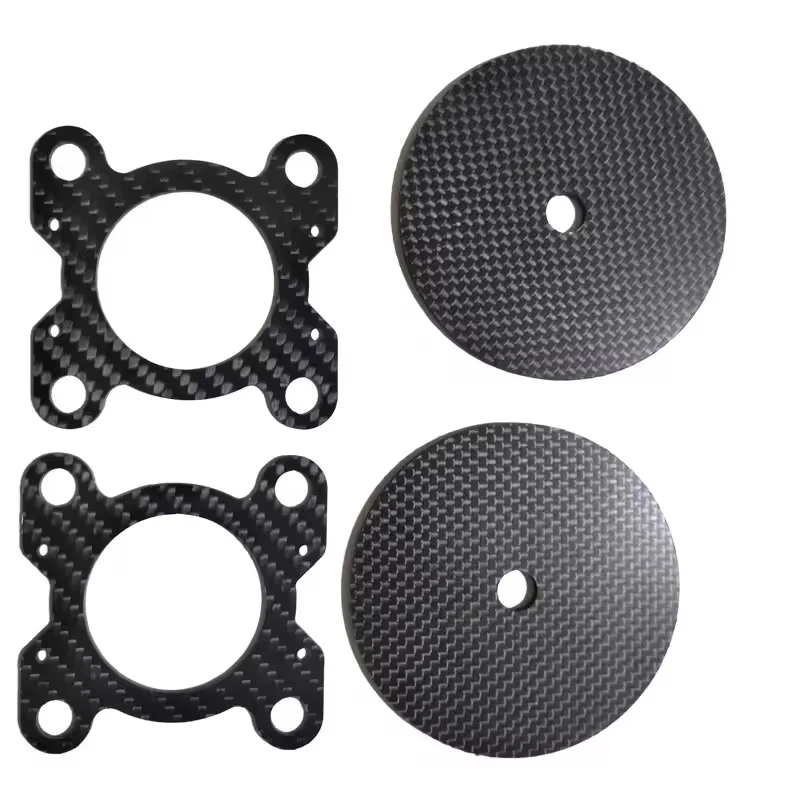
Lastre e piastre in fibra di carbonio
Stock di laminato piatto per il taglio CNC e componenti strutturali leggeri.
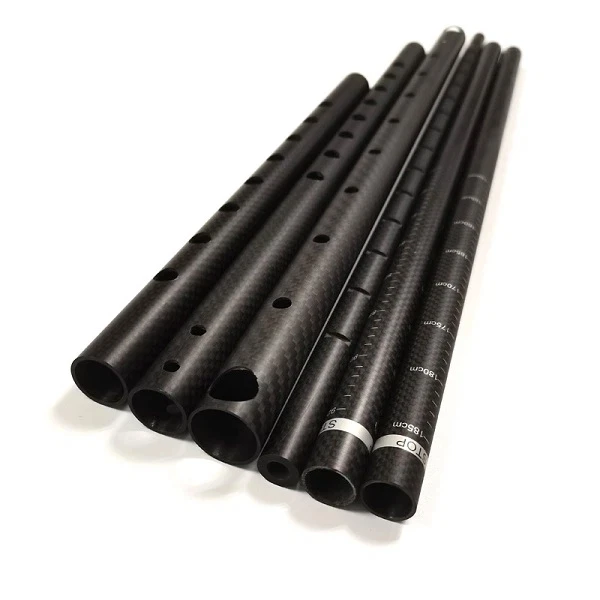
Aste in materiale composito
Prodotti compositi a forma di tondino forniti per assemblaggi industriali e OEM.
