
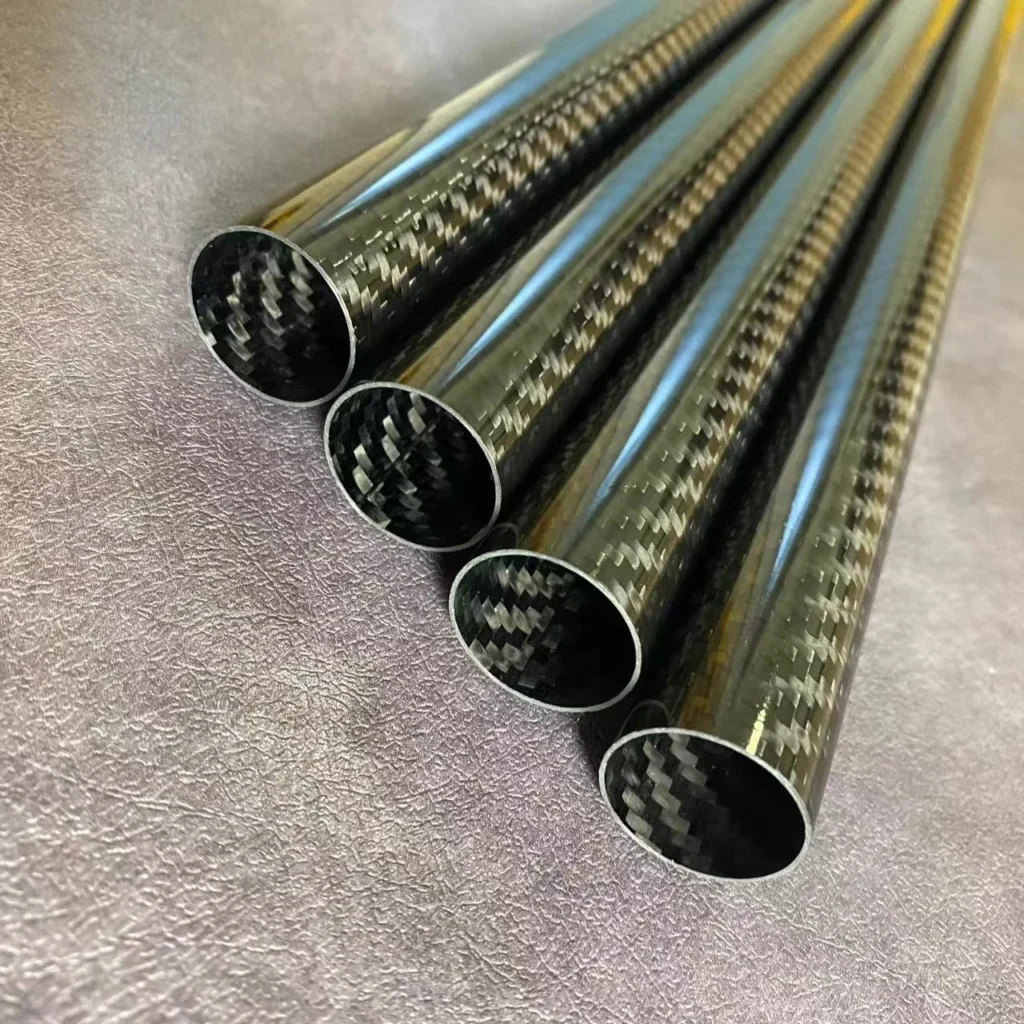
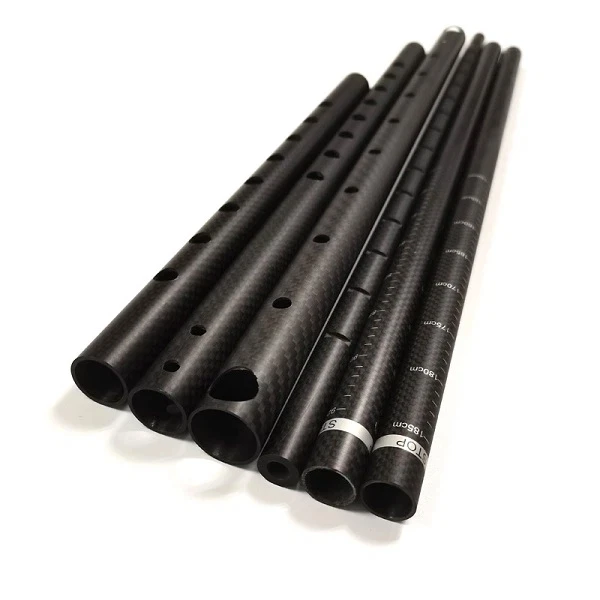
Carbon fiber tubes are used in many products today. You can see them in drones, sports gear, robot arms, automative parts, outdoor tools, and many other lightweight parts. They are popular because they are strong, light, and do not rust.
But here is the important part: not all carbon fiber tubes are made in the same way. Two common types are pultruded tubes y roll wrapped tubes. They may look similar from the outside, but they do not perform the same in real use. Different making methods give them different strengths, limits, and costs.
If you are buying carbon fiber tubes for an OEM project, this choice matters. The right tube can help your product work better and last longer. The wrong tube can cause cracking, bending, or extra cost. This guide will help you understand the difference in a simple way.
Why This Choice Matters
Many buyers first look at the tube size. They ask about outer diameter, inner diameter, wall thickness, and length. That is important, but it is only part of the answer.
The other part is how the tube is made. This decides where the fibers sit and which direction the tube is strongest in. That is why two tubes with the same size may perform very differently. One may be better for straight pushing and pulling. The other may be better for bending and twisting.
So the real question is not only, “What size tube do I need?” The better question is, “What kind of load will this tube see in real use?”
How Pultruded Tubes Are Made
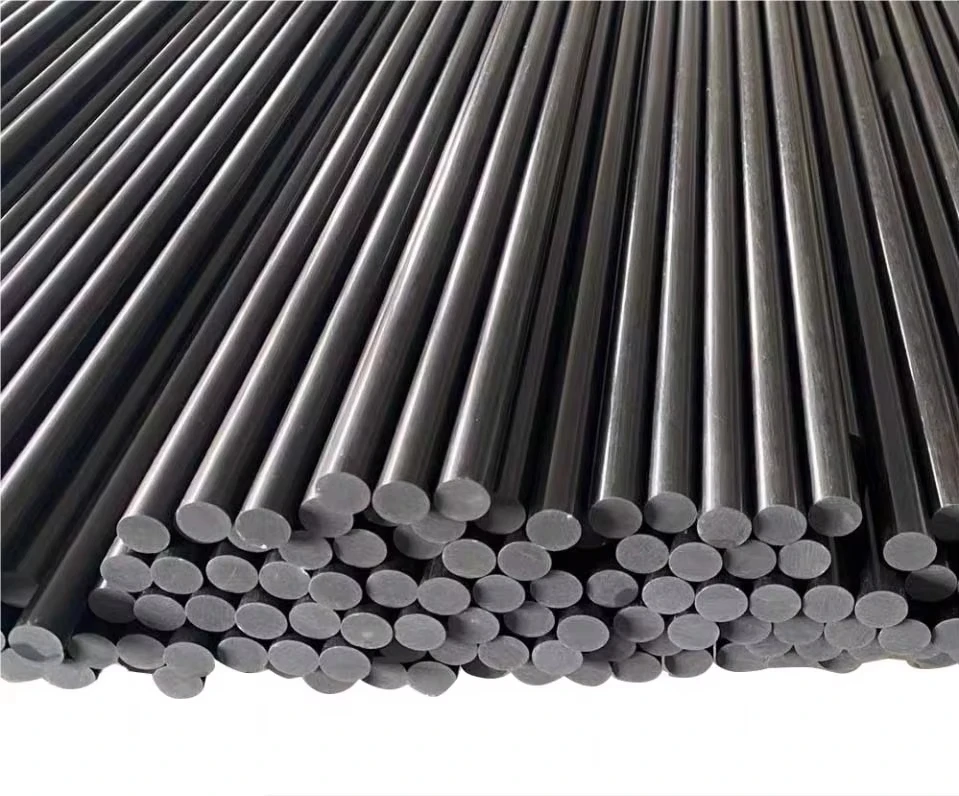
A pultruded carbon fiber tube is made in a continuous process. The fibers are pulled through resin and then through a heated die. This creates a tube with a constant shape. Most of the fibers run along the length of the tube. That is why pultruded tubes are very good in the length direction.
This process is a good choice when you need:
- long straight tubes
- stable production
- good value
- strong lengthwise stiffness
Because the fibers mostly run straight, pultruded tubes are often a smart choice for parts that see mainly axial load. That means the force goes along the tube, not across it. Pultrusion is also known for being cost-effective for long, straight, repeat jobs.
In simple words:
Pultruded tubes are usually the better choice when the job is straight, simple, and cost-sensitive.
How Roll Wrapped Tubes Are Made
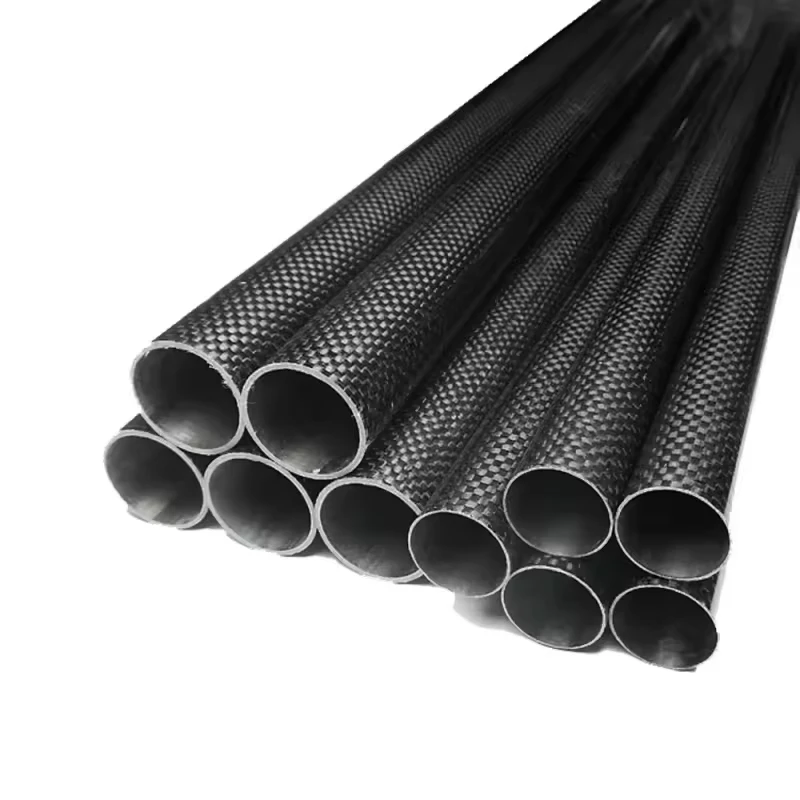
A roll wrapped carbon fiber tube is made in a different way. Layers of carbon fiber are wrapped around a mandrel and then cured. The maker can place the fibers in different directions, such as 0°, ±45°, and 90°. This gives more control over how the tube behaves.
Because of this layered structure, roll wrapped tubes usually handle bending, twisting, and crushing better than pultruded tubes. They may cost more, but they give more design freedom and more balanced performance in real applications.
In simple words:
Roll wrapped tubes are usually the better choice when the job is more demanding and the load is not only straight.
The Biggest Differences in Real Use
The easiest way to understand the difference is to look at what each tube does best.
| Point | Pultruded Tube | Roll Wrapped Tube |
|---|---|---|
| Main fiber direction | Mostly along the tube length | Can use several fiber directions |
| Best at | Straight lengthwise load | Mixed loads, bending, twisting |
| Cost | Usually lower | Usually higher |
| Flexibilidad de diseño | Baja | Más alto |
| Crush resistance | Baja | Better |
| Bending performance | Good, but limited | Usually better |
| Torsion performance | Limitado | Better |
This does not mean pultruded is bad and roll wrapped is always better. It means they are built for different jobs. Pultruded tubes are strong where the load goes down the length. Roll wrapped tubes are stronger when the load is more complex.
A simple example helps:
- If you need a straight support tube, pultruded may be enough.
- If you need a drone arm or camera boom that will bend and twist, roll wrapped is often the safer choice.
Where Pultruded Tubes Work Best
Pultruded tubes work well in projects where the force is mostly straight and the shape stays simple. They are often used in industrial frames, telescopic poles, lightweight trusses, and other long straight parts. Easy Composites also points to uses such as push-pull rods, UAV-related parts, robotics, and tent poles when the loading suits this type of tube.
Pultruded tubes are often a good fit when you want:
- lower cost
- repeatable straight lengths
- good axial stiffness
- faster large-volume supply
But pultruded tubes also have limits. They are not the best choice when the tube must resist strong twisting, side crush, or more complex loading. Sources comparing the two methods repeatedly point out that pultruded tubes have weaker transverse and torsional behavior because the fibers are mostly axial.
So if your part will be clamped hard, twisted often, or loaded from many directions, a simple pultruded tube may not be enough.
Where Roll Wrapped Tubes Make More Sense
Roll wrapped tubes make more sense when performance matters more than the lowest cost. Because the fiber angles can be adjusted, these tubes are often used in high-performance parts where the load is not simple. Common examples include UAV arms, robotics, camera equipment, sports shafts, and other parts that must stay light but also resist bending and twist.
Roll wrapped tubes are often a better fit when you want:
- better bending strength
- better crush resistance
- better torsion resistance
- more custom layup options
- better finish or tighter tube control
This is why many buyers choose roll wrapped tubes for products that need better all-around performance, not only straight-line strength.
Common Applications and the Better Match
Below is a simple guide. It is not a hard rule, but it helps buyers make a faster first choice.
| Aplicación | Better Starting Choice | Why |
|---|---|---|
| Straight support members | Pultruded | Good value for axial load |
| Telescopic poles | Pultruded or roll wrapped | Depends on fit, load, and surface need |
| Drone arms | Roll wrapped | Better for bending and twist |
| Robot arms and links | Roll wrapped | Better for mixed loads |
| Sports shafts | Roll wrapped | Better all-around performance |
| Industrial frames | Pultruded | Cost-effective for straight structures |
| Camera booms and poles | Roll wrapped | Better bending performance |
These examples are also close to the application areas shown on LongHe’s site, including outdoor tools, robot & automation, UAV & drone, sports equipment, and industrial uses. LongHe also states that tube diameter, wall thickness, fiber orientation, and resin systems can be customized, which is important when buyers need more than a standard catalog size.
A Simple Buying Checklist for OEM Buyers
Before you send an inquiry, try to prepare these points. This makes it much easier for a supplier to recommend the right tube.
1. Tube size
Share the outer diameter, inner diameter, wall thickness, and length.
2. Main load
Tell the supplier if the tube will see:
- pushing or pulling
- bending
- twisting
- crushing
- mixed loads
3. Surface and fit
Do you need a smooth finish, a clear cosmetic look, or tight fit for telescoping?
4. Quantity
Is this for sample testing, a small pilot run, or long-term volume supply?
5. Joining method
Will the tube be bonded, clamped, drilled, or connected to metal parts?
6. Target application
Tell the supplier the real use, such as drone arm, telescopic pole, sports shaft, or robot boom.
This matters because carbon fiber tube performance depends on the actual design and use case, not only the material name. Some suppliers also suggest asking for bend, axial, and crush test data for the exact tube size and layup you plan to use.
Questions Buyers Often Ask Before Ordering
Is a pultruded carbon fiber tube strong?
Yes, it is strong, especially along the length of the tube. That is one of its main advantages. But it is less strong against twisting and crushing than a roll wrapped tube.
What does pultruded mean?
“Pultruded” comes from the idea of pull + extrusion. The fibers are pulled through resin and through a heated die to make a constant shape.
Is roll wrapped always better?
No. Roll wrapped is often better for mixed loads and higher performance, but pultruded is often better for straight, cost-effective, high-volume parts.
Can I buy custom carbon fiber tubes?
Yes. LongHe says tube diameter, wall thickness, fiber orientation, and resin systems can be customized based on project needs.
Which one should I choose?
Choose based on the real job:
- choose pultruded for straight, simple, cost-sensitive use
- choose roll wrapped for better all-around structural performance
That is the best starting rule for most buyers.
Final Thoughts
Pultruded tubes and roll wrapped tubes are both useful. Neither one is “best” for every job.
If your product needs a straight tube with good axial stiffness and lower cost, pultruded is often the smart choice. If your product needs better bending, twisting, and crush resistance, roll wrapped is often the better path.
For OEM buyers, the safest move is to choose the tube based on the real load, fit, and application, not only on price or appearance. That leads to better product performance and fewer problems later.
You may also like

Tubos compuestos
Se centra en la alta rigidez y el bajo peso de las estructuras orientadas al rendimiento.
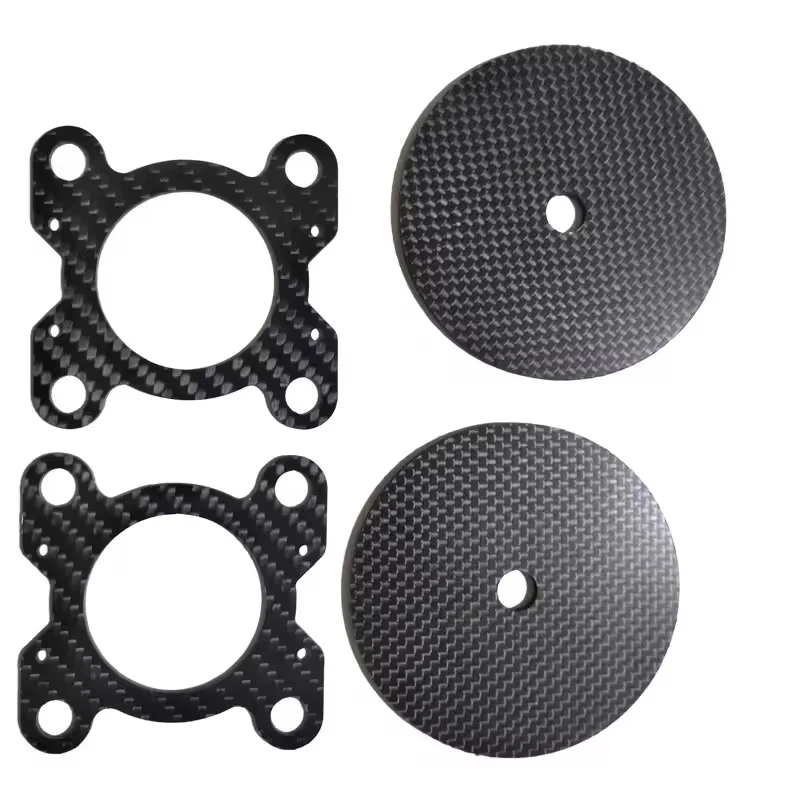
Carbon Fiber Sheets & Plates
Flat laminate stock for CNC cutting and lightweight structural components.
Varillas de material compuesto
Rod-shaped composite products supplied for industrial and OEM assemblies.
