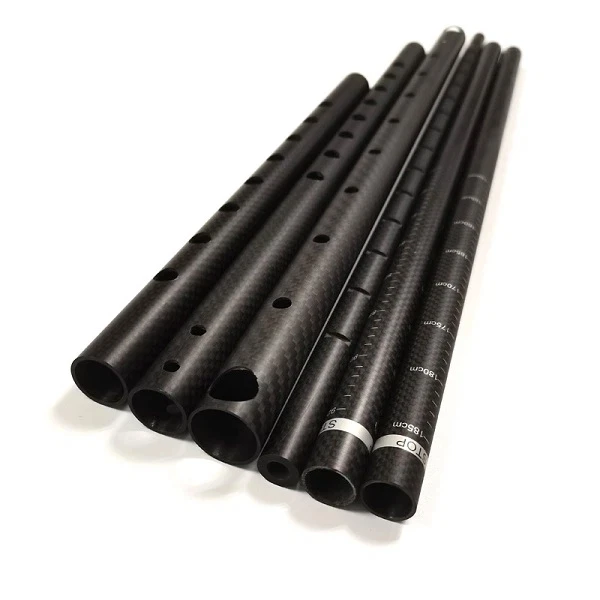
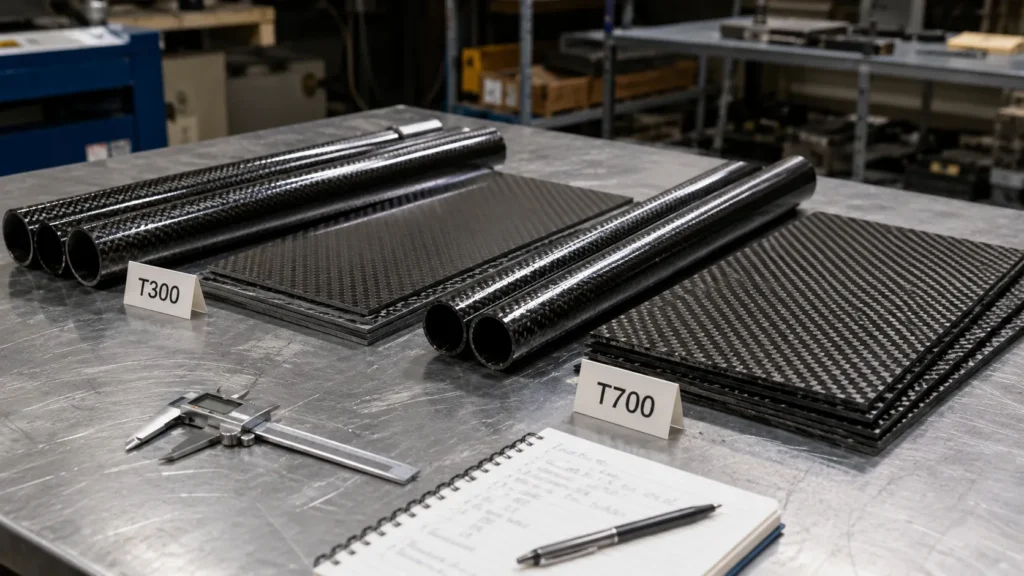
Choosing between T300 and T700 carbon fiber is not always easy.
Many buyers know that carbon fiber is light and strong. But when they start a real project, they may see different fiber grades, such as T300, T700, T800, 3K, 12K, and UD carbon fiber. Then the question becomes simple but important: which one should I choose?
For many carbon fiber tubes, sheets, plates, and custom parts, T300 and T700 are two common options. T700 is stronger than T300, but that does not mean T700 is always the better choice. The right grade depends on the product shape, load, wall thickness, surface finish, cost target, and final application.
What Does T300 vs T700 Carbon Fiber Mean?
T300 and T700 are carbon fiber grades, but they do not describe the whole finished product.
This is a very important point. T300 and T700 usually refer to the carbon fiber filament itself. A finished carbon fiber tube, sheet, or custom part is not only made from fiber. It also includes resin, layup design, fiber direction, wall thickness, curing process, and surface treatment.
So when a buyer asks, “Is T700 better than T300?” the answer is:
Yes, T700 has higher tensile strength than T300.
But no, T700 is not always better for every product.
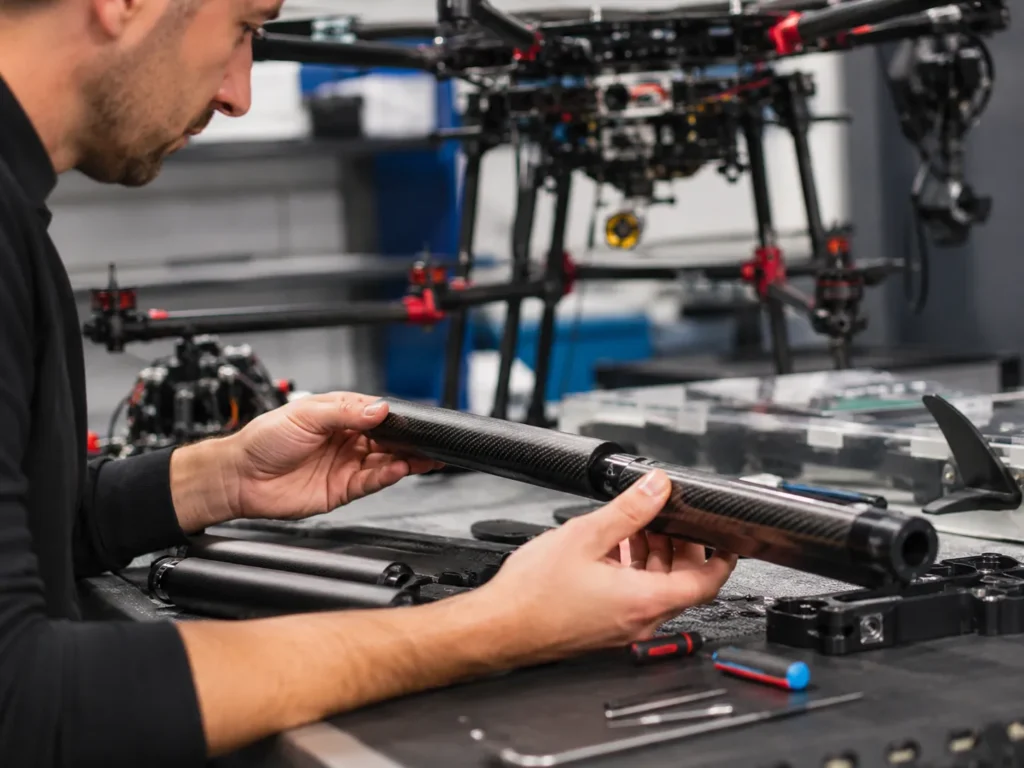
For example, if you need a simple carbon fiber cover plate, T300 may already be strong enough. If you need a lightweight structural tube for sports equipment, drone parts, or telescoping poles, T700 may be a better option.
The material grade is only one part of the final performance.
Quick Comparison: T300 vs T700 Carbon Fiber
T300 and T700 are both standard modulus carbon fibers, but T700 has higher tensile strength.
The table below gives a simple comparison.
| Item | T300 Carbon Fiber | T700 Carbon Fiber | What It Means for Buyers |
|---|---|---|---|
| Fiber type | Standard modulus carbon fiber | High-strength standard modulus carbon fiber | Both are common in composite products |
| Tensile strength | About 3,530 MPa | About 4,900 MPa | T700 can handle higher tensile loads |
| Tensile modulus | About 230 GPa | About 230 GPa | Stiffness is similar at fiber level |
| Elongation | About 1.5% | About 2.1% | T700 can take more strain before breaking |
| Density | About 1.76 g/cm³ | About 1.80 g/cm³ | Both are lightweight materials |
| Cost | Lower | Higher | T300 is more cost-friendly |
| Best for | General tubes, sheets, plates, panels, covers | Higher-strength tubes, sports parts, drone parts, custom structures | Choose based on load and budget |
These numbers are useful, but they should not be the only basis for choosing a material. In real products, the final strength also depends on how the carbon fiber is used.
A well-designed T300 tube may perform better than a poorly designed T700 tube. The layup, thickness, fiber angle, and resin system all matter.
What Is T300 Carbon Fiber?
T300 carbon fiber is a widely used standard carbon fiber for general composite parts.
T300 is often used when a product needs good strength, light weight, stable quality, and reasonable cost. It is common in carbon fiber sheets, plates, tubes, rods, panels, covers, and many custom parts.
For many buyers, T300 is the practical choice. It gives a good balance between performance and price. It is not the strongest carbon fiber grade, but it is strong enough for many real applications.
T300 is often suitable for:
- Carbon fiber sheets and plates
- Decorative carbon fiber panels
- General carbon fiber tubes
- Carbon fiber rods
- Lightweight covers
- Equipment panels
- Consumer product parts
- Industrial support parts
- Cost-sensitive OEM projects
If your product does not need very high strength, T300 can be a smart choice. It helps control cost while still giving the main benefits of carbon fiber: low weight, good stiffness, clean appearance, and corrosion resistance.
T300 is also useful for products where appearance, shape, thickness, or machining accuracy matters more than extreme strength.
For example, a carbon fiber panel used as a cover or support surface may not need T700. A T300 carbon fiber sheet with the right thickness and surface finish may already meet the requirement.
What Is T700 Carbon Fiber?
T700 carbon fiber is a higher-strength carbon fiber often used for more demanding products.
Compared with T300, T700 has higher tensile strength. This means it can carry higher pulling force before failure. That makes it useful for products that need better strength-to-weight performance.
T700 is often used in sports equipment, aerospace-related parts, drone frames, high-strength tubes, pressure vessels, and lightweight structural components. It is also common in products where buyers want a stronger material without moving to a much more expensive high-modulus fiber.
T700 is often suitable for:
- Lightweight structural tubes
- Telescoping carbon fiber poles
- Drone and UAV components
- Sports equipment parts
- High-strength carbon fiber rods
- Thin-wall carbon fiber tubes
- Custom load-bearing parts
- Products that need higher impact resistance
- Parts where weight reduction is very important
T700 can be a good choice when the product must be light but also strong. For example, if a carbon fiber tube needs a thinner wall but still needs to carry load, T700 may help improve the design.
However, T700 usually costs more than T300. It may not be necessary for every project.
The Main Difference Is Strength, Not Stiffness
Many buyers think T700 is much stiffer than T300, but this is not always correct.
At the fiber level, T300 and T700 have similar tensile modulus. The modulus is related to stiffness. Both are standard modulus carbon fibers. That means T700 is mainly stronger, but not much stiffer than T300.
This is one of the most common misunderstandings.
If your main problem is bending stiffness, simply changing from T300 to T700 may not solve everything. You may need to adjust the tube diameter, wall thickness, layup direction, or structure design.
For example, a larger diameter carbon fiber tube can often improve stiffness more than changing fiber grade. A thicker wall can also increase bending strength and stiffness. A correct layup can make the tube stronger in the direction where the load is applied.
So the question should not only be:
“Should I use T300 or T700?”
A better question is:
“What product design can meet my load, weight, and cost target?”
In many projects, material grade and structure design must work together.
Is T700 Always Better Than T300?
No. T700 is stronger, but it is not always the better choice.
This is important for buyers who want to control cost. If the product does not need high tensile strength, T700 may only increase the material cost without giving a clear benefit.
For example, if you need a carbon fiber sheet for decoration, a machine cover, or a light-duty panel, T300 may be enough. You may get a better result by choosing the right thickness, surface finish, and machining process.
T700 is more useful when the product is close to its strength limit. If the part must be thin, light, and strong at the same time, T700 may bring real value.
Here is a simple way to think about it:
Choose T300 when you need good performance at a reasonable cost.
Choose T700 when you need higher strength and better weight control.
The best choice depends on the product.
When Should You Choose T300 Carbon Fiber?
T300 is a good option for many general carbon fiber products.
If your project needs light weight, good stiffness, stable quality, and a clean carbon fiber appearance, T300 is often enough. It is also a better choice when cost is important.
You can choose T300 when:
- The product is not under very high load.
- The part is mainly used for appearance or light structure.
- The wall thickness can be adjusted to meet strength needs.
- The customer has a clear cost target.
- The product uses standard sizes or simple shapes.
- The part does not need extreme weight reduction.
- The design can use thickness or layup to improve strength.
T300 is common for carbon fiber sheets, plates, tubes, panels, covers, and many OEM parts. It is also suitable for prototypes when the customer wants to test the shape, surface, or assembly first.
For many industrial and commercial products, T300 is the more practical material.
For example, a carbon fiber plate used as a support board may need good flatness and surface quality. If the load is not very high, T300 can work well. The buyer may not need to pay extra for T700.
A general carbon fiber tube used as a handle, support rod, or frame part may also use T300. If the tube size and wall thickness are correct, it can offer good strength and stiffness.
When Should You Choose T700 Carbon Fiber?
T700 is a better choice when strength and weight are both important.
If your product must be very light, but also needs to handle higher load, T700 can be more suitable. It is often used when the design has less room for extra wall thickness or larger tube diameter.
You can choose T700 when:
- The product is a load-bearing part.
- The wall thickness must stay thin.
- The product needs higher tensile strength.
- The part needs better strength-to-weight ratio.
- The application is sports, outdoor, drone, or structural use.
- The buyer wants a higher-performance carbon fiber product.
- The product may face repeated stress or impact.
- The customer accepts a higher material cost.
T700 is often used for lightweight tubes, telescoping poles, drone parts, sports equipment, and high-strength custom components.
For example, a telescoping carbon fiber pole needs to be light, straight, and strong. If the pole is too heavy, it is hard to use. If the wall is too thin, it may fail under load. In this case, T700 may help improve strength without adding too much weight.
For drone parts, weight is also important. A small weight change can affect flight time and performance. T700 may be a better option for arms, frames, or structural supports where strength and low weight are both needed.
For sports products, T700 can also be useful. It may help improve strength and reduce weight, especially when the part needs to handle repeated bending or impact.
T300 vs T700 for Carbon Fiber Tubes
For carbon fiber tubes, the material grade is important, but the tube design is even more important.
A carbon fiber tube can fail in different ways. It may fail from bending, compression, twisting, impact, or local crushing. T300 and T700 only tell part of the story.
When choosing T300 or T700 for carbon fiber tubes, you should also check:
- Outer diameter
- Inner diameter
- Wall thickness
- Tube length
- Fiber direction
- Layup structure
- Load direction
- Surface finish
- Connection method
- Final use environment
If the tube needs better tensile strength and lighter weight, T700 may be better. If the tube is for general support or appearance, T300 may be enough.
For long tubes, bending stiffness is often important. In that case, tube diameter and wall thickness may have more effect than fiber grade. If the tube bends too much, changing from T300 to T700 may not fix the problem by itself.
For telescoping tubes, there are more things to consider. Each tube section must fit smoothly. The wall thickness, tolerance, surface finish, and locking method all affect performance. T700 can improve strength, but good manufacturing control is still necessary.
For custom carbon fiber tubes, the best solution is usually not just “T300 or T700.” It is a full design decision.
T300 vs T700 for Carbon Fiber Sheets and Plates
For carbon fiber sheets and plates, T300 is often enough for many projects.
Carbon fiber sheets are often used for panels, covers, support plates, machine parts, drone plates, and decorative surfaces. In many of these uses, thickness, layup, and surface finish are more important than using a higher fiber grade.
If the sheet is used as a flat cover or decorative panel, T300 is usually a practical choice. It gives a good balance of strength, stiffness, appearance, and cost.
If the sheet needs higher load capacity, T700 may be considered. But before choosing T700, the buyer should also check whether a thicker sheet, different layup, or local reinforcement can solve the problem.
For carbon fiber plates, machining is also important. A strong material does not help if the cutting edges are poor or the holes are not accurate. CNC cutting, drilling quality, tolerance, and surface treatment can affect the final use.
So for sheets and plates, the material grade should be selected together with:
- Sheet thickness
- Surface finish
- Fiber pattern
- Layup direction
- Cutting method
- Hole position
- Assembly method
- Load area
T700 can be useful for high-strength plates, but many general carbon fiber sheets can use T300.
T300 vs T700 for Custom Carbon Fiber Parts
For custom carbon fiber parts, there is no one fixed answer.
Custom parts can have many shapes. Some are simple flat plates. Some are tubes or rods. Some are molded parts. Some need bonding, drilling, cutting, or assembly with metal parts.
The right material depends on how the part is used.
A custom carbon fiber part may need T300 if the goal is cost control and general performance. It may need T700 if the part must be very strong, thin, and light.
For molded carbon fiber parts, the final strength depends on fiber direction and mold design. If the load direction is clear, the layup can be designed to support that direction. If the load direction is not clear, the part may need a more balanced layup.
For CNC carbon fiber parts, the sheet or plate must have the right thickness and quality. T300 or T700 is only one decision. Cutting accuracy and edge finish also matter.
For bonded parts, surface treatment is important. If the bonding surface is too smooth, the adhesive may not hold well. In some cases, one side may need a rough surface for epoxy bonding, while the other side can keep a glossy or matte finish.
This is why a good custom carbon fiber supplier should ask about the application before quoting.
How to Choose the Right Carbon Fiber Grade for Your Project
The best way to choose between T300 and T700 is to start from the product requirement.
Before selecting the material, prepare the basic project information. This helps the supplier recommend the right grade, layup, and process.
Here is a simple process:
- Confirm the application
Explain how the product will be used. A drone part, telescoping pole, machine panel, and sports part all have different needs. - Confirm the size
Provide the outer diameter, inner diameter, thickness, length, or drawing. Size has a big effect on strength and stiffness. - Confirm the load
Tell the supplier if the part will face bending, pulling, twisting, compression, or impact. - Confirm the weight target
If the product must be very light, T700 may be more useful. If weight is not very strict, T300 may be enough. - Confirm the surface finish
Glossy, matte, rough bonding surface, 3K twill, plain weave, and UD finish can all affect cost and production. - Confirm the budget
If the target price is tight, T300 is often the better starting point. - Confirm the test requirement
If the product must pass a load test, impact test, or fatigue test, the material and layup should be designed around the test.
This process is better than choosing a material only by name.
Common Mistakes When Comparing T300 and T700
Many buyers compare T300 and T700 in the wrong way.
Here are some common mistakes:
- Thinking T700 is always much stiffer than T300
- Choosing T700 only because the name sounds better
- Ignoring wall thickness and tube diameter
- Comparing fiber data with finished product data
- Forgetting the effect of resin and layup
- Using a high-grade fiber for a low-load part
- Choosing the cheapest material for a structural part
- Not telling the supplier the real application
- Asking for a quote without size or load details
- Expecting one material to solve every design problem
Avoiding these mistakes can save cost and reduce project risk.
For example, if a customer wants a very stiff long tube, the supplier may suggest a larger diameter instead of only changing T300 to T700. If a customer wants a thin but strong tube, T700 may be useful. If a customer wants a simple carbon fiber cover, T300 may be enough.
Good material selection is not about choosing the most expensive grade. It is about choosing the right solution.
Which One Is More Cost-Effective?
T300 is usually more cost-effective for general products.
If the product does not need higher tensile strength, T300 can offer a better balance of cost and performance. This is why it is widely used in common carbon fiber tubes, sheets, plates, and panels.
T700 is more cost-effective when the product really needs its higher strength. For example, if using T700 allows a thinner wall or lighter structure while still meeting the load requirement, the higher material cost may be reasonable.
In simple words:
T300 saves cost when standard performance is enough.
T700 adds value when higher strength is needed.
A buyer should not only compare material price per kilogram. The better question is whether the final product meets the performance target at the best total cost.
Sometimes T700 can reduce weight and improve performance. Sometimes it only increases cost. The answer depends on the part design.
T300 vs T700: Which Should You Choose?
For most general carbon fiber products, T300 is a strong and practical choice.
For high-strength, lightweight, or structural products, T700 may be a better option.
If your project is a carbon fiber sheet, cover, panel, general tube, or cost-sensitive OEM part, T300 is often enough. If your project is a telescoping pole, drone part, sports component, thin-wall tube, or load-bearing custom part, T700 may be worth considering.
The final choice should be based on the application, size, load, weight target, and budget.
A good supplier should not simply tell you that T700 is better. Instead, they should help you decide whether T700 is necessary for your product.
FAQ About T300 vs T700 Carbon Fiber
Is T700 carbon fiber better than T300?
Yes and no. T700 has higher tensile strength than T300, so it is better for some high-strength applications. But T700 is not always better for every product. If the product does not need higher strength, T300 may be more cost-effective.
Is T300 carbon fiber strong?
Yes. T300 carbon fiber is strong enough for many carbon fiber tubes, sheets, plates, panels, and custom parts. It is widely used because it offers a good balance of strength, stiffness, weight, and cost.
What is T700 carbon fiber used for?
T700 carbon fiber is often used for lightweight structural parts, sports equipment, drone parts, telescoping poles, high-strength tubes, and custom components that need better strength-to-weight performance.
What is the main difference between T300 and T700 carbon fiber?
The main difference is tensile strength. T700 has higher tensile strength than T300. However, both have similar standard modulus values, so T700 is not always much stiffer than T300.
Which carbon fiber is better for tubes?
It depends on the tube application. For general support tubes, T300 may be enough. For thin-wall, lightweight, or high-strength tubes, T700 may be better. Tube diameter, wall thickness, and layup design are also very important.
Which carbon fiber is better for sheets and plates?
For many carbon fiber sheets and plates, T300 is enough. If the sheet or plate must handle higher load or needs better strength-to-weight performance, T700 can be considered.
Does T700 carbon fiber cost more than T300?
Usually yes. T700 normally costs more than T300 because it has higher tensile strength. It should be selected when the added performance is useful for the final product.
Can I replace T300 with T700 directly?
Not always. The supplier should check the product design, layup, thickness, and application before replacing one material with another. A direct material change may not solve all performance problems.
Is T700 suitable for decorative carbon fiber parts?
It can be used, but it may not be necessary. For decorative carbon fiber parts, appearance, surface finish, weave pattern, and thickness are often more important than using T700.
How do I know which grade is right for my project?
You should provide the product size, application, load requirement, weight target, surface finish, and budget. With this information, the supplier can suggest T300, T700, or another carbon fiber solution.
Final Thoughts
T300 and T700 are both useful carbon fiber grades. The best choice depends on the real product requirement.
T300 is a good choice for general carbon fiber tubes, sheets, plates, panels, covers, and cost-sensitive custom parts. It offers stable performance and reasonable cost.
T700 is a better choice when the part needs higher strength, lower weight, or better strength-to-weight performance. It is often used for telescoping poles, sports equipment, drone parts, lightweight tubes, and structural custom components.
If you are not sure which carbon fiber grade is right for your project, the best approach is to share your drawing, size, application, and load requirement with the supplier. Then the material, layup, thickness, and production method can be selected together.
A good carbon fiber product is not only about using a higher-grade fiber. It is about using the right material in the right design.
You may also like

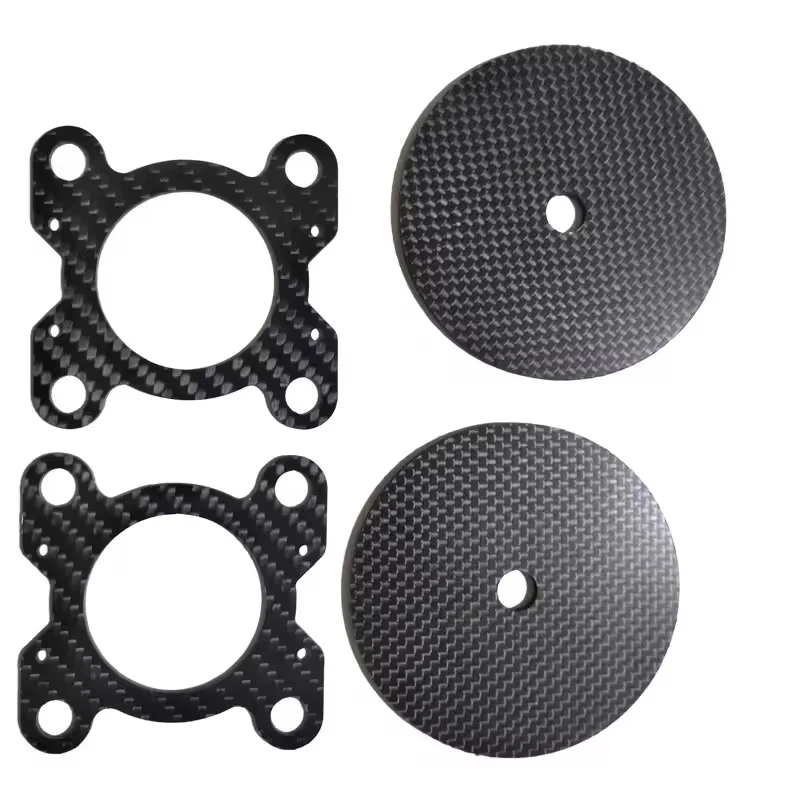
Carbon Fiber Sheets & Plates
Flat laminate stock for CNC cutting and lightweight structural components.