Carbon Fiber Flag Pole Overview
- OEM buyers building flag pole kits, wall/house-mounted sets, or portable systems
- Marine brands needing boat flag pole solutions with non-rusting hardware interfaces
- Commercial projects needing stable straightness, repeatable QC, and batch consistency
Flag Pole Types We Supply
These flag pole types are organized by application scenario and mounting method, covering residential, yard, portable, and OEM use cases.
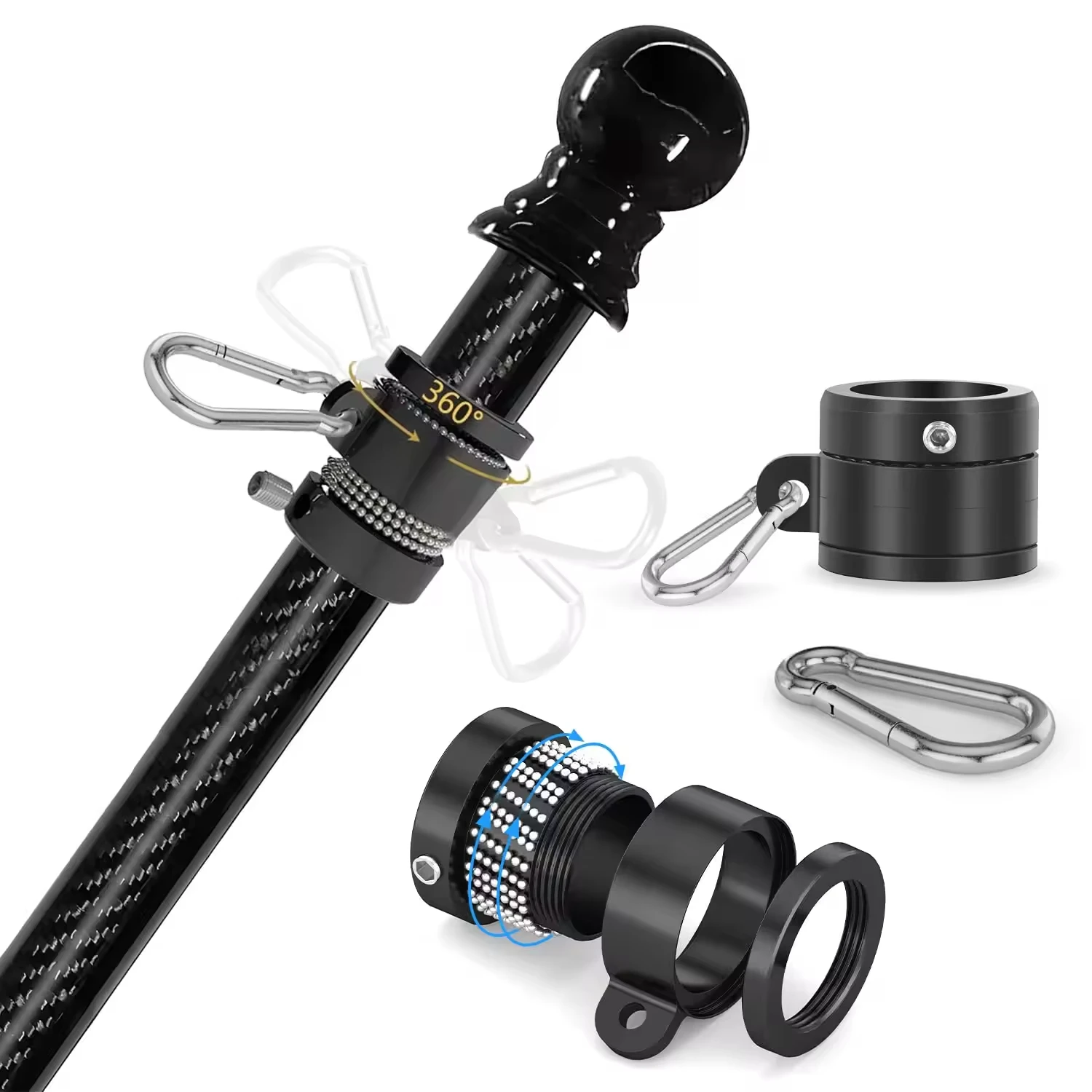
Telescoping Flag Pole (Carbon Fiber Telescopic Flag Pole)
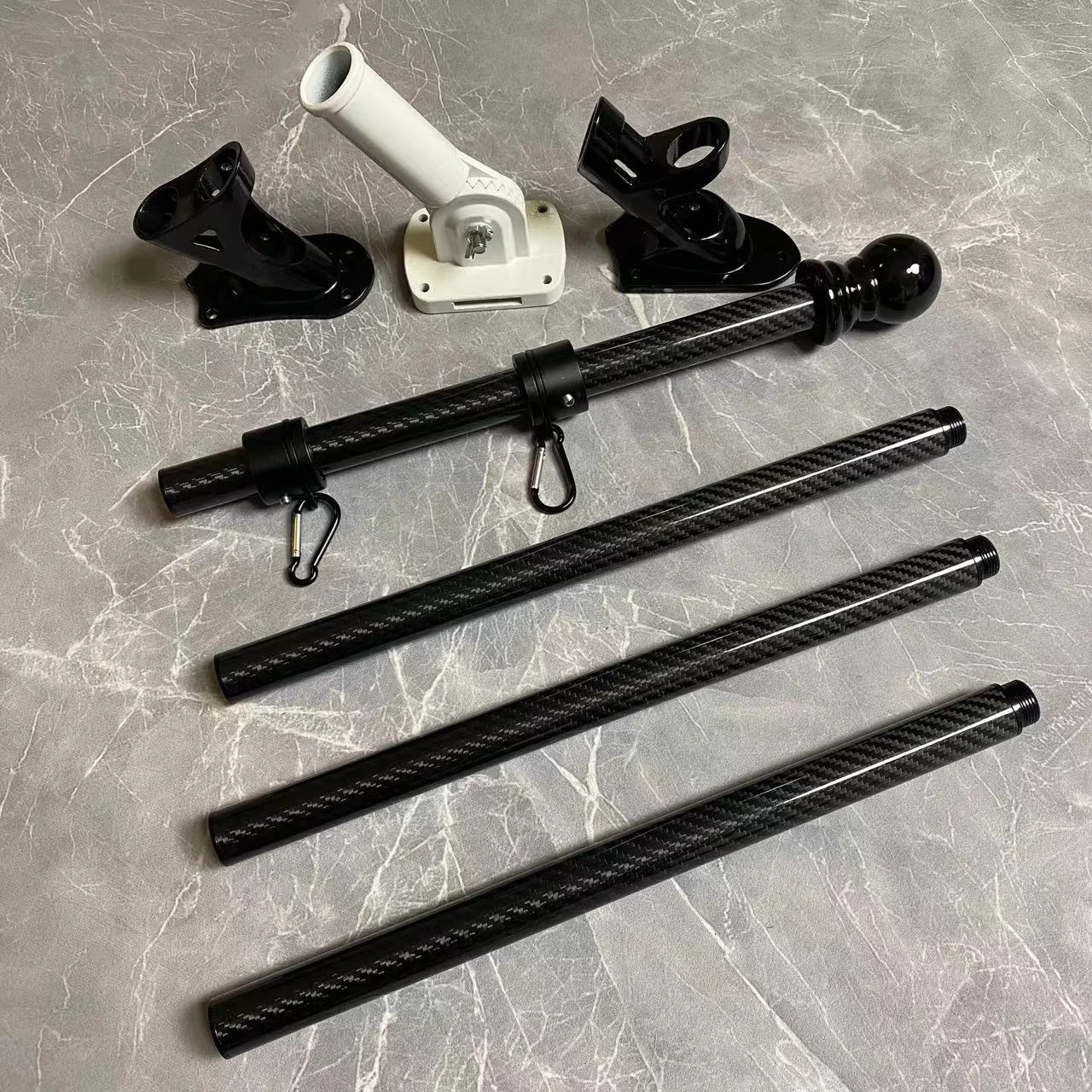
Flag Pole for House (Wall-Mount / Porch / Bracket Systems)
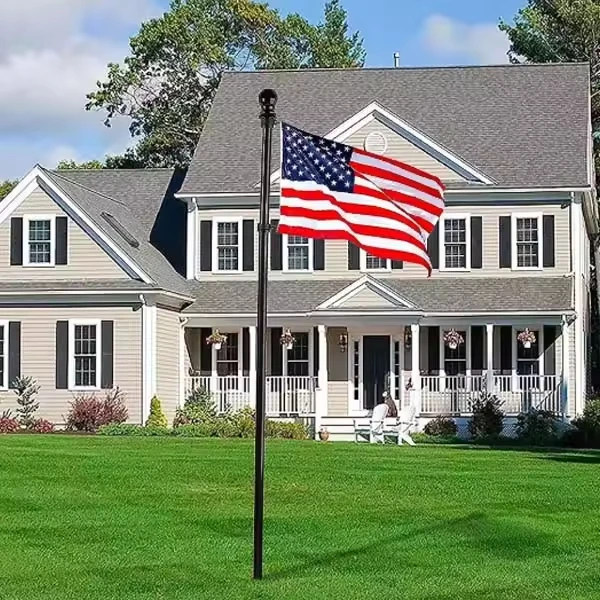
Yard Flag Pole (In-Ground / Sleeve-Mount)
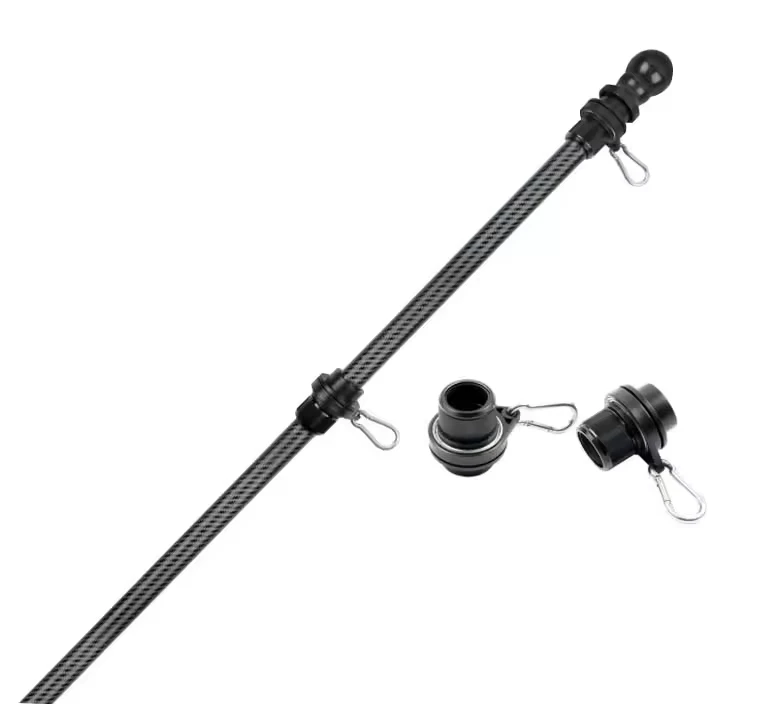
Commercial Flag Pole (OEM Composite Mast Sections)
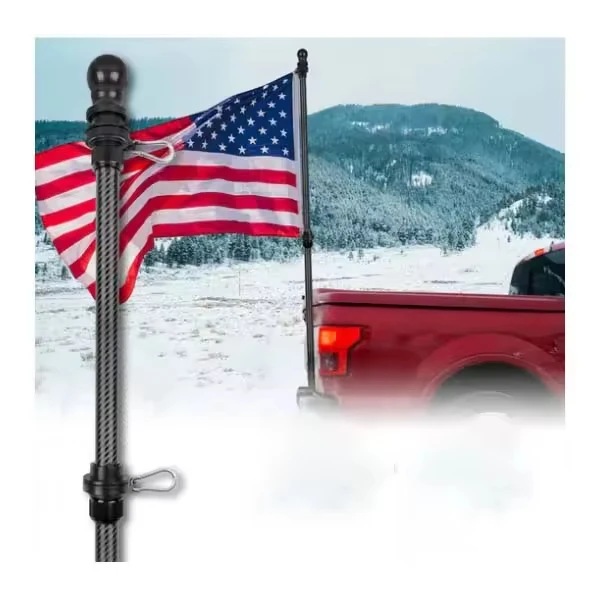
Truck / Camper / Marine (Boat Flag Pole)
Carbon Fiber Flag Pole Key Design Variables
Use these variables to spec a carbon fiber flag pole that behaves correctly in wind and daily handling:
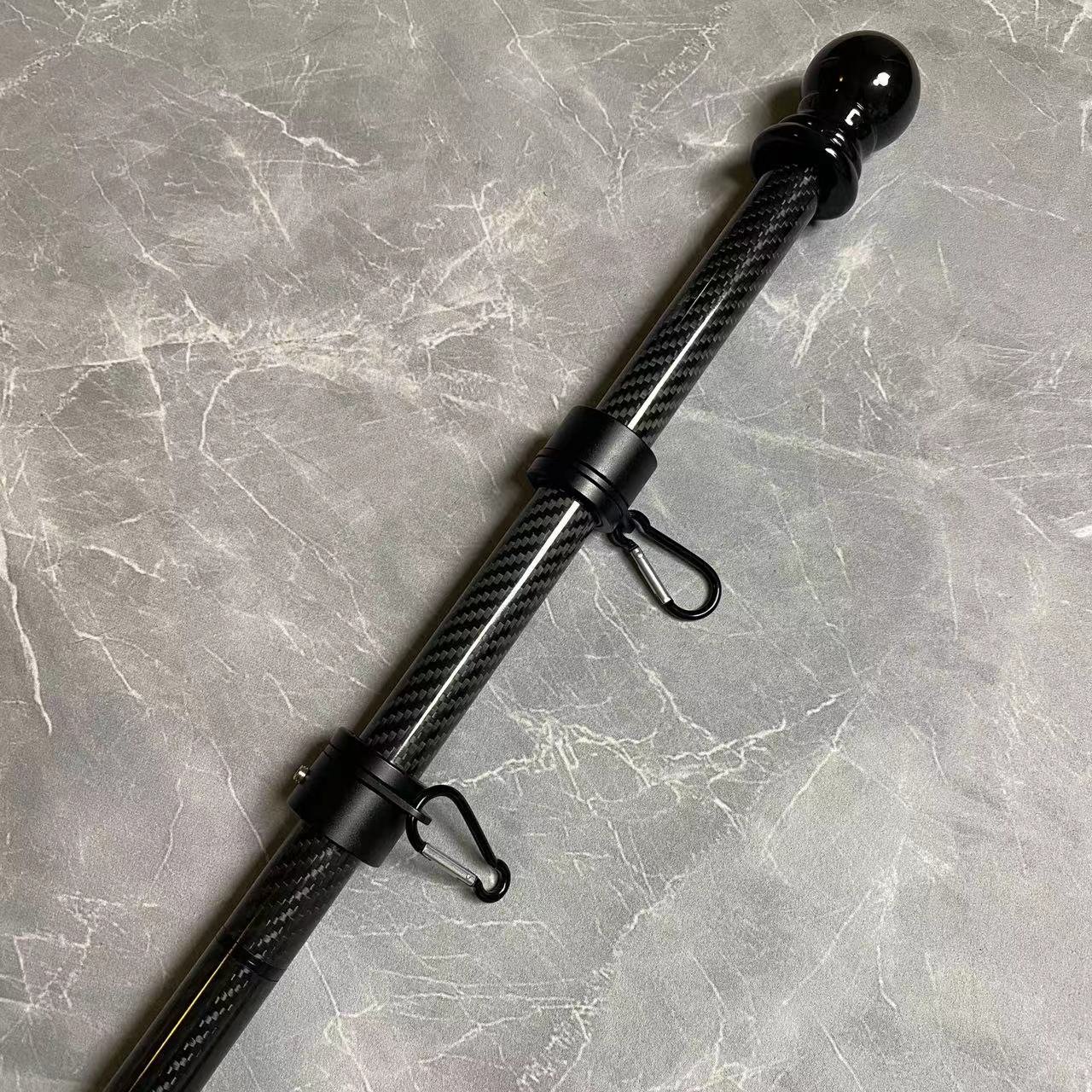
- Height & flag size pairing (avoid over-flagging to reduce wind load)
- OD / ID & wall thickness (stiffness and “feel” scale strongly with geometry)
- Layup orientation (0° stiffness vs ±45° torsion control)
- Section fit & straightness (critical for telescoping systems)
- Surface finish (3K twill look, matte/gloss clear coat, UV durability)
- Hardware interfaces (mounting reinforcement, inserts, bonded ends)
Flag Pole Sizing & Wind Practical Guide
Proper flag pole selection depends on flag size, wind exposure, mounting method, and pole geometry, not height alone.
- Flag size is the primary wind load driver; oversized flags are the most common cause of pole bending and instability.
- Pole height, diameter, and wall thickness work as a system—taller poles require increased stiffness to control deflection and vibration.
- Mounting method matters: wall-mounted poles concentrate stress at the base, while in-ground or sleeve-mounted systems distribute load differently.
- Material stiffness-to-weight ratio influences wind performance; higher-modulus, lightweight materials help reduce visible flex and long-term fatigue.
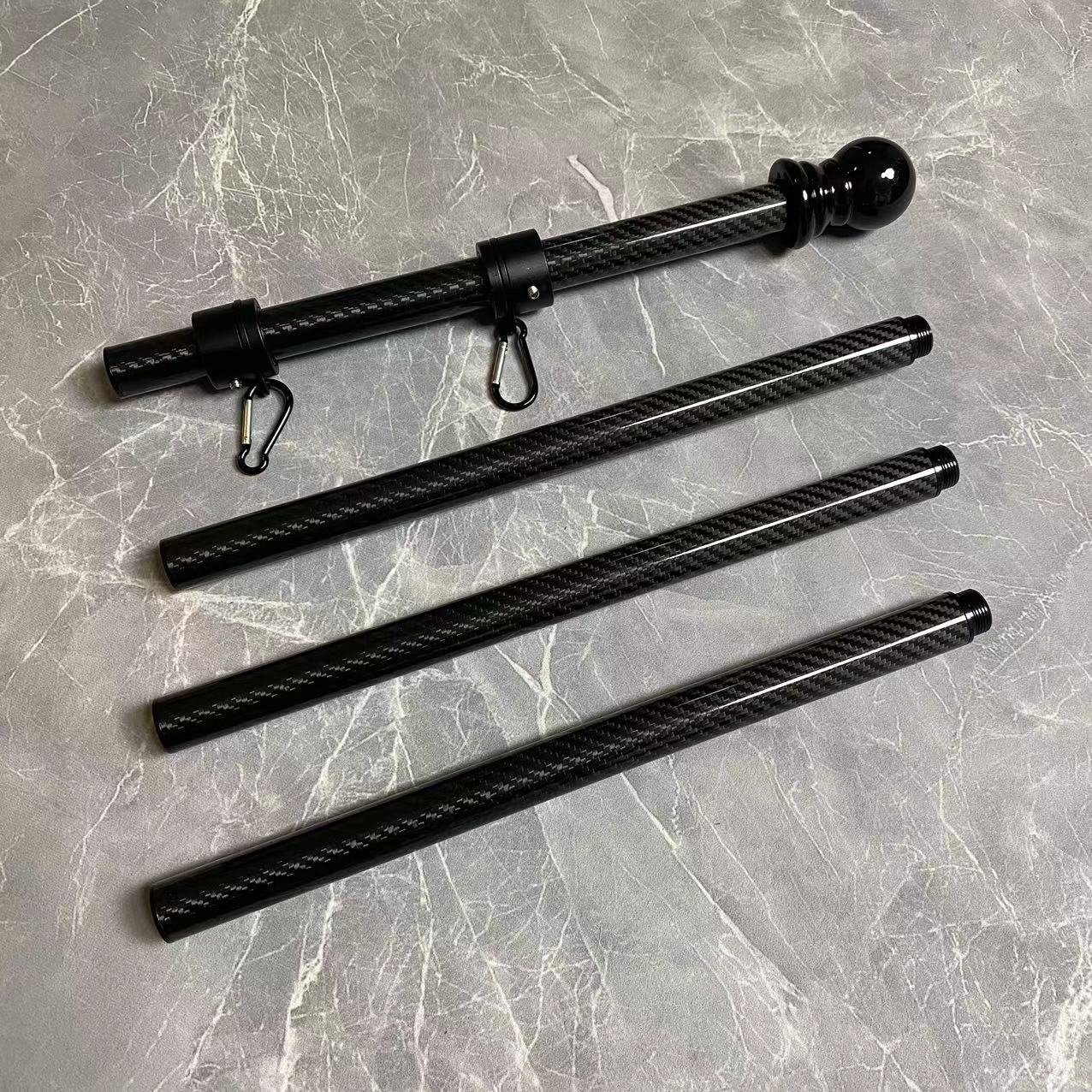
Professional Data Table: Material Comparison for Flag Poles
| Property (typical reference) | Carbon Fiber (CFRP fiber ref.) | Fiberglass (E-glass ref.) | What it means for a flag pole |
| Fiber tensile modulus | 230 GPa (standard modulus carbon, e.g., T700-class) | ~72 GPa (E-glass) | Higher modulus helps reduce pole deflection and “whip” |
| Fiber density | ~1.80 g/cm³ | ~2.54 g/cm³ | Lower density supports lighter handling, easier portable/telescoping |
| Corrosion behavior | No rust; resin system + coating selection matters | No rust; good general durability | Both suit outdoor use; coastal/salt environments often favor composites |
Typical Specifications & Custom Options
Carbon fiber flag poles are engineered based on structural loading, installation method, and durability requirements rather than fixed catalog sizes.
| 매개변수 | Typical Range / Options | Engineering Relevance |
| Pole Configuration | One-piece | Multi-section telescoping | Determines transport length and stiffness continuity |
| Overall Height | 2 m – 8 m (customizable beyond) | Directly affects base bending moment under wind |
| Telescoping Sections | 2 – 10 sections | More sections = compact packing, higher joint design demand |
| Packed Length | 0.8 m – 1.5 m (telescoping designs) | Critical for camper, vehicle, and portable use |
| Outer Diameter (Base Section) | 25 mm – 60 mm | Primary contributor to bending stiffness |
| 벽 두께 | 1mm – 3.0 mm | Controls deflection, vibration, and fatigue life |
| Straightness Tolerance | ≤ 1/1000 of length | Required for visible residential & commercial installs |
| Material System | Standard-modulus carbon fiber composite | Balances stiffness, cost, and durability |
| 표면 마감 | 3K twill cosmetic | matte | gloss | Aesthetic and UV protection requirement |
| UV Protection | Outdoor-grade clear coat (UV-stabilized) | Prevents resin degradation over long-term exposure |
| Mount Interface Type | Wall bracket | ground sleeve | vehicle/marine mount | Defines base reinforcement strategy |
| Local Reinforcement | Clamp / insert zones selectively thickened | Prevents crushing and stress concentration |
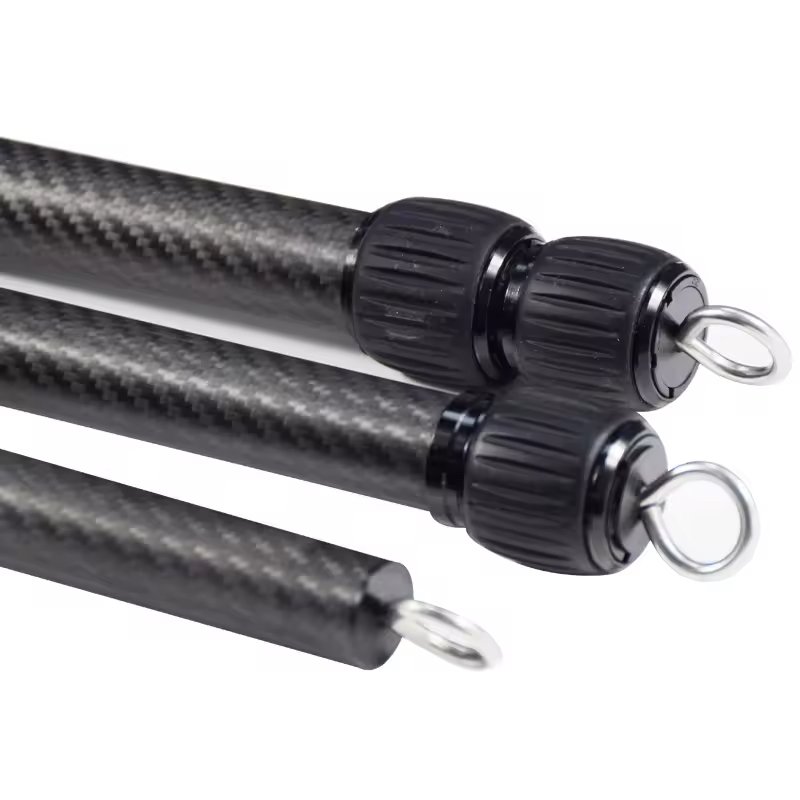
| Accessory Integration | Rope routing, rings, clips, end fittings | Required for flag pole kit assemblies |
| Supply Format | Pole only | Partial kit | Full flag pole kit | Supports OEM and private-label projects |
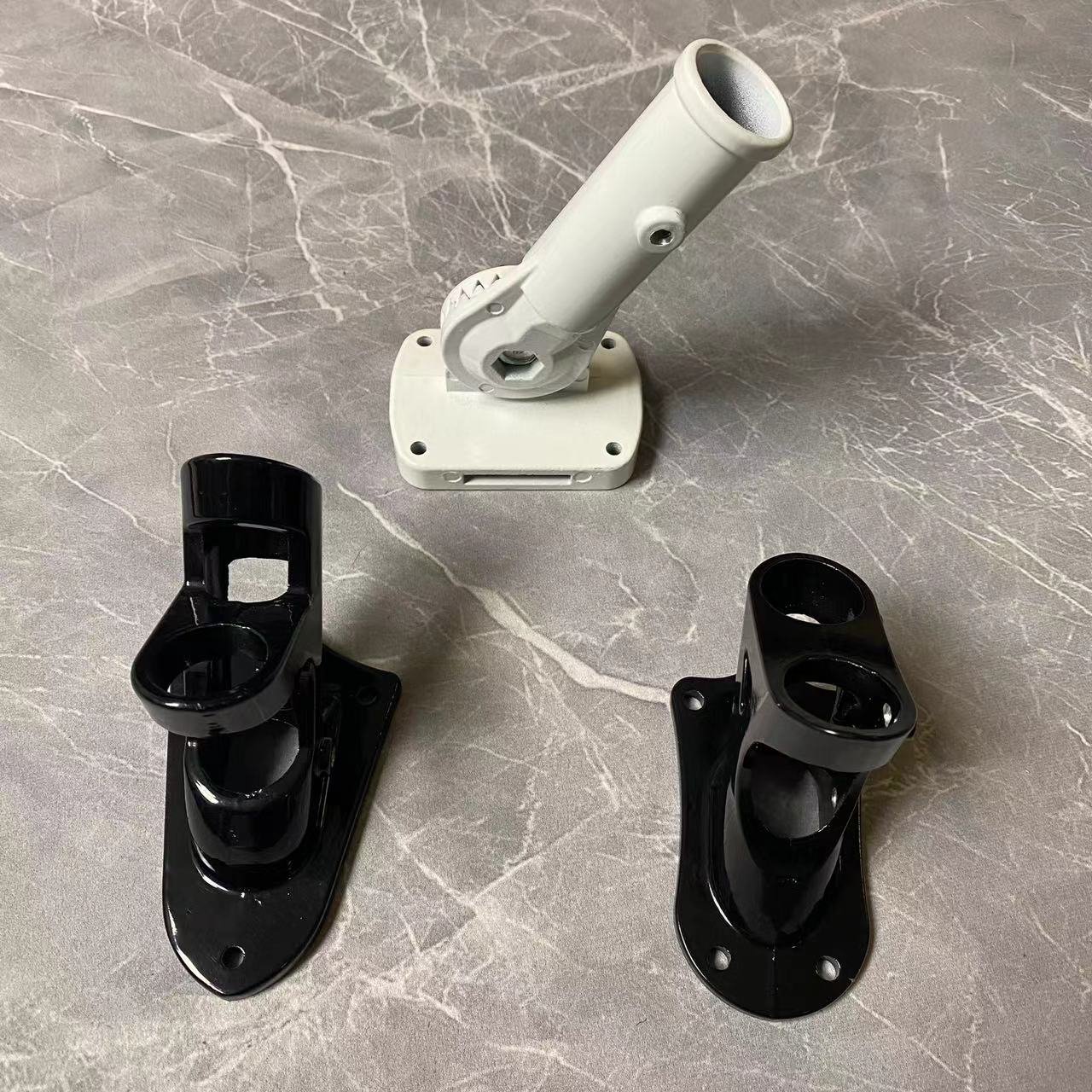
Pole Interfaces & Mount Compatibility
Application Case Study: Telescoping Carbon Fiber Flag Pole for Yard Installation
자주 묻는 질문
What is a carbon fiber flag pole?
A carbon fiber flag pole is a composite pole manufactured from carbon fiber–reinforced laminate.
Compared with metal or fiberglass poles, it offers a higher stiffness-to-weight ratio and improved corrosion resistance for outdoor use.
Are carbon fiber flag poles stronger than fiberglass?
Yes, in terms of stiffness.
Standard-modulus carbon fiber has a significantly higher tensile modulus than E-glass fiberglass, which helps reduce visible bending under wind load at similar dimensions.
Is a carbon fiber flag pole suitable for high wind areas?
Yes, when properly sized.
Wind performance depends on flag size, pole geometry, and mounting method rather than material alone. Carbon fiber allows higher stiffness without excessive weight increase.
What size flag pole should I choose for my yard or house?
Pole height should be selected together with flag size and mounting method.
Oversized flags are the most common cause of pole instability, even on relatively short poles.
Are your flag poles compatible with standard mounts and brackets?
예.
Pole outer diameter and base reinforcement are engineered to ensure compatibility with common wall mounts, ground sleeves, and customer-provided mounting systems.
What is the difference between a telescoping flag pole and a one-piece pole?
A telescoping flag pole uses multiple sections for compact transport and storage.
One-piece poles offer continuous stiffness but require full-length handling during installation.