Fiberglass Rods Overview
Fiberglass rods are composite rod products manufactured from continuous glass fibers and thermoset resin using the pultrusion process.
They are commonly selected for applications that require corrosion resistance, electrical insulation, and dimensional stability without the weight and conductivity of metal rods.
In industrial and OEM contexts, fiberglass rods are specified based on diameter control, stiffness behavior, 및 supply form, rather than aesthetic appearance.
These criteria help determine whether a solid structural rod, a flexible rod, or fiberglass rod stock is most suitable for a given application.
Fiberglass Rods We Supply
The following fiberglass rod categories are defined by functional use and structural behavior for OEM and industrial applications.
Fiberglass Tent Rods
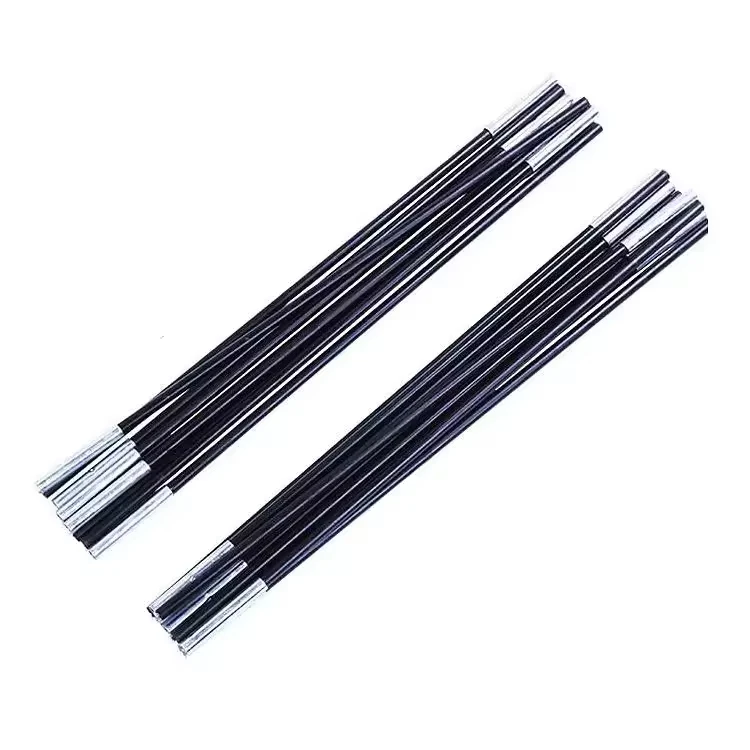
Fiberglass tent rods are used in tent pole systems and outdoor shelters, providing controlled flexibility and weather resistance.
They are also supplied as replacement fiberglass tent rods for maintenance and aftermarket use.
Flexible Fiberglass Rods
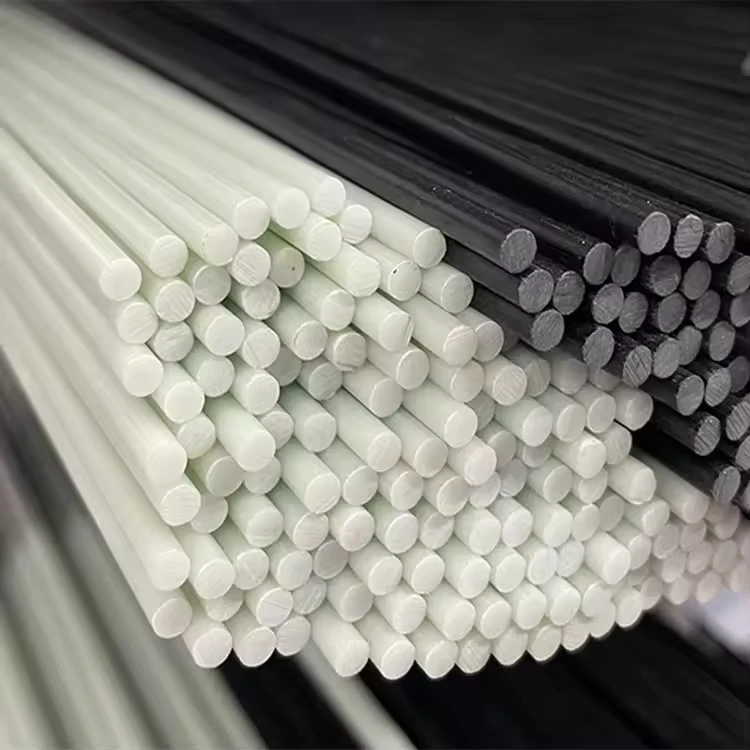
Flexible fiberglass rods are designed to bend and recover under load, commonly used in pole systems, markers, and elastic support applications.
Solid Fiberglass Rods
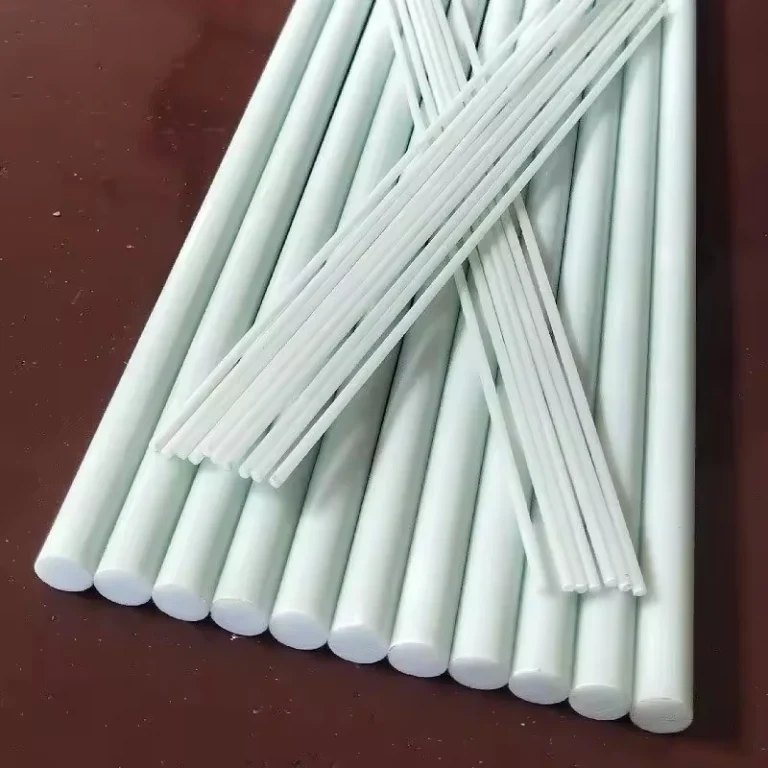
Solid fiberglass rods are pultruded composite rods selected for structural support where dimensional stability is required.
일반적인 사양 범위
Fiberglass rods are supplied in multiple diameters and lengths for structural and flexible applications.
| Specification Item | 일반적인 옵션 |
| Rod Type | Solid fiberglass rods / Flexible fiberglass rods |
| Diameter | Common inch sizes (including 3/8, 1/2, 3/4) and custom diameters |
| 길이 | Cut-to-length supply; long-length rods available on request |
| 레진 시스템 | Standard industrial resin; epoxy fiberglass rod option |
| 표면 마감 | Smooth or sanded surface |
| Color | Natural fiberglass color or custom colors |
| Supply Form | Straight rods, sections, or rod stock for machining |
Applications of Fiberglass Rods
Fiberglass rods are applied across different industrial and outdoor scenarios, with selection driven by stiffness behavior and installation method.

Tent Poles & Replacement Rods
Fiberglass tent rods are widely used in tent pole systems and outdoor shelters, providing reliable flexibility and weather resistance.
They are also supplied as replacement fiberglass tent rods for repair and aftermarket kits.
Flexible Poles & Marker Rods
Flexible fiberglass rods are used in pole systems, markers, and guide rods where controlled bending and recovery are required.
Structural Supports & Solid Rod Applications
Solid fiberglass rods are used for structural support, handles, spacers, and general industrial assemblies where dimensional stability is required.
Industrial Machining & Rod Stock Use
Fiberglass rod stock is commonly supplied for cutting, machining, and assembly into OEM components and fixtures.
Threaded & Energy-Related Rod Applications
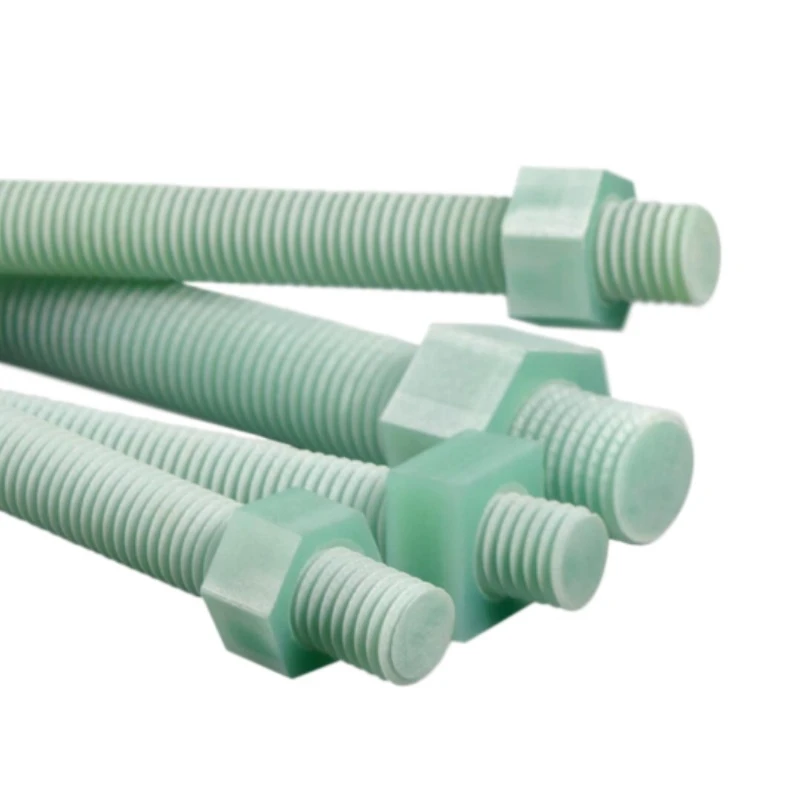
Fiberglass threaded rods 그리고 fiberglass sucker rods are used in corrosive or non-conductive environments, including industrial fastening and energy-related systems.
제조 및 품질 관리
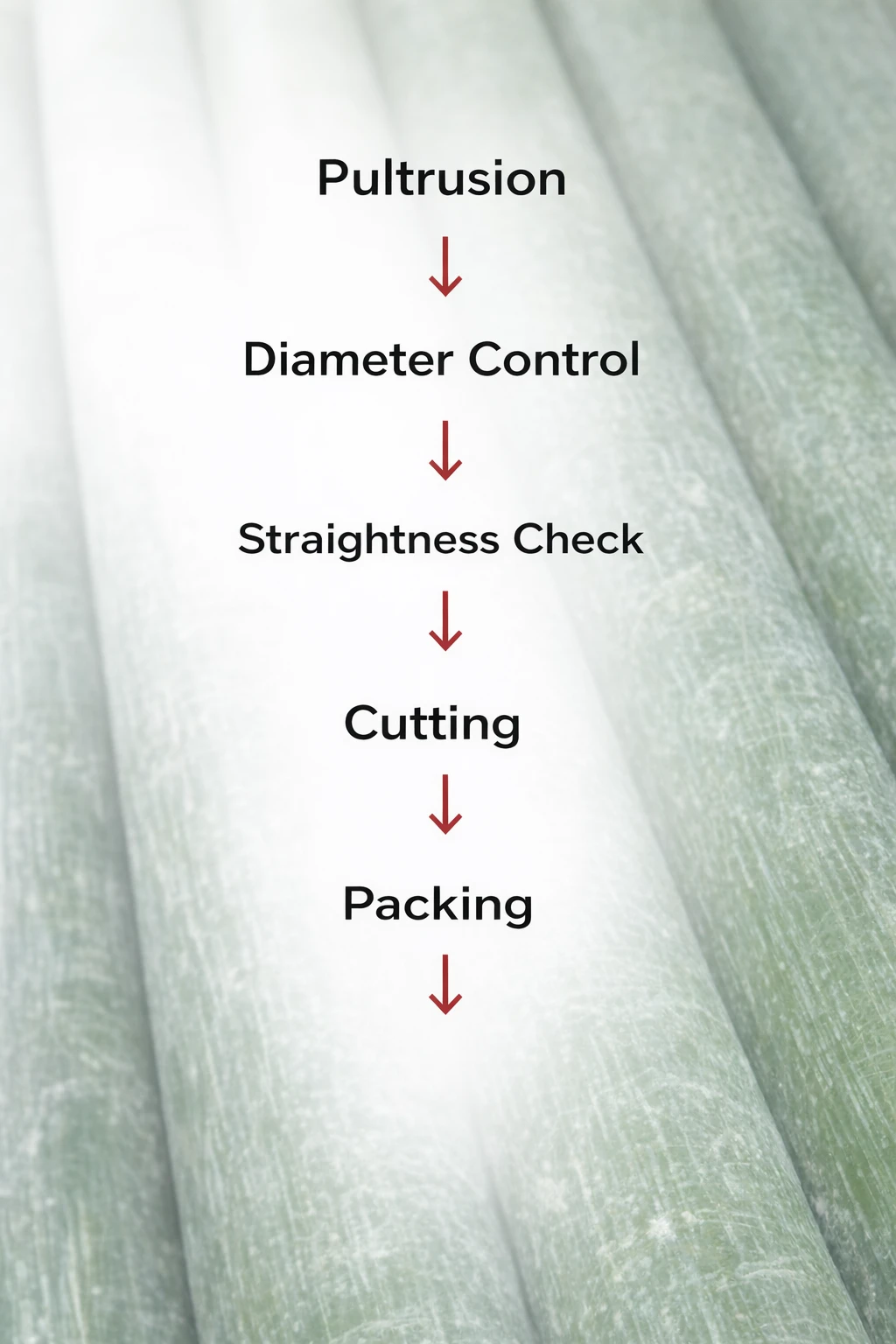
Fiberglass rods are produced using a controlled pultrusion process to ensure consistent fiber alignment, diameter stability, and straightness across production batches.
This manufacturing method supports repeatable performance for both solid and flexible fiberglass rod applications.
Quality control focuses on dimensional consistency, surface condition, and batch traceability.
Each order is produced according to defined specifications and inspected to ensure suitability for cutting, assembly, and long-term use in industrial and outdoor environments.
Why Choose Our Fiberglass Rods
The following points highlight our manufacturing consistency, specification control, and supply reliability for fiberglass rod production.
Stable Pultrusion
Fiberglass rods are produced using a controlled pultrusion process to ensure consistent diameter, straightness, and fiber alignment across batches.
OEM Specification Control
Rod type, stiffness behavior, length, and surface condition are defined based on application requirements, supporting OEM drawings and repeat production.
Reliable Industrial Supply
Production and inspection follow defined procedures to support stable supply for industrial, outdoor, and utility fiberglass rod applications.
Fiberglass vs Graphite Rod
Fiberglass rods and graphite (carbon fiber) rods are both fiber-reinforced composite materials, but they differ fundamentally in mechanical behavior due to differences in fiber modulus, strain capacity, and failure mechanisms.
These material differences directly influence durability, stiffness, electrical properties, and cost considerations in industrial applications.
Mechanical Property Comparison (Typical Engineering Ranges)
| 속성 | Fiberglass Rod (E-Glass) | Graphite / Carbon Fiber Rod |
|---|---|---|
| 밀도 | 1.9–2.1 g/cm³ | 1.5–1.8 g/cm³ |
| 인장 계수 | 20–30 GPa | 70–230 GPa |
| 인장 강도 | 500-900 MPa | 600–1500 MPa |
| Strain to Failure | ~2.5–4.5% | ~0.5–1.8% |
| 내충격성 | 높음 | 보통에서 낮음 |
| Electrical Conductivity | 비전도성 | Electrically conductive |
| 실패 모드 | Progressive | Brittle |
Values represent commonly reported ranges in composite engineering references and ASTM mechanical test data.
Material Behavior
Fiberglass rods exhibit lower stiffness but significantly higher strain capacity, allowing them to absorb impact energy and repeated bending without sudden fracture.
Failure typically occurs progressively, which improves damage tolerance in real-world handling and outdoor environments.
Graphite rods provide much higher stiffness due to the high modulus of carbon fibers, enabling lightweight designs with minimal deflection.
However, their lower strain tolerance results in brittle failure under impact, point loading, or misalignment.
Environmental and Electrical Considerations
Fiberglass rods are inherently non-conductive and resistant to moisture and corrosion, making them suitable for electrical, utility, and outdoor applications.
Graphite rods, while corrosion-resistant, are electrically conductive and require additional insulation considerations in certain environments.
Cost and Manufacturing Implications
From an OEM perspective, fiberglass rods generally offer lower raw material cost, wider processing tolerance, and more stable supply economics, particularly for larger diameters and long lengths.
Graphite rods involve higher material costs and stricter handling requirements, which can increase overall system cost despite weight savings.
Practical Selection Guidance
| Design Priority | 추천 자료 |
|---|---|
| Impact resistance and durability | Fiberglass Rod |
| 전기 절연 | Fiberglass Rod |
| Cost-sensitive OEM production | Fiberglass Rod |
| Maximum stiffness-to-weight ratio | Graphite Rod |
| Controlled loading environments | Graphite Rod |
자주 묻는 질문
Are fiberglass rods available in 3/8, 1/2, or 3/4 inch sizes?
Yes, fiberglass rods are commonly supplied in standard inch sizes such as 3/8, 1/2, and 3/4 inch.
Availability may vary by application and supply form, with custom diameters also supported.
Are 10 ft fiberglass rods available?
Yes, fiberglass rods can be supplied in longer lengths such as 10 ft, depending on production and packaging requirements.
Length selection is typically based on application and handling considerations.
Which is better: solid or flexible fiberglass rods?
Neither is universally better; solid fiberglass rods are used for dimensional stability, while flexible fiberglass rods are designed to bend and recover under load.
The correct choice depends on stiffness requirements and how the rod is expected to perform in service.
Are fiberglass rods suitable for outdoor use?
Yes, fiberglass rods perform well in outdoor environments due to their resistance to moisture and corrosion.
They are widely used in utility, marker, and outdoor structural applications.
Are fiberglass rods electrically conductive?
No, fiberglass rods are non-conductive.
This makes them suitable for electrical, utility, and insulation-related applications where metal rods are not appropriate.