
What Is a Camera Pole?
Carbon fiber camera poles are structural extension systems manufactured by combining high-modulus carbon fiber tubes with engineered locking mechanisms and mounting interfaces. Designed for elevated imaging applications, they provide lightweight reach, high stiffness, and dimensional stability in environments where performance and operator control are critical.
Unlike consumer photography accessories or decorative extension rods, professional camera poles are load-bearing structural components. They must resist bending, torsion, and vibration when extended to significant heights. Depending on the application, telescopic camera poles can be engineered with multi-section conical designs, reinforced base segments, and controlled wall thickness to achieve optimal stiffness-to-weight ratios and stable imaging performance.
Most high-performance camera poles are produced using carbon fiber laminates with epoxy resin systems. Fiber orientation and layup configuration—such as 0° axial reinforcement, ±45° torsional layers, or hybrid constructions—are carefully selected to reduce deflection and dampen vibration. Compared to aluminum poles, carbon fiber camera poles offer superior fatigue resistance, corrosion resistance, and reduced operator fatigue during prolonged use.
In industrial and OEM environments, consistent structural performance is essential. Properly manufactured camera poles require controlled fiber distribution, precision tube tolerances, reliable locking mechanisms, and stable curing processes. For large-volume production or customized projects, material grade selection, section geometry, and mounting integration directly influence mechanical stability and long-term durability.
For detailed material properties and composite engineering considerations, refer to our Carbon Fiber Material Guide.
Carbon Fiber Camera Poles Types We Manufacture
Our carbon fiber camera pole systems are manufactured in multiple structural configurations to meet different reach, load, and deployment requirements.
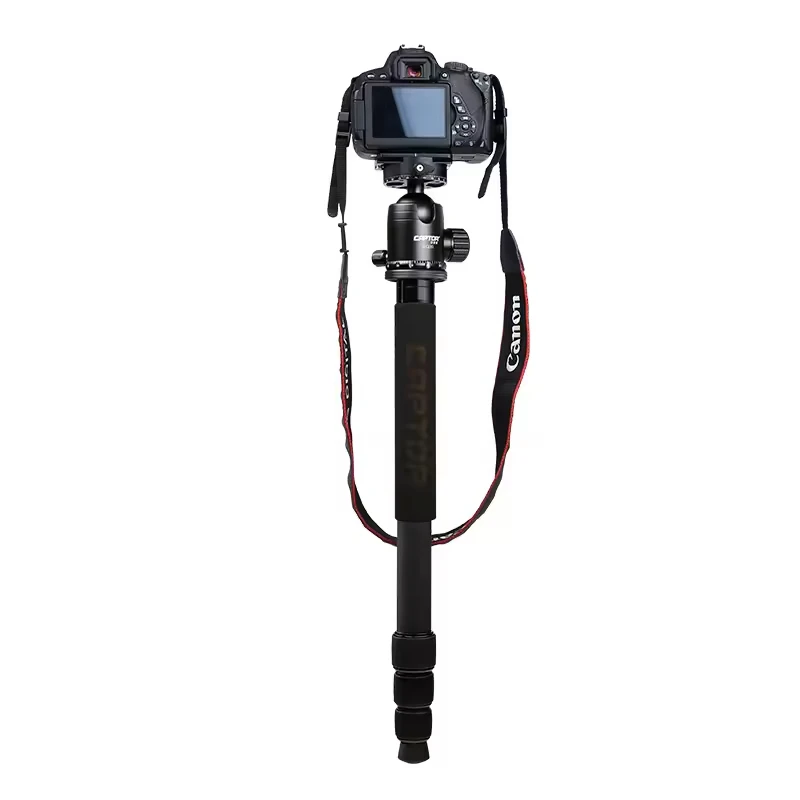
Telescoping Camera Pole
Multi-section telescopic camera poles designed for adjustable height and compact transport.
Available in 6m, 8m, 10m and extended configurations, carbon fiber telescopic camera poles provide controlled deflection and improved stiffness-to-weight performance.
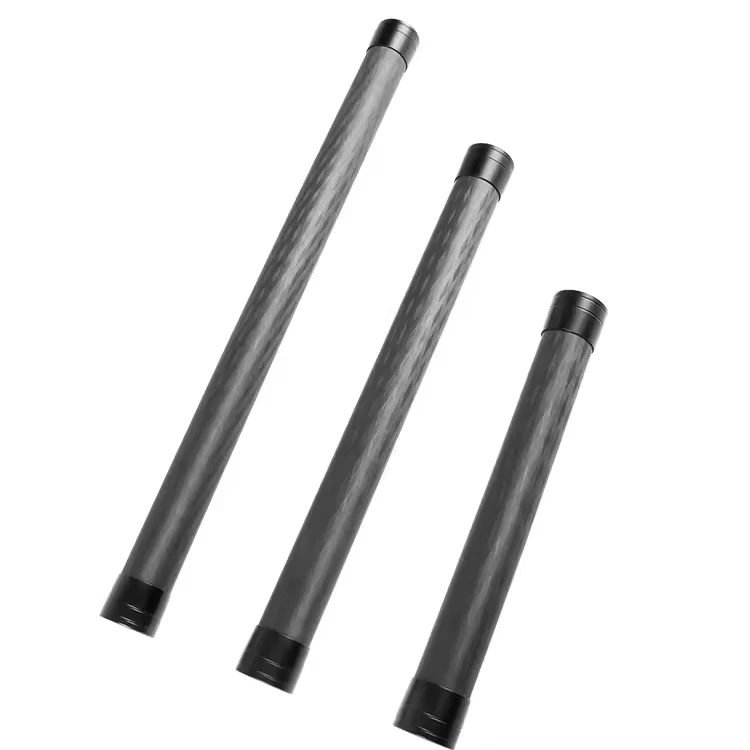
Fixed-Length Carbon Fiber Camera Poles
Single-piece carbon fiber camera poles engineered for maximum rigidity and minimal vibration.
Suitable for permanent installations or controlled industrial imaging setups.
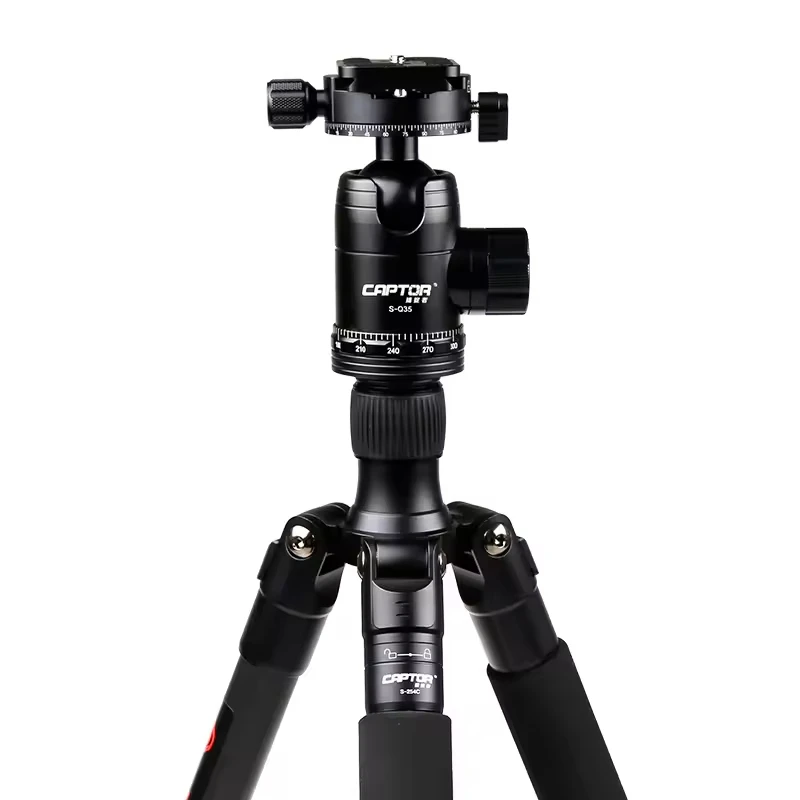
Extendable Camera Pole
Lightweight camera extension poles used to increase reach for inspection cameras, action cameras, and portable monitoring systems.
Carbon fiber construction reduces weight while maintaining structural rigidity.
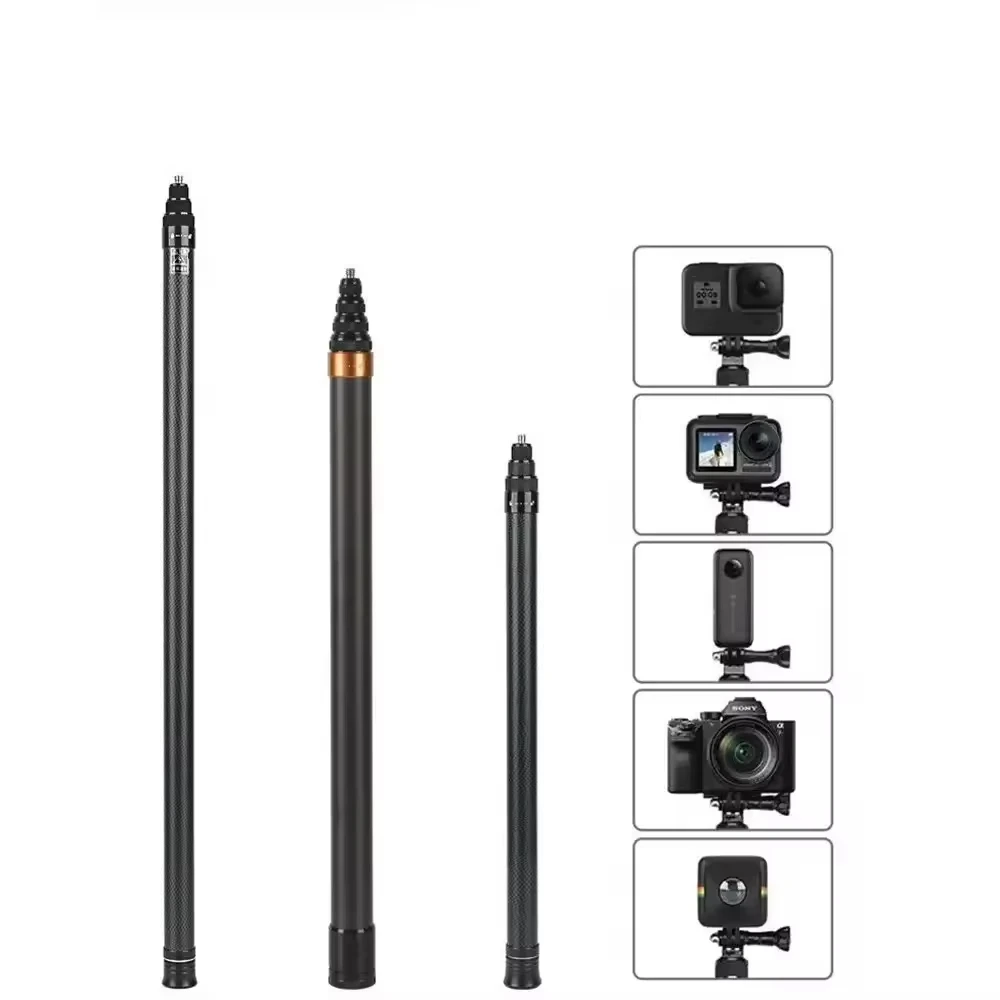
Modular Camera Mast
Carbon fiber camera mast pole systems designed for extended height and temporary deployment.
Suitable for portable CCTV mast applications and elevated surveillance platforms.
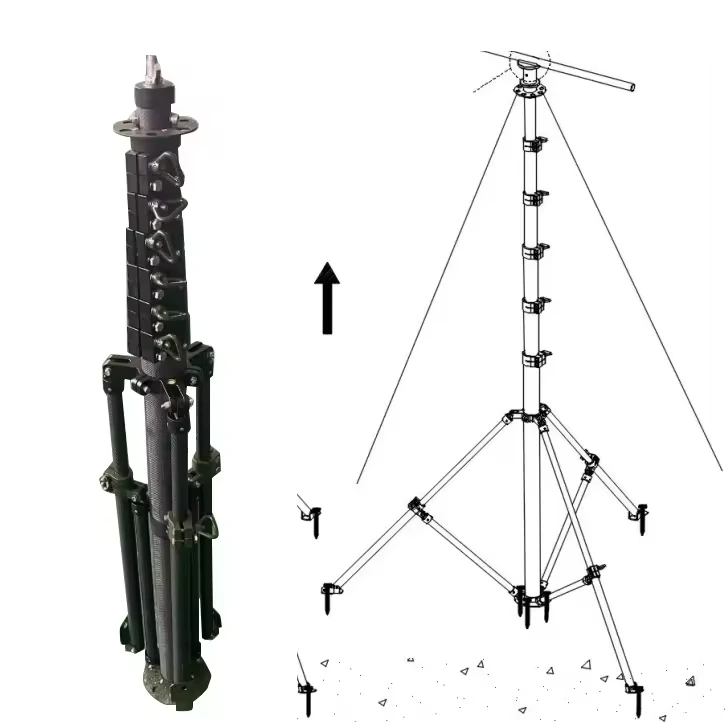
Carbon Fiber Camera Pole Custom Support
We support full OEM customization, including:
Conical telescopic tube design
High-modulus reinforcement for reduced deflection
Integrated cable management
Custom mounting brackets
Structural analysis support
Branding and private labeling
Batch production with consistent tolerances
For large-volume projects, we assist with layup optimization and mechanical performance validation.
Why Choose Carbon Fiber for Camera Poles?
Material selection directly influences structural deflection, system weight, and vibration behavior in extended camera pole applications.
| 속성 | Carbon Fiber Composite (Epoxy Matrix, Standard Modulus) | 알루미늄 6061-T6 | 데이터 소스 |
|---|---|---|---|
| 밀도 | 1.5–1.7 g/cm³ | 2.70 g/cm³ | ASM Handbook, MatWeb |
| Tensile Modulus (E) | 70–150 GPa (200–350 GPa high-modulus grades) | ~69 GPa | Toray Data Sheet, ASM |
| Specific Stiffness (E/ρ) | Higher than aluminum (varies by fiber grade) | Lower relative to density | Calculated from above values |
| 피로 행동 | No classical fatigue crack propagation within elastic range | Subject to fatigue crack growth under cyclic loading | CMH-17 |
| 내식성 | Composite structure; no galvanic oxidation | Requires surface treatment in outdoor environments | ASM Handbook |
| Vibration Damping | Higher internal damping due to fiber-matrix structure | Lower internal damping (metallic structure) | CMH-17 |
Carbon Fiber Camera Pole Application
Carbon fiber camera poles are used in professional environments where extended reach, structural stiffness, and reduced system weight are critical to operational performance.
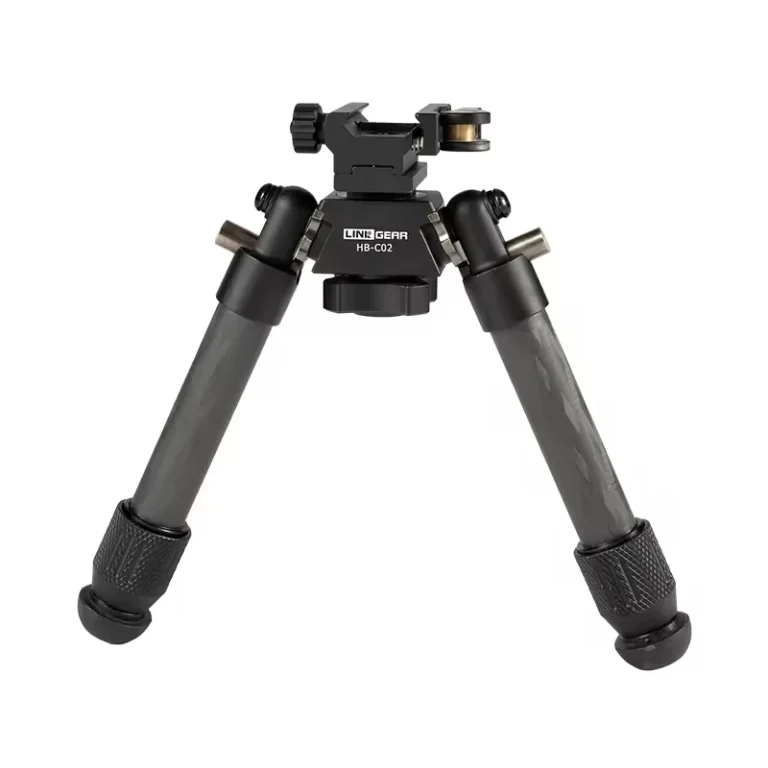
Inspection Camera Poles
Used for roof inspection, façade assessment, and structural surveys requiring elevated visual access without scaffolding. Carbon fiber inspection camera poles provide lightweight handling and controlled deflection during extended operation.
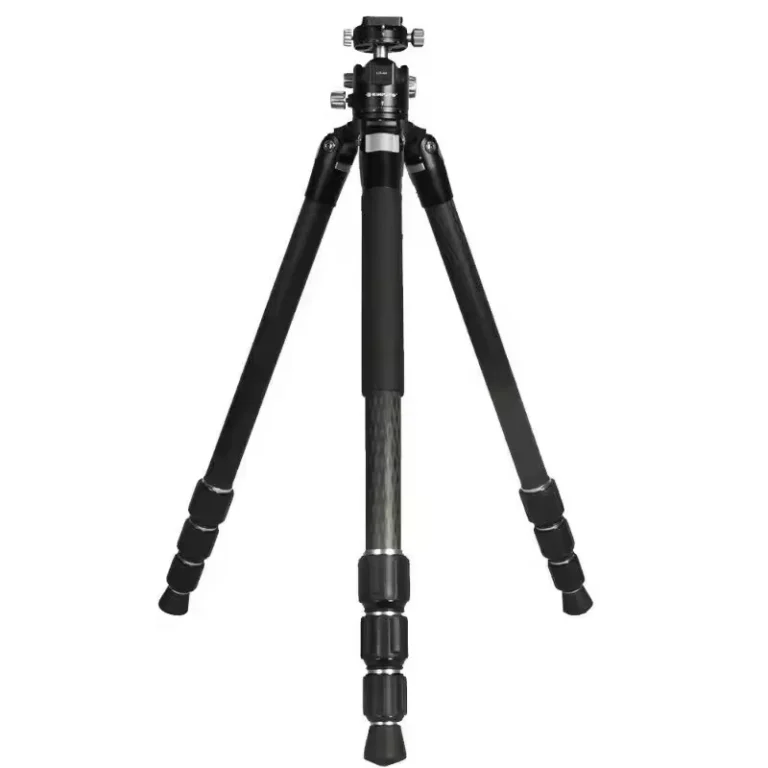
Portable CCTV & Surveillance Poles
Designed for temporary or mobile surveillance setups where rapid deployment and adjustable height are required. Lightweight carbon fiber construction improves transport efficiency and stability during pole-mounted camera positioning.
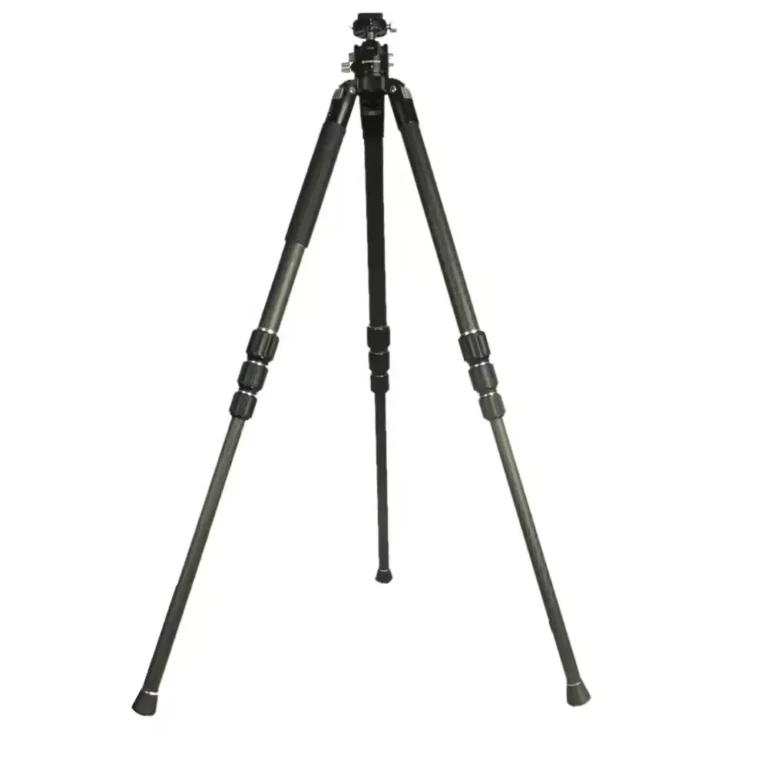
Telescopic Camera Poles
Engineered for adjustable-height applications such as bridge inspection, utility monitoring, and infrastructure surveys. Multi-section telescopic systems allow controlled extension while maintaining structural stiffness at extended lengths.
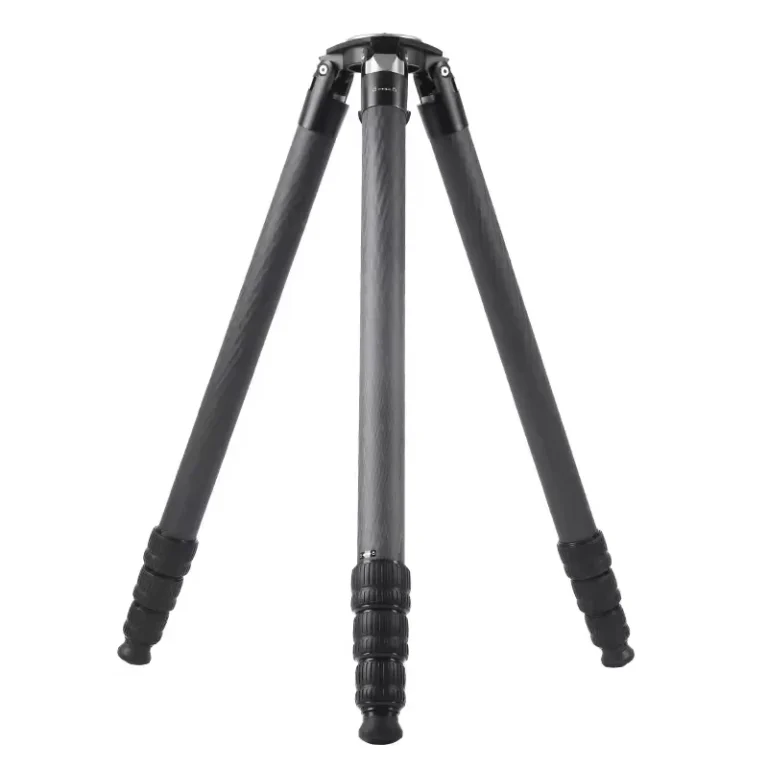
Industrial Camera Extension Poles
Applied in manufacturing and processing facilities for elevated equipment inspection and confined access monitoring. Carbon fiber extension poles reduce operator fatigue while maintaining rigidity during repetitive use.
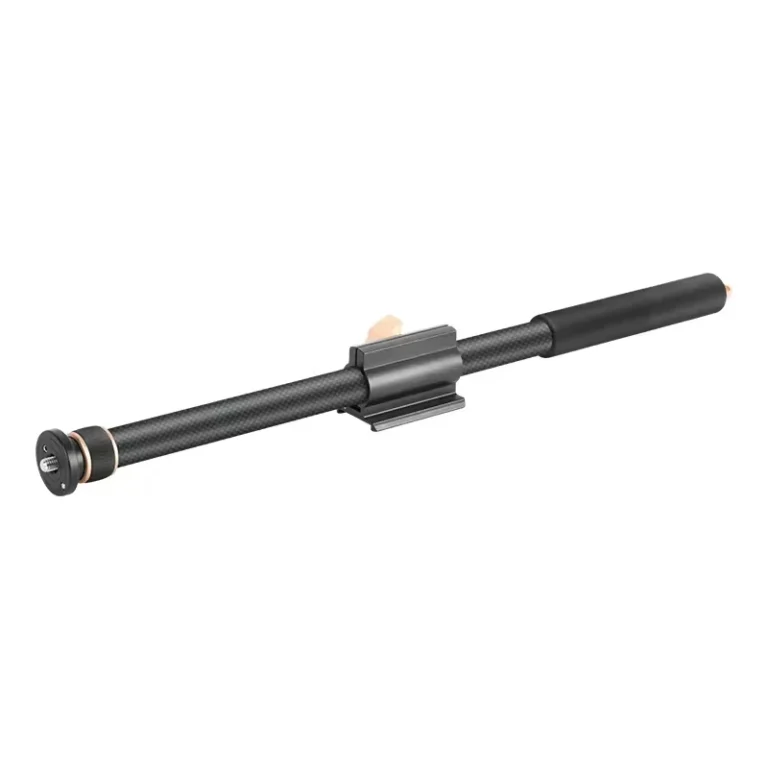
Professional Filming & Broadcast Poles
Used in sports filming, event documentation, and elevated camera positioning. Reduced mass and improved vibration behavior enhance handling performance during dynamic shooting environments.
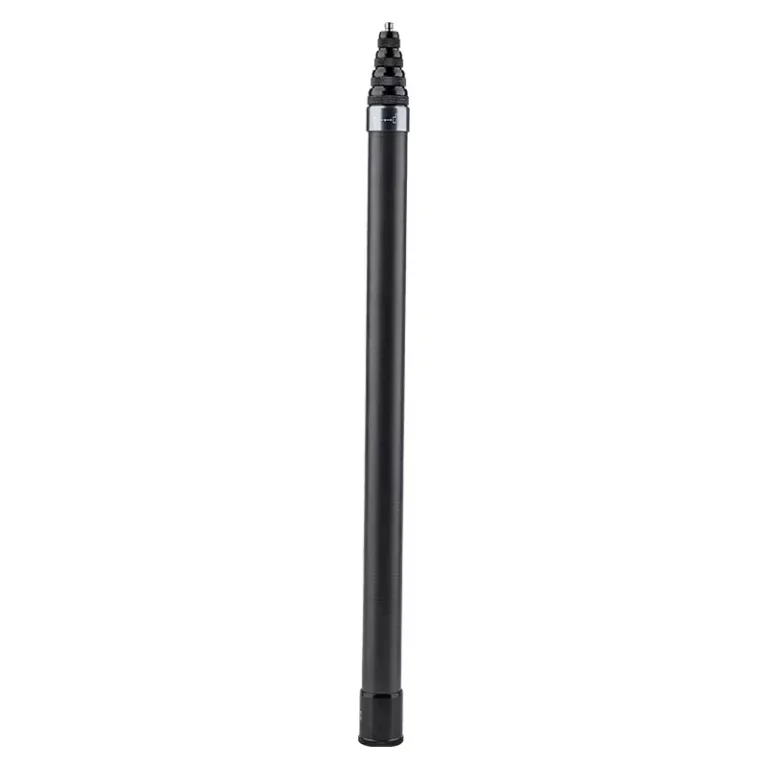
Gopro Camera Extension Pole
Lightweight extension poles designed for action cameras and compact imaging systems. Carbon fiber construction improves reach without significantly increasing system weight, making them suitable for portable filming setups.
Engineering Design Considerations
Pole performance is influenced by geometry, laminate design, and load distribution. Key engineering parameters include:
Deflection Control
Bending displacement increases with extension length. Tube diameter and laminate stiffness must be matched to control tip deflection under static and dynamic loading.
레이업 전략
Axial (0°) fibers improve bending stiffness, while ±45° layers enhance torsional stability and vibration behavior. Layup configuration directly affects structural response.
Section Geometry
Conical telescopic sections improve load transfer and reduce stress concentration at joints. Proper overlap length ensures structural continuity.
Mount & Load Interface
Camera mass, accessories, and mounting adapters determine applied loads. Thread standards such as 1/4″-20, 3/8″-16, and M14 must accommodate static and dynamic forces.
Vibration Behavior
Extended poles can oscillate after movement. Composite damping characteristics and structural stiffness influence recovery time and imaging stability.
Carbon Fiber Camera Pole Technical Specifications
The following technical parameters represent typical structural configurations. Final dimensions, laminate design, and mounting interfaces can be adjusted according to load requirements and extension height.
| 매개변수 | Standard Range |
|---|---|
| Material Grade | 24T / 30T / 40T Carbon Fiber |
| 표면 마감 | 3K Twill, UD, Matte, Gloss |
| Extended Length | 1 m – 20 m |
| Collapsed Length | 0.6 m – 2 m |
| Sections | 2 – 8 Sections |
| 벽 두께 | 1.0 – 2.5 mm |
| Mount Interface | 1/4″-20, 3/8″-16, M14, Custom |
| Lock Mechanism | Twist Lock / Clamp Lock |
Carbon Fiber Camera Pole Case Study
Application: Infrastructure Inspection
도전:
An inspection provider required a lightweight pole system exceeding 8 meters with reduced tip deflection compared to aluminum alternatives.
솔루션:
A 6-section telescopic carbon fiber pole using optimized axial reinforcement and controlled wall thickness.
Outcome:
Reduced total system mass
Improved stiffness-to-weight performance
Improved handling stability at extended height
품질 관리
Consistent structural performance is maintained through:
Controlled fiber orientation
Dimensional tolerance verification
Lock mechanism durability testing
Surface inspection and finish control
Batch traceability system
OEM projects can include first-article validation and mechanical verification upon request.
자주 묻는 질문
What is a pole camera?
A pole camera refers to a camera system mounted on an extended structural pole to provide elevated visual access. In professional environments, it typically consists of a telescopic pole with a secure mounting interface, allowing inspection, surveillance, or monitoring without lifts or scaffolding.
What is a CCTV pole?
A CCTV pole is a structural mounting pole designed to support surveillance cameras at height. It may be fixed-length or telescopic, depending on whether the system is permanent or temporary. Structural stiffness and wind resistance are critical factors in CCTV pole design.
How tall can a camera pole extend?
Telescopic camera poles typically extend between 1 and 20 meters, depending on section configuration, tube diameter, and laminate stiffness. Extended height must be matched with appropriate wall thickness and structural reinforcement to control deflection.
How does a telescopic camera pole work?
A telescopic camera pole consists of multiple nested composite tube sections. Each section slides within the larger tube and is secured using twist-lock or clamp-lock mechanisms. Conical geometry improves load transfer and stability when fully extended.
Are carbon fiber camera poles stronger than aluminum poles?
Yes ,Carbon fiber composites provide higher stiffness relative to weight compared to aluminum alloys. This allows equivalent or improved bending performance at reduced mass, which is especially important for extended pole systems.
Do carbon fiber poles reduce vibration?
Yes. ,Composite materials exhibit higher internal damping compared to metallic structures. In extended camera poles, this characteristic influences oscillation behavior after movement and can contribute to improved image stability.
What mounting interfaces are available for camera poles?
Common mounting standards include 1/4″-20, 3/8″-16, and M14 threaded adapters. Custom mounting plates and integrated bracket systems can also be engineered for OEM integration.
Can camera poles be customized for OEM projects?
Yes. Structural length, laminate configuration, wall thickness, surface finish, locking systems, and mounting interfaces can be customized according to load requirements and production volume.