
탄소 섬유란 무엇인가요?
탄소 섬유 소재 특성 비교
공신력 있는 출처를 기반으로 한 엔지니어링 비교
아래 값은 산업용 및 항공우주 등급 탄소 섬유 복합재의 일반적인 엔지니어링 참조 범위를 나타냅니다.
| 재료 | 밀도(g/cm³) | 인장 강도(MPa) | 비강도* | 인장 계수(GPa) | 데이터 소스 | |
| 탄소 섬유 복합재(에폭시) | 1.5-1.8 | 600-1500 | 400-1000 | 70-230 | ASM / NASA | |
| 알루미늄 6061-T6 | 2.7 | ~310 | ~115 | 69 | 알루미늄 협회 | |
| 구조용 강철(A36) | 7.85 | 400-550 | ~55 | 200 | 세계 철강 | |
| 전자 유리 합성물 | 1.9-2.1 | 500-900 | ~260-430 | 20-30 | 오웬스 코닝 | |
실제 설계에서 탄소 섬유 변형률은 일반적으로 변형률 대 파손으로 해석되는 반면, 탄소 섬유 계수는 섬유 방향을 따라 강성을 정의합니다.
탄소 섬유 인장 강도는 고장 전 최대 하중 용량을 나타내지만 섬유 방향 및 라미네이트 설계와 함께 평가해야 합니다.
피로 및 내구성 비교
| 재료 | 피로 행동 | 내식성 | 참조 |
| 탄소 섬유 복합재 | 10⁶ 사이클 후 강도 손실 최소화 | 우수 | ASTM D3479 / FAA |
| 알루미늄 합금 | 점진적 피로 균열 | Good | ASM |
| Structural Steel | High fatigue sensitivity | Poor–Fair | 세계 철강 |
| Fiberglass Composite | Good fatigue resistance | 우수 | CompositesWorld |
Actual performance varies depending on alloy grade, fiber architecture, resin system, and manufacturing process. The data above represents typical engineering reference ranges used for material comparison.
Carbon Fiber Product Forms
Carbon fiber material is supplied in multiple product forms to meet different structural, machining, and assembly requirements.


시트 및 플레이트
Carbon fiber sheets and plates are flat laminate materials supplied for machining, cutting, and secondary fabrication.
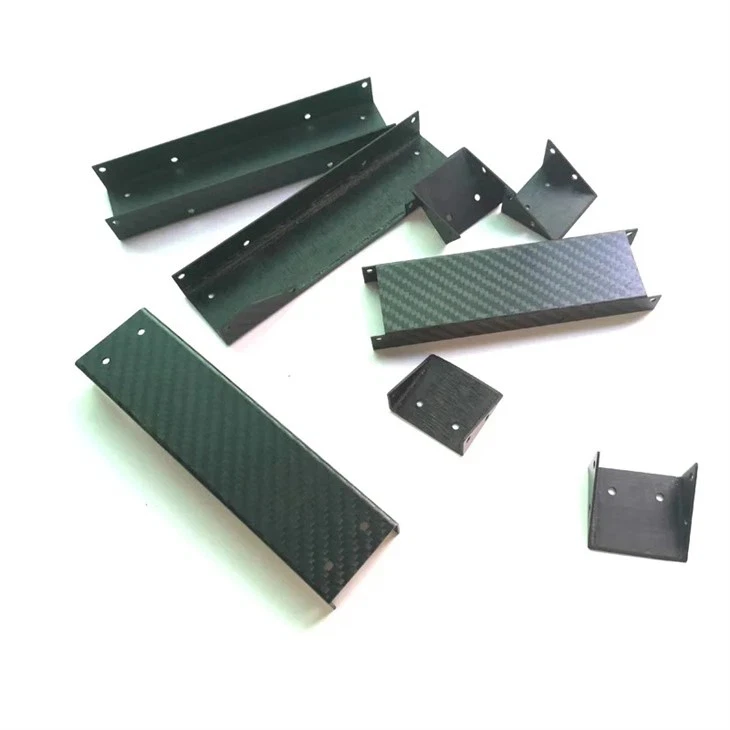
부품 및 프로필
Carbon fiber can be engineered into custom structural parts and profiles through molding, layup, and machining processes.
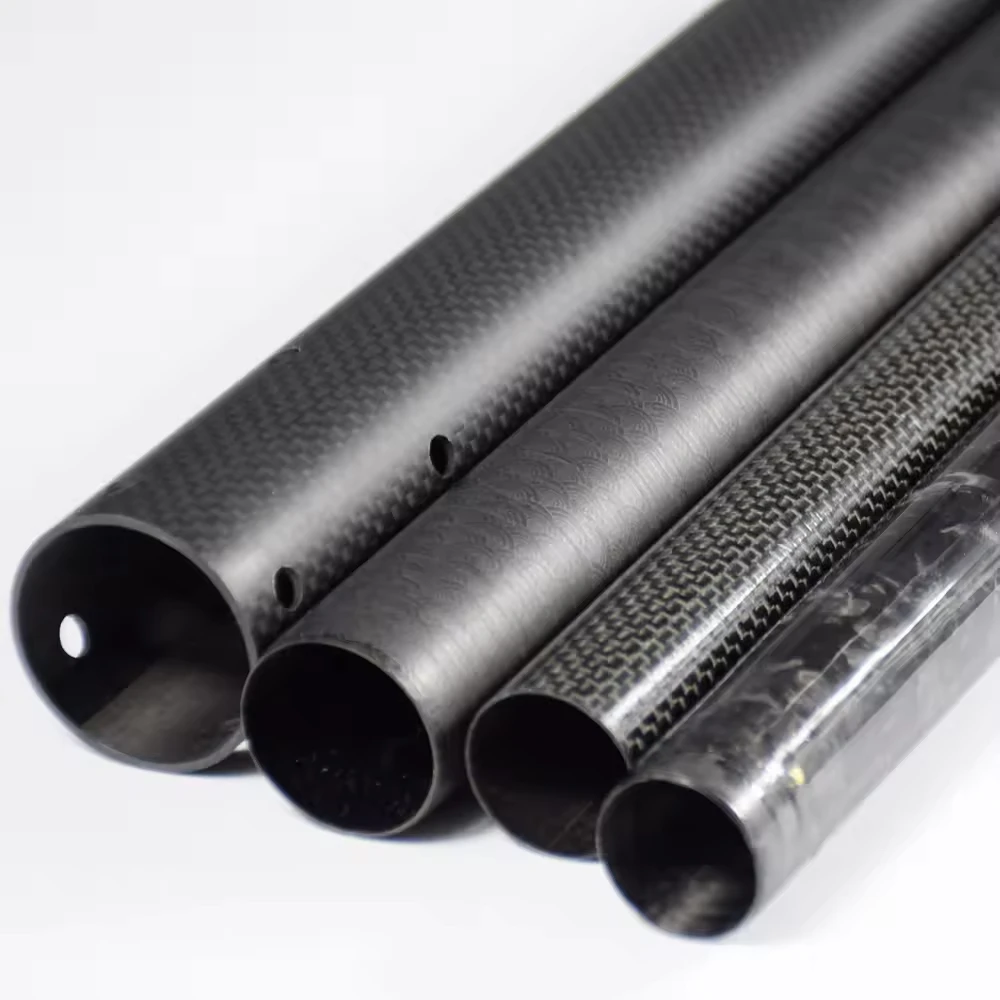
The selection of carbon fiber product form depends on load conditions, geometry, manufacturing method, and cost considerations.
Design Considerations & Limitations of Carbon Fiber
While carbon fiber offers exceptional performance advantages, its effective use requires proper engineering design and an understanding of its material limitations.
Anisotropy & Load Direction
Carbon fiber composites are anisotropic materials, meaning their mechanical properties vary with fiber orientation.
Maximum strength and stiffness are achieved along the fiber direction, making laminate design and load path definition critical in structural applications.
Failure Behavior & Impact Sensitivity
Unlike metals, carbon fiber does not plastically deform before failure.
Overloading or impact can lead to sudden fracture or internal delamination, which may not be visible on the surface but can significantly reduce structural integrity.
Manufacturing & Cost Considerations
Carbon fiber components require specialized manufacturing processes, tooling, and quality control.
Material cost, processing complexity, and production volume must be evaluated early to balance performance benefits with economic feasibility.
Environmental & Thermal Limits
The performance of carbon fiber composites is strongly influenced by the selected resin system.
Service temperature range, UV resistance, and moisture durability depend on resin chemistry and surface protection rather than the carbon fibers themselves.
다양한 탄소 섬유 솔루션 애플리케이션
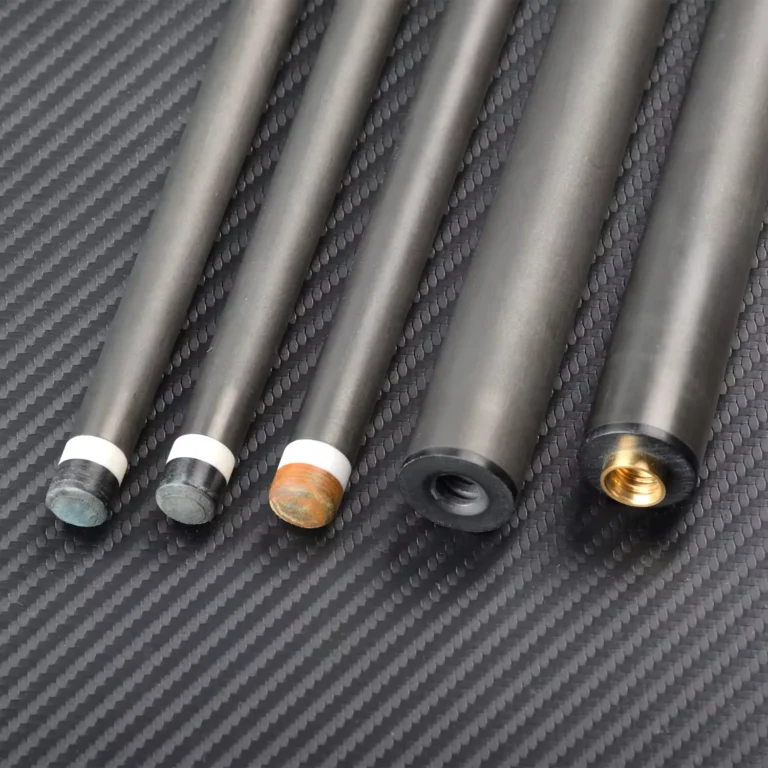
카본 화살촉, 당구 큐, 하키 샤프트, 라크로스 샤프트 및 스포츠용 CFRP 부품
강성, 경량화 및 성능 중심의 스포츠 장비 애플리케이션을 위해 제조된 OEM 탄소 섬유 및 복합재 제품입니다.
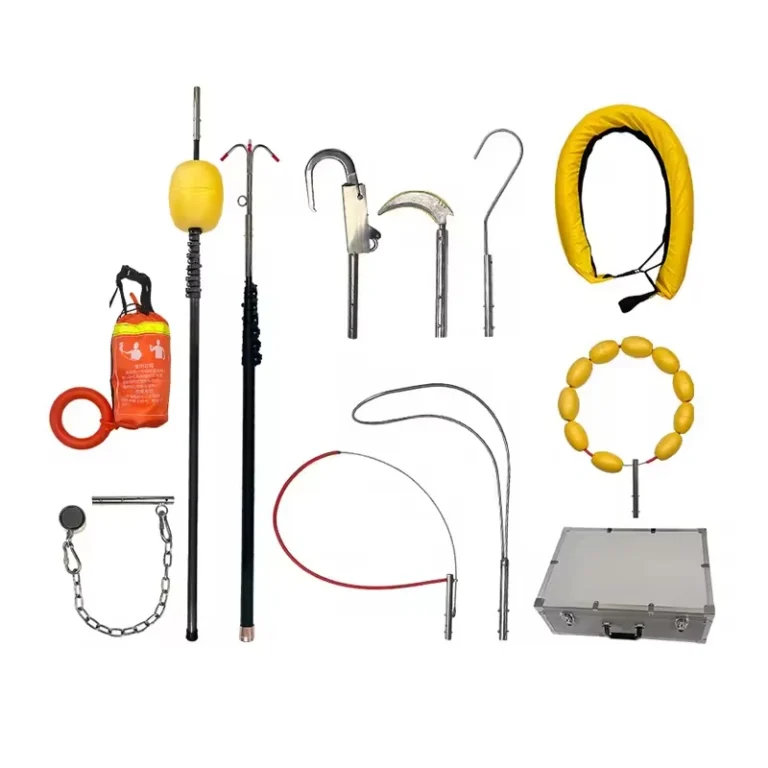
클리닝 폴, 검사 폴, 현장 도구 및 텔레스코핑 복합 구성품
가볍고 내구성이 뛰어난 탄소 섬유 제품은 야외 공구의 휴대성, 도달 범위 및 작동 안정성에 최적화되어 있습니다.
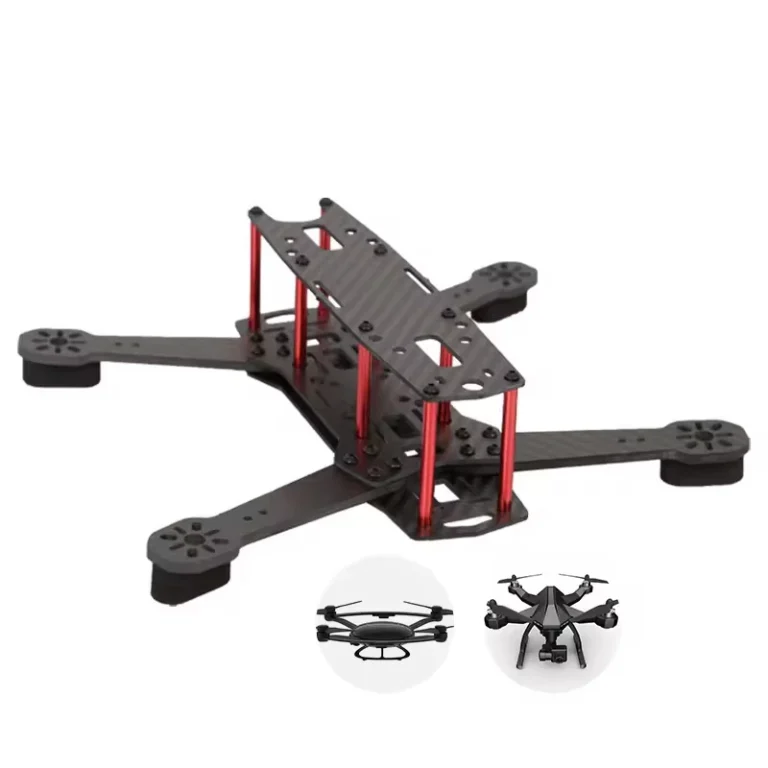
드론 프레임, 암, 랜딩 기어 및 경량 구조 부품
UAV 및 드론 애플리케이션에서 최적화된 중량 대비 성능을 발휘하도록 설계된 고강도 탄소 섬유 구조입니다.
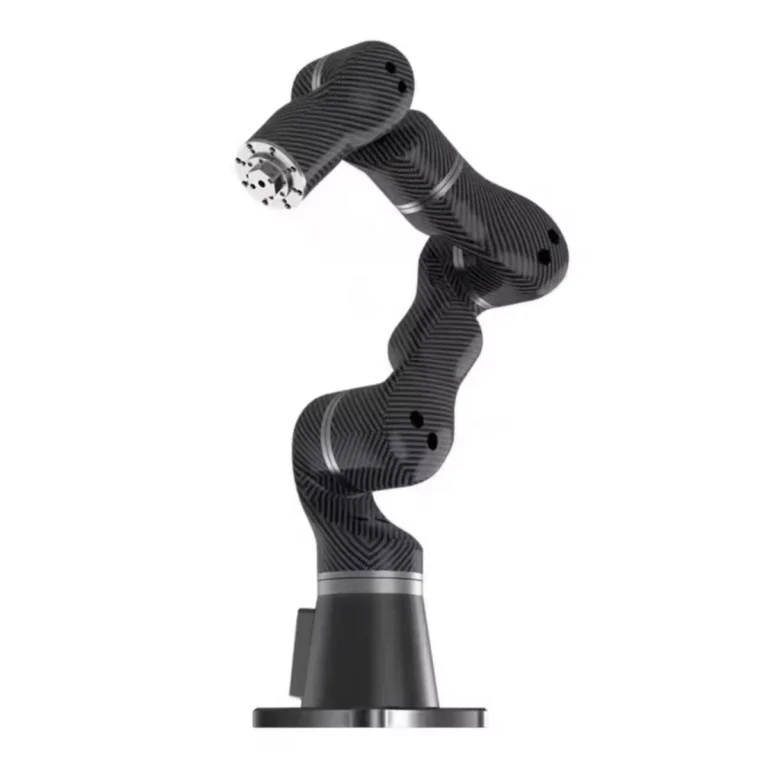
로봇 암, 붐, 구조 링크 및 맞춤형 CFRP 부품
로봇 시스템의 강성, 치수 안정성 및 동적 성능을 위해 설계된 정밀 제조 복합 부품입니다.
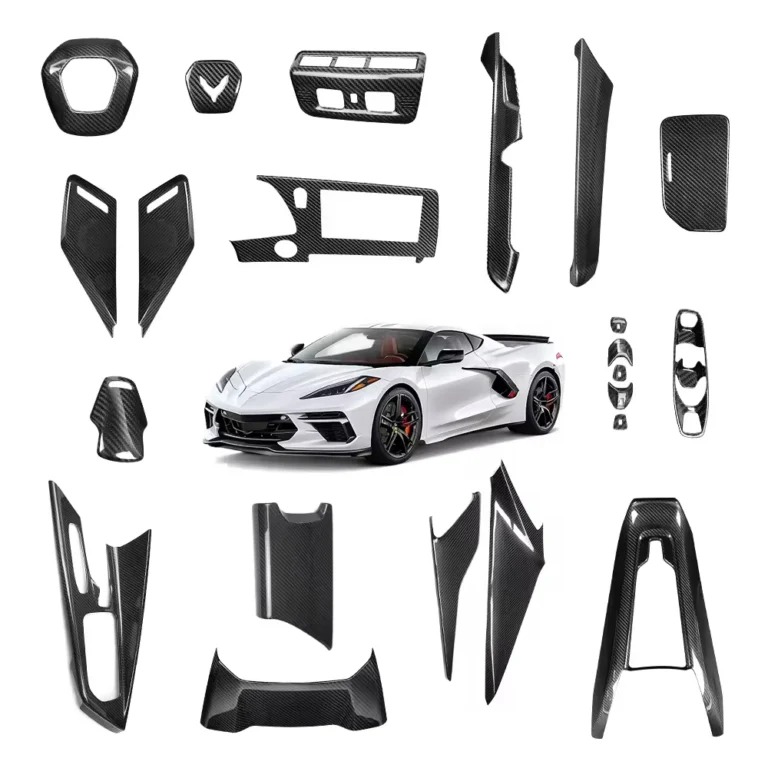
구조 보강재, 인테리어 트림 부품 및 맞춤형 CFRP 부품
탄소 섬유 솔루션은 자동차 및 모빌리티 애플리케이션을 위한 경량화, 기능 통합, 내구성에 중점을 두고 있습니다.
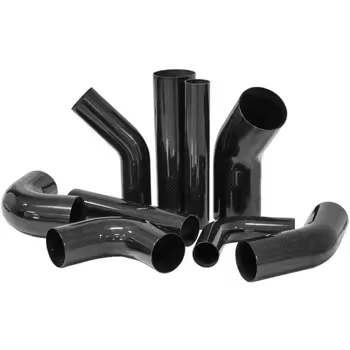
클리닝 폴, 검사 폴, 현장 도구 및 텔레스코핑 복합 구성품
가볍고 내구성이 뛰어난 탄소 섬유 제품은 야외 공구의 휴대성, 도달 범위 및 작동 안정성에 최적화되어 있습니다.
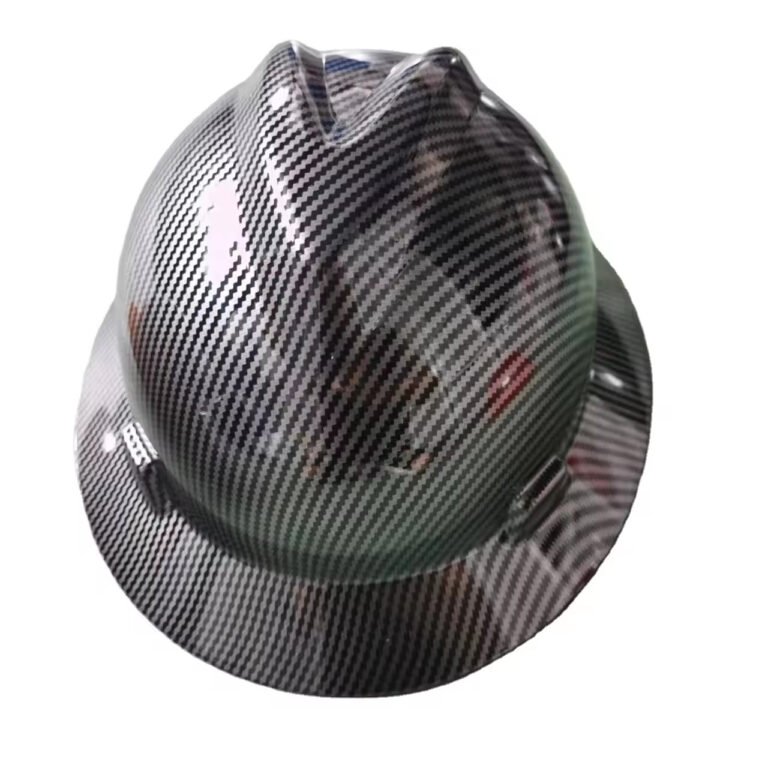
보호 인서트, 헬름, 보강 패널 및 내충격성 복합 부품
보호, 구조적 무결성 및 안전이 중요한 애플리케이션을 위해 설계된 탄소 섬유 및 복합 부품입니다.
Carbon Fiber vs Aluminum: Engineering Material Comparison
Carbon fiber composites and aluminum alloys are both widely used structural materials in industrial and OEM applications.
The comparison below is based on public engineering handbooks, aerospace material databases, and industry standards, commonly referenced during material selection.
1. Density & Weight Efficiency
| 재료 | 밀도(g/cm³) | 참조 |
|---|---|---|
| Carbon Fiber Composite (epoxy) | 1.5 – 1.8 | ASM International |
| 알루미늄 6061-T6 | 2.70 | The Aluminum Association |
Engineering implication:
Carbon fiber composites are typically 30–45% lighter than aluminum for equivalent structural volume, making them preferable in weight-critical designs.
2. Strength-to-Weight Ratio (Specific Strength)
| 재료 | 인장 강도(MPa) | 밀도(g/cm³) | 비강도* |
|---|---|---|---|
| 탄소 섬유 복합재 | 600 – 1500 | 1.5 – 1.8 | 400 – 1000 |
| 알루미늄 6061-T6 | ~310 | 2.70 | ~115 |
*Specific Strength = Tensile Strength / Density (relative comparison)
Data sources:
ASM Handbook, Volume 21 – Composites
Aluminum Association – 6061-T6 Datasheet
Engineering implication:
Carbon fiber delivers 3~8배 높은 비강도 을 알루미늄보다 더 많이 사용하기 때문에 항공우주, 무인항공기, 고성능 구조물에서 알루미늄을 대체하고 있습니다.
3. 강성(모듈러스) 고려 사항
| 재료 | 인장 계수(GPa) | 참조 |
|---|---|---|
| 탄소 섬유 복합재 | 70 - 230(광섬유 방향) | NASA |
| 알루미늄 6061-T6 | ~69 | 알루미늄 협회 |
Engineering implication:
알루미늄은 다음을 제공합니다. 등방성 강성 (모든 방향에서 동일).
탄소 섬유 강성은 방향 의존적, 를 사용하여 엔지니어가 필요한 곳에만 강성을 배치할 수 있으므로 구조가 더 가벼워집니다.
4. 피로 및 서비스 수명
| 성능 측면 | 탄소 섬유 | 알루미늄 | 참조 |
|---|---|---|---|
| 피로 행동 | 10⁶ 사이클 후 성능 저하 최소화 | 점진적인 균열 성장 | ASTM D3479 / ASM |
| 내식성 | 부식에 대한 내성 | 보호 장치 없이는 취약함 | NASA / ASM |
| 일반적인 서비스 수명 | 15-25년 이상 | 디자인에 따라 달라짐 | FAA / ASM |
Engineering implication:
탄소 섬유는 다음과 같은 분야에서 탁월한 성능을 발휘합니다. 주기적 로딩 환경, 알루미늄은 세심한 피로 및 부식 관리가 필요합니다.
5. 열 및 환경 성능
| 매개변수 | 탄소 섬유 복합재 | 알루미늄 | 참조 |
|---|---|---|---|
| 열팽창 계수 | -0.1 ~ 1.0 µm/m-K | ~23 µm/m-K | NASA |
| 연속 서비스 온도 | 수지 의존적(120-250°C) | >200 °C | ASM |
Engineering implication:
탄소 섬유 제공 뛰어난 치수 안정성 온도 변화에 따라 알루미늄은 열에 의해 크게 팽창합니다.
6. 제조 및 비용 고려 사항
| 팩터 | 탄소 섬유 | 알루미늄 |
|---|---|---|
| 재료비 | 더 높음 | Lower |
| 제조 | 복합 레이업, 성형, 경화 | 가공, 압출, 성형 |
| 디자인 유연성 | 높음(사용자 지정 레이업) | 보통 |
| 모범 사용 사례 | 무게가 중요한 고성능 | 비용에 민감한 대용량 |
요약: 탄소 섬유가 알루미늄을 대체할 때
일반적으로 알루미늄보다 탄소 섬유를 선택하는 경우가 많습니다:
무게 감소가 중요합니다.
높은 비강도 또는 강성이 요구됨
내피로성 및 부식 내성이 중요합니다.
맞춤형 구조 최적화로 재료비 상승을 정당화합니다.
Aluminum remains advantageous where:
Cost sensitivity dominates
Isotropic properties are preferred
High-volume, simple geometries are required
Data Sources & Standards
ASM Handbook, Volume 21 – Composites
NASA Materials and Processes Technical Information System (MAPTIS)
ASTM D3039 / ASTM D3479
The Aluminum Association – Aluminum 6061-T6 Datasheets
FAA Advisory Circular AC 20-107B
자주 묻는 질문
Is carbon fiber stronger than steel?
Yes, carbon fiber has a significantly higher strength-to-weight ratio than steel.
While steel may offer higher absolute strength in bulk form, carbon fiber provides comparable or higher tensile strength at a much lower weight, making it more efficient in weight-sensitive structural applications.
Is carbon fiber stronger than aluminum?
In terms of specific strength and stiffness, carbon fiber outperforms aluminum.
Carbon fiber composites can achieve several times the strength-to-weight ratio of aluminum alloys, which is why they are often selected in aerospace, UAV, and high-performance structural designs.
Is carbon fiber brittle?
Carbon fiber does not plastically deform like metals and is considered a brittle material in failure behavior.
When overloaded, it may fail suddenly rather than bending, which is why proper laminate design, safety factors, and impact considerations are critical in engineering applications.
What is carbon fiber strain?
Carbon fiber strain typically refers to strain-to-failure, which indicates how much deformation the material can withstand before fracture.
For standard carbon fiber composites, strain-to-failure values generally range from approximately 1.3% to 2.1%, depending on fiber grade, resin system, and laminate architecture.
How long does carbon fiber last?
Carbon fiber composites offer excellent fatigue resistance and do not corrode like metals.
When properly designed and protected from excessive impact or environmental exposure, carbon fiber components can achieve service lives of 15–25 years or more in structural applications.
Is carbon fiber affected by heat or moisture?
Carbon fibers themselves are thermally stable, but the resin system determines heat and moisture resistance.
Continuous service temperature and environmental durability depend on resin selection, surface protection, and operating conditions rather than the carbon fibers alone.
When is carbon fiber not a good choice?
Carbon fiber may not be ideal for cost-sensitive, high-volume designs, applications requiring ductile deformation, or environments involving severe impact without inspection capability.
In such cases, metals or alternative composites may provide a more suitable balance of performance and cost.