Pourquoi les clients nous choisissent :
- Fabricant-Contrôle direct
- Soutien à l'ingénierie
- Une qualité constante
- Délai de livraison fiable

Carbon Kevlar tubes are hybrid composite structural tubes that combine carbon fiber stiffness with Kevlar’s impact and abrasion resistance through controlled laminate or braided architectures.
Carbon fibers primarily carry structural loads, while Kevlar reinforcement improves damage tolerance in areas prone to shock, edge wear, or repeated handling.
These tubes are rigid, OEM-grade components designed for precision assembly and machining—not inflatable or consumer-grade tubing.
We supply multiple carbon Kevlar tube configurations for different structural requirements.
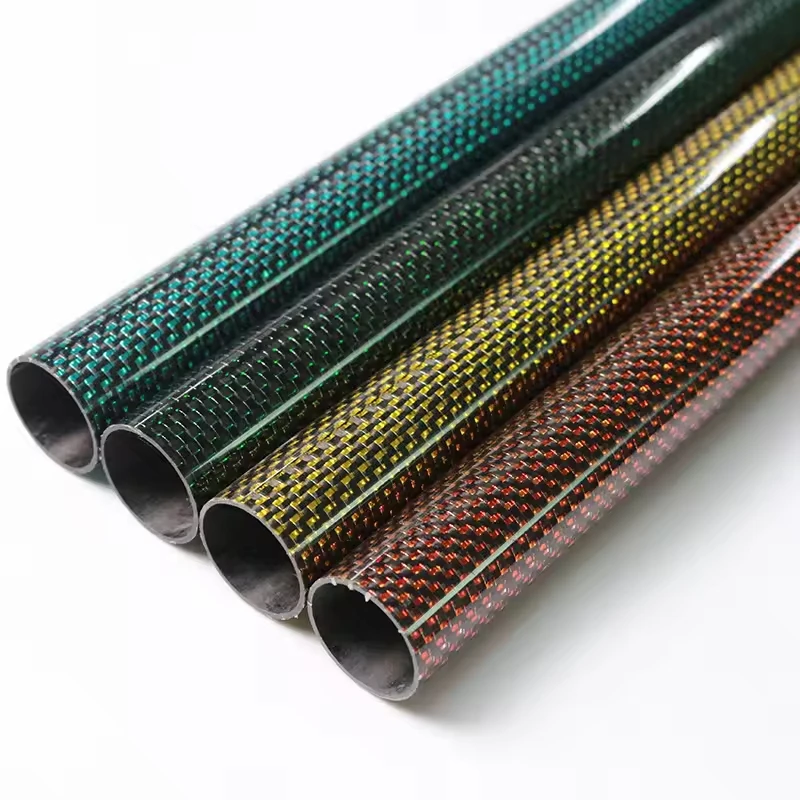
Braided carbon Kevlar tubes are manufactured using interlaced carbon and aramid fibers to achieve balanced strength in axial, torsional, and radial directions.
This structure improves impact tolerance and surface durability while maintaining stable geometry, making it suitable for dynamic assemblies and contact-prone structural components.
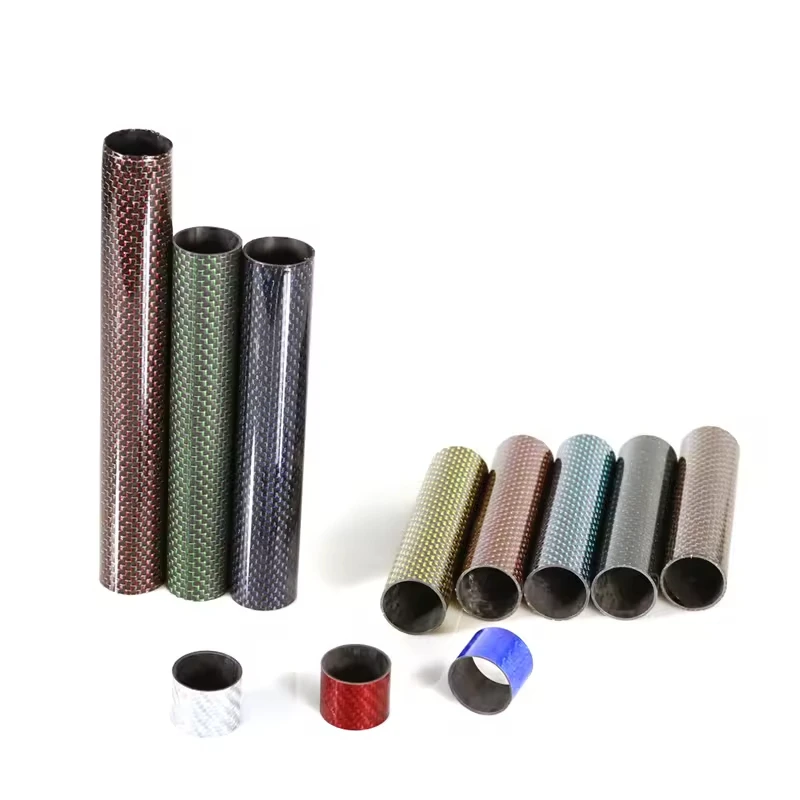
Kevlar composite tubes prioritize impact resistance, abrasion durability, and damage control rather than maximum stiffness.
They are commonly selected for structures exposed to shock loading, edge contact, or repeated handling, where predictable failure behavior and service life are critical.

Carbon Kevlar hybrid tubes use carbon fiber as the primary load-bearing material, with Kevlar reinforcement added selectively within the laminate.
This hybrid configuration preserves structural stiffness while improving resistance to impact, surface wear, and handling-related damage in demanding OEM applications.
Carbon Kevlar tubes are used in structural systems requiring durability, impact resistance, and stiffness.

Carbon Kevlar tubes are used in robotic arms, support frames, and protective structures where stiffness must be maintained under vibration, impact, and repeated motion. Kevlar reinforcement improves damage tolerance in dynamic and contact-prone assemblies.
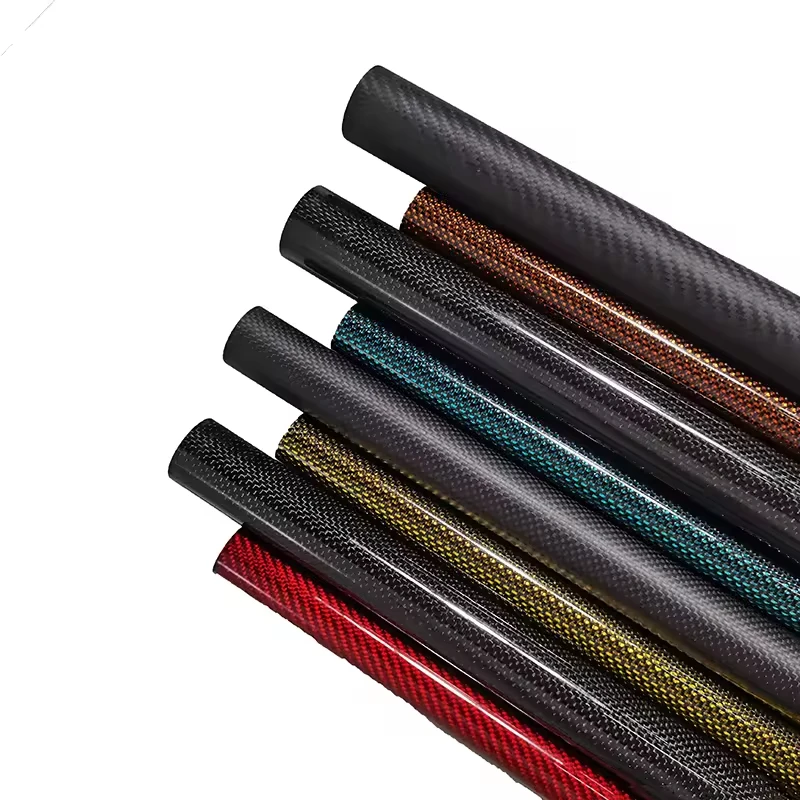
In UAV support systems and aerospace ground equipment, carbon Kevlar tubes provide lightweight structural performance while offering better resistance to handling damage and accidental impact during transport and operation.
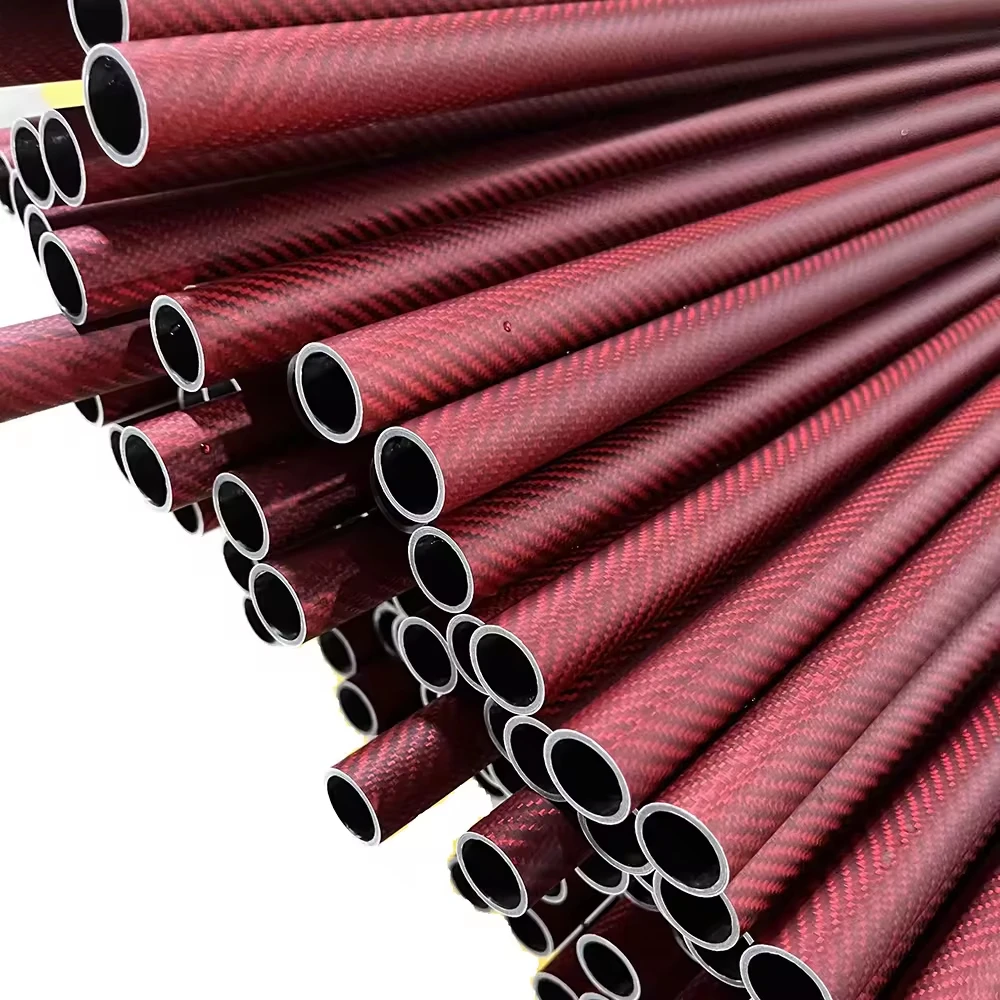
Carbon Kevlar tubes are applied in performance-oriented structures that experience shock loading, vibration, and frequent assembly. The hybrid construction helps reduce brittle failure risks while maintaining high stiffness-to-weight efficiency.
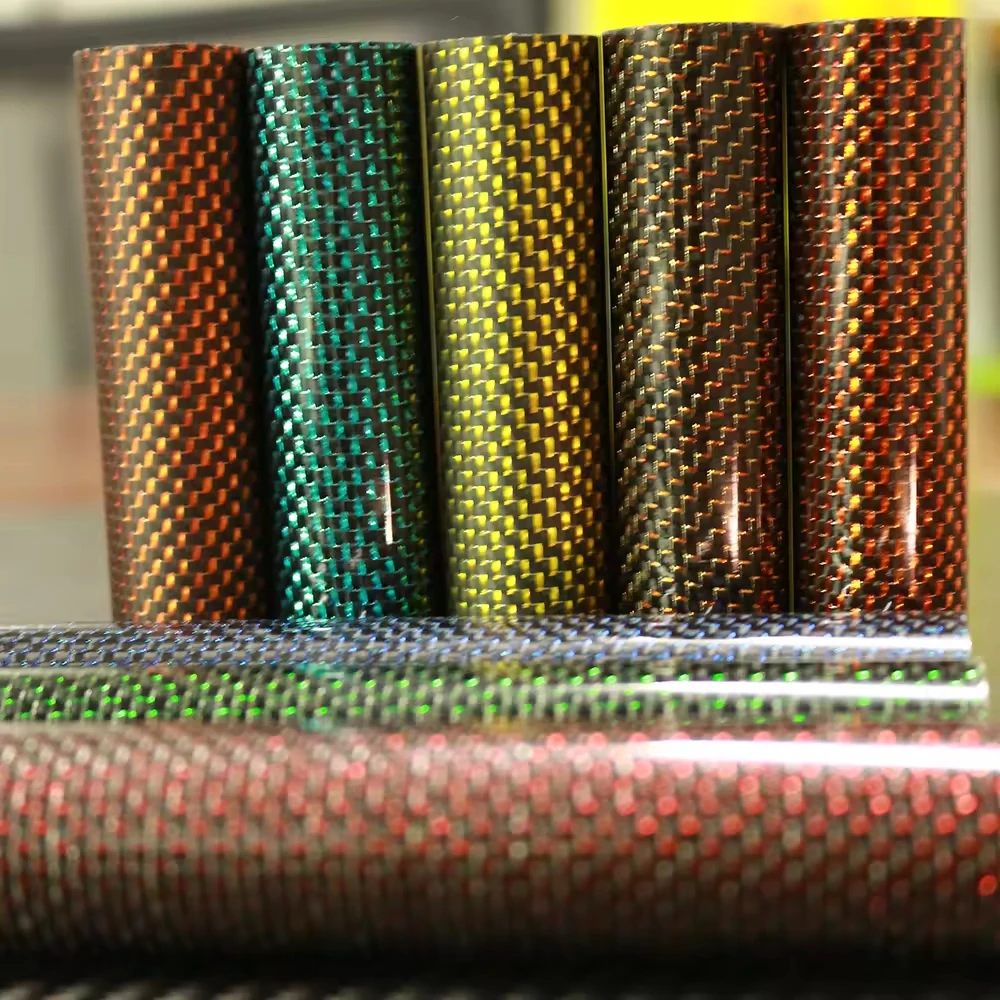
For industrial environments, these tubes are used in protective frames, guards, and lightweight structural supports. Kevlar reinforcement enhances abrasion resistance and edge durability in areas exposed to repeated contact or wear.
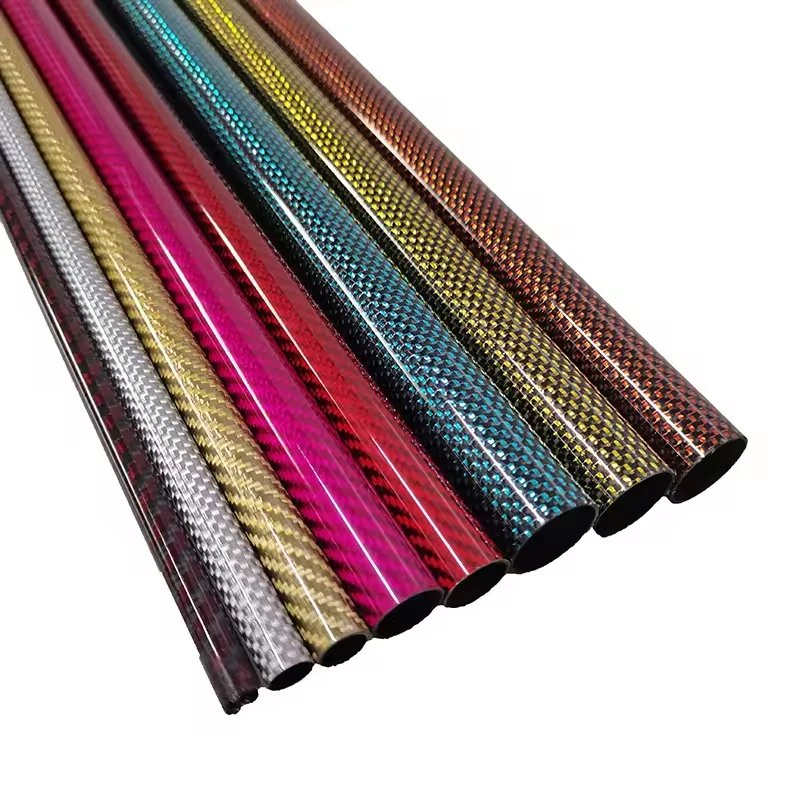
In marine and offshore applications, carbon Kevlar tubes are selected for their corrosion resistance, structural stability, and improved impact tolerance in harsh operating environments where durability and weight reduction are both critical.
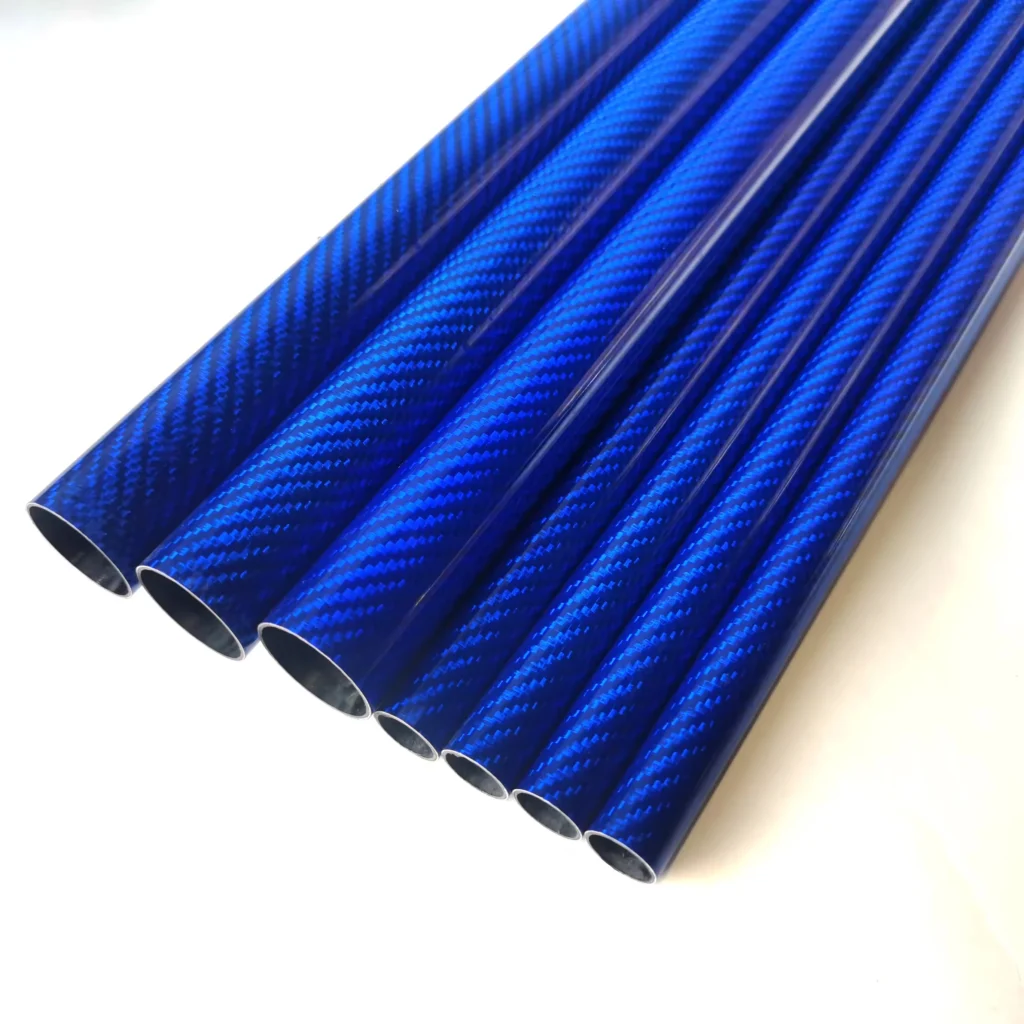
Carbon Kevlar tubes are used in masts and support structures for sensors and instrumentation, where dimensional stability, vibration control, and long-term reliability are required in outdoor or mobile systems.
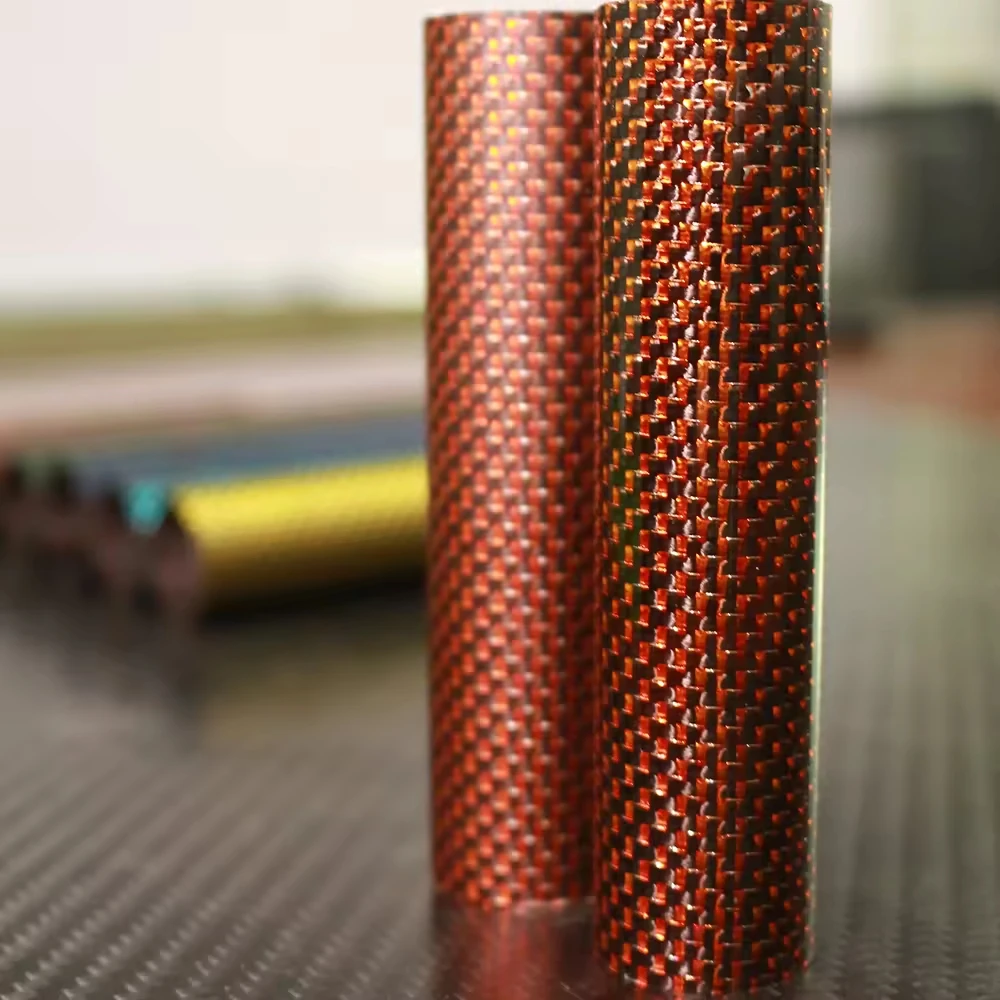
For sports equipment manufacturers, carbon Kevlar tubes are applied in structural components where durability, impact resistance, and consistent mechanical performance are essential during repeated use and handling.
Carbon Kevlar tubes are supplied to drawing or specification, with key structural parameters defined for machining, assembly, and long-term service.
| Parameter | Typical Capability |
|---|---|
| Outer Diameter (OD) | Defined per drawing or specification |
| Inner Diameter (ID) | Controlled by mandrel and layup design |
| Length | Cut-to-length or continuous lengths |
| Wall Thickness | Engineered through hybrid laminate structure |
| Fiber Architecture | Braided or layered carbon–Kevlar hybrid |
| Fiber Composition | Carbon fiber with aramid (Kevlar) reinforcement |
| Resin System | Structural epoxy systems |
| Surface Condition | As-cured, matte, gloss, or sanded |
| Dimensional Control | Drawing-based tolerances |
| Machining Compatibility | Suitable for CNC cutting and drilling |
| Inspection Method | Dimensional and visual inspection |
| Production Consistency | Controlled layup with batch traceability |
Carbon Kevlar tubes balance stiffness, impact resistance, and abrasion durability for demanding structural applications.
Kevlar reinforcement improves the tube’s ability to absorb impact energy and limit crack propagation, reducing the risk of brittle failure common in pure carbon structures. This makes carbon Kevlar tubes more reliable in shock-prone or handling-intensive environments.
Kevlar fibers enhance resistance to surface wear and edge damage at contact points such as clamps, joints, and mounting interfaces. This extends service life in applications where repeated contact or friction is unavoidable.
Carbon fibers remain the primary load-bearing element, ensuring high axial and bending stiffness. Kevlar is added selectively to reinforce vulnerable regions without significantly compromising rigidity or weight efficiency.
Under vibration, cyclic loading, or repeated assembly, carbon Kevlar tubes maintain structural integrity better than standard carbon tubes. Improved damage tolerance results in more predictable long-term performance.
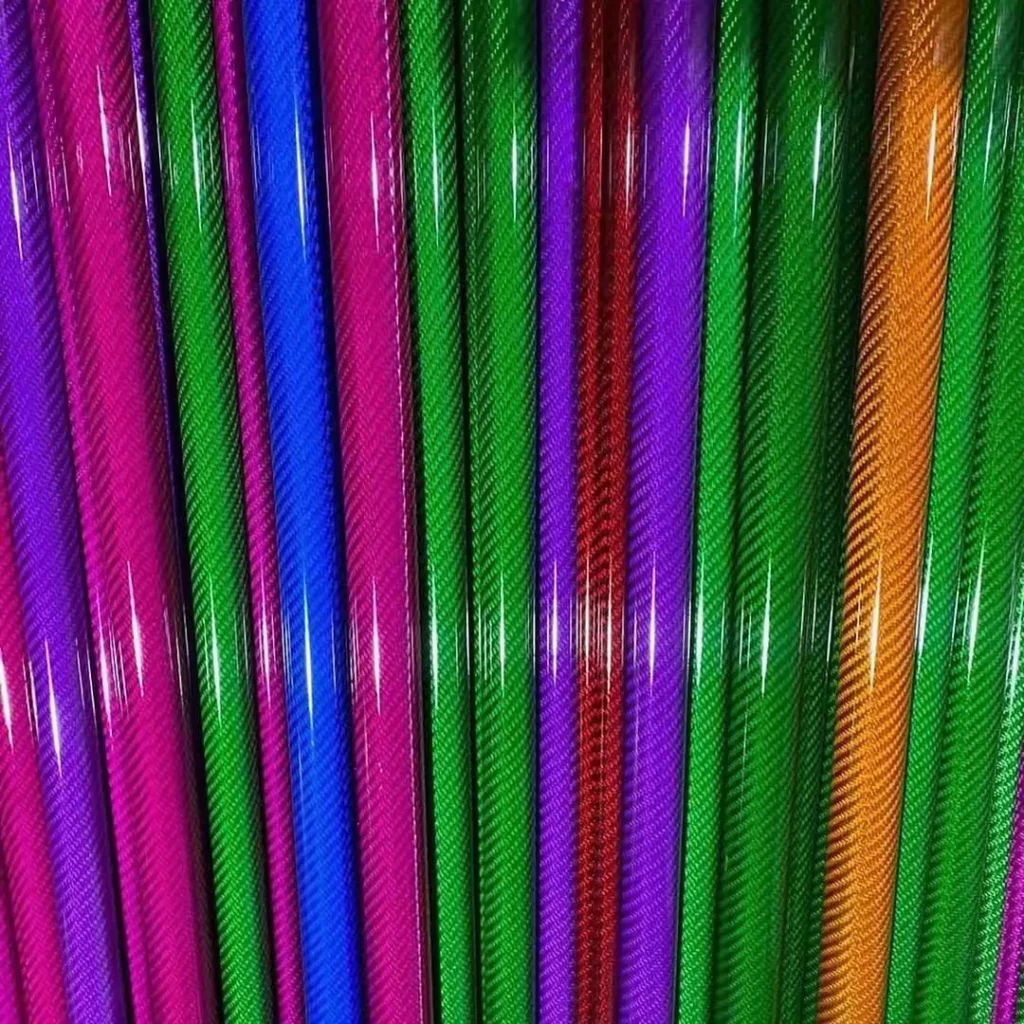
Controlled Hybrid Layup
Carbon and Kevlar fibers are placed in defined architectures to ensure consistent stiffness, impact resistance, and structural behavior.
Process & Curing Consistency
Controlled curing parameters are applied to maintain stable mechanical performance across production batches.
Dimensional & Visual Inspection
Tubes are inspected for key dimensions and surface condition to meet drawing-based requirements.
Batch Repeatability for OEM Supply
Production focuses on repeatable layup and process control to support reliable, long-term OEM programs.
Carbon Kevlar tubes and carbon fiber tubes are both lightweight composite structures, but they are engineered for different failure behaviors and operating conditions.
The choice between them is not about which material is “stronger,” but about how the structure behaves under impact, wear, and long-term service.
Carbon fiber tubes prioritize maximum stiffness and weight efficiency, while carbon Kevlar tubes introduce aramid reinforcement to improve damage tolerance, abrasion resistance, and failure predictability in demanding environments.
| Comparison Aspect | Carbon Kevlar Tube | Carbon Fiber Tube |
|---|---|---|
| Primary Design Goal | Balanced stiffness with damage tolerance | Maximum stiffness-to-weight |
| Load-Carrying Behavior | Carbon carries load; Kevlar limits damage | Carbon carries load exclusively |
| Impact Resistance | High – absorbs energy and limits cracking | Moderate – prone to brittle fracture |
| Abrasion & Edge Durability | Excellent due to Kevlar fibers | Limited, especially at cut edges |
| Failure Mode | Progressive, controlled damage | Sudden, brittle failure |
| Performance Under Vibration | More tolerant of cyclic and dynamic loads | High stiffness but lower damage tolerance |
| Weight Efficiency | Slightly higher weight due to hybrid layers | Lowest possible weight for stiffness |
| Machining Behavior | Tougher edges, more damage-resistant | Cleaner cuts, but more edge sensitivity |
| Surface Durability | Better for contact and clamping zones | More susceptible to surface wear |
| Typical Selection Logic | Durability-critical structures | Stiffness-critical structures |
Choose carbon fiber tubes when:
Maximum stiffness and minimum weight are the primary design drivers
Loads are well-defined and impact risk is low
The structure operates in controlled environments
Clean machining edges and tight tolerances are the top priority
Choose carbon Kevlar tubes when:
Structures are exposed to impact, abrasion, or repeated handling
Failure predictability and service life are more important than absolute stiffness
The application involves vibration, shock loading, or dynamic motion
Surface durability at clamps, joints, or interfaces is critical
From an engineering standpoint, carbon Kevlar tubes are not a replacement for carbon fiber tubes, but a functional alternative designed to address carbon fiber’s inherent brittleness.
By combining carbon’s stiffness with Kevlar’s energy absorption and wear resistance, hybrid tubes offer a more forgiving structural response in real-world operating conditions.
For OEM designs where damage tolerance and long-term reliability matter as much as stiffness, carbon Kevlar tubes provide a practical balance between performance and durability.
Carbon Kevlar tubes focus on improved impact resistance and abrasion durability, while carbon fiber tubes prioritize maximum stiffness and minimum weight.
Kevlar reinforcement reduces brittle failure and improves service life in demanding environments.
Carbon Kevlar tubes are used in structural systems exposed to impact, vibration, abrasion, or repeated handling.
They are commonly applied in robotics, industrial frames, UAV support structures, and performance engineering assemblies.
Kevlar tubes are not stiffer than carbon fiber tubes, but they are more damage- and impact-tolerant.
Carbon fiber carries structural loads efficiently, while Kevlar improves energy absorption and crack resistance.
Yes, carbon Kevlar tubes can be CNC machined with appropriate tooling and fixturing.
Machining parameters should be optimized to manage Kevlar fibers and maintain clean edges.
Carbon Kevlar tube manufacturers focus on controlled hybrid layup, dimensional consistency, and batch repeatability.
These factors are critical for OEM programs requiring stable long-term supply.