Por qué nos eligen nuestros clientes :
- Fabricante-Control Directo
- Apoyo técnico
- Calidad constante
- Plazos de entrega fiables

Carbon fiber for automotive applications refers to vehicle components and automotive-related products that use carbon fiber composites as structural materials in performance-driven and lightweight designs.
From structural and functional vehicle parts to exhaust components and automotive service tools, carbon fiber is widely applied across modern passenger cars, electric vehicles, and specialized automotive platforms.
In automotive engineering and manufacturing, carbon fiber is selected not for appearance, but for its ability to deliver weight reduction, structural efficiency, and design flexibility under demanding operating conditions.
As a result, carbon fiber has become an established material solution for a wide range of automotive applications, supporting both OEM production and custom vehicle-related components.
Material behavior and performance constraints relevant to this application are documented in our Visión general del material de fibra de carbono.
ConsultaTypical carbon fiber products used in automotive applications are selected based on vehicle system requirements and verified application demand.
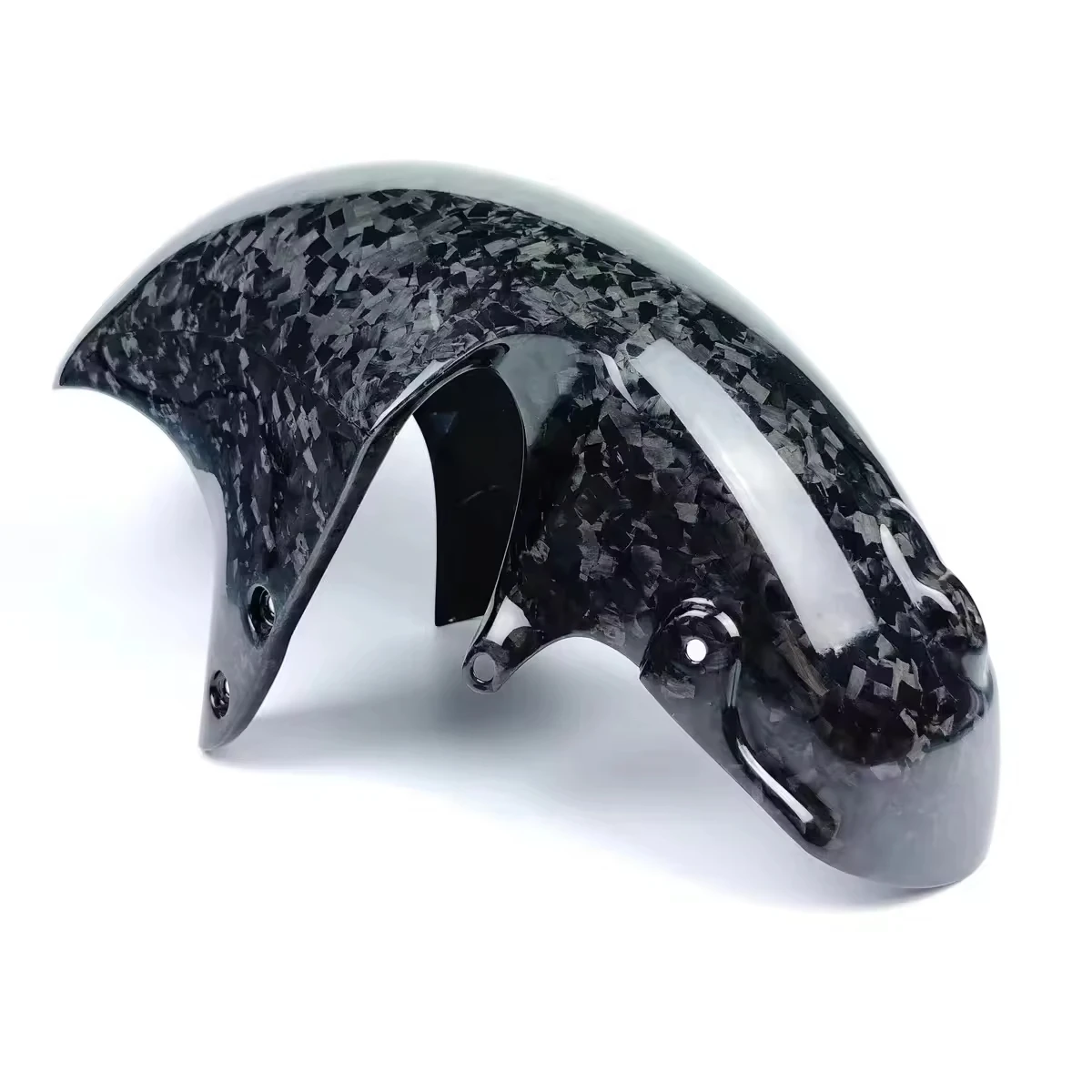
Carbon fiber car parts are widely used in automotive applications where weight reduction and structural efficiency are required.
These parts are commonly applied across vehicle body systems, functional components, and structural reinforcements, supporting both performance-focused and efficiency-driven vehicle designs.
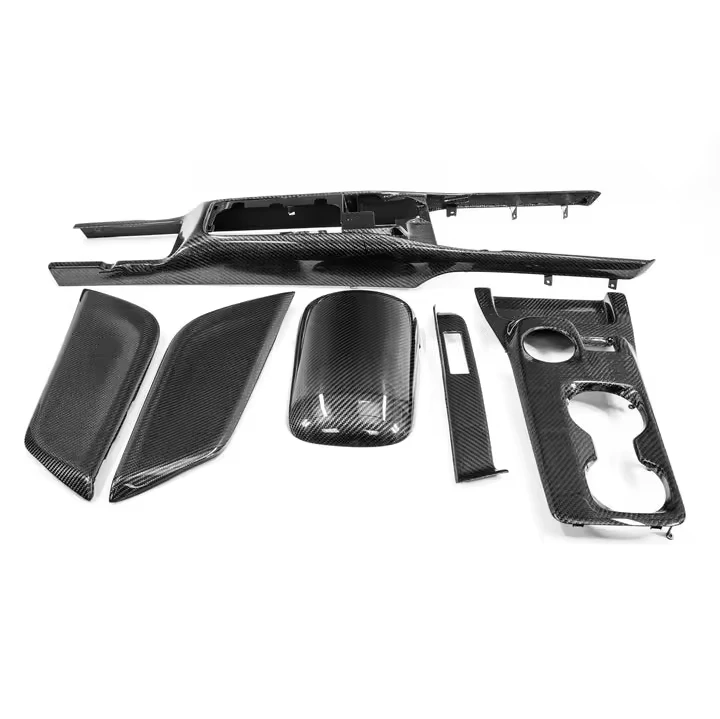
Custom carbon fiber car parts are developed for automotive projects with specific geometry, load conditions, or integration requirements.
They are commonly used in OEM programs, low-volume production, and specialized vehicle platforms where standard automotive components cannot meet design targets.
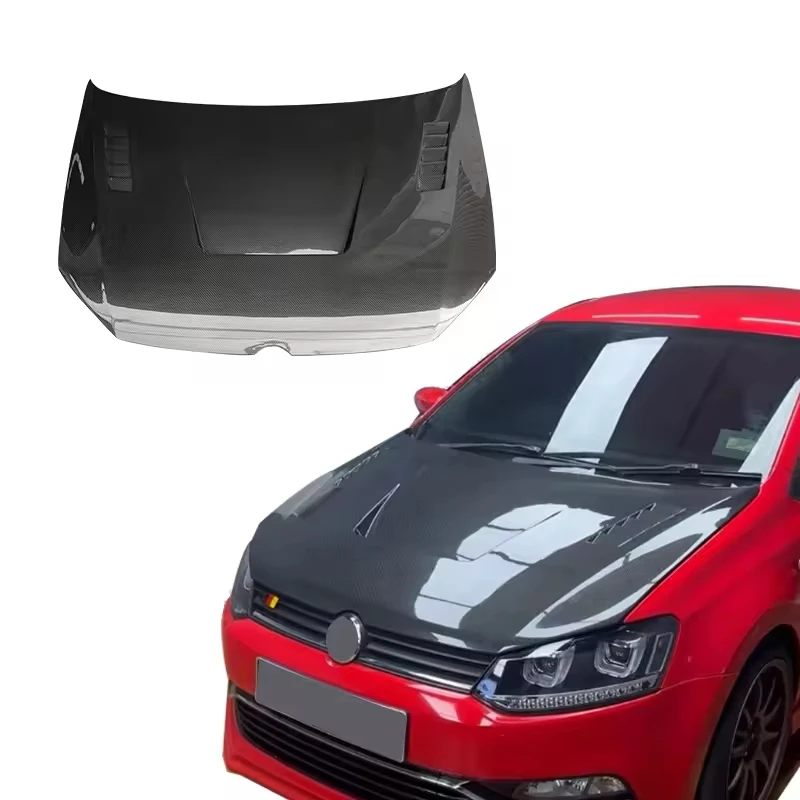
Carbon fiber car hoods are used to reduce front-end vehicle weight while maintaining stiffness and dimensional stability.
They are typically applied in performance-oriented and lightweight vehicle designs where improved weight distribution and structural efficiency are important.
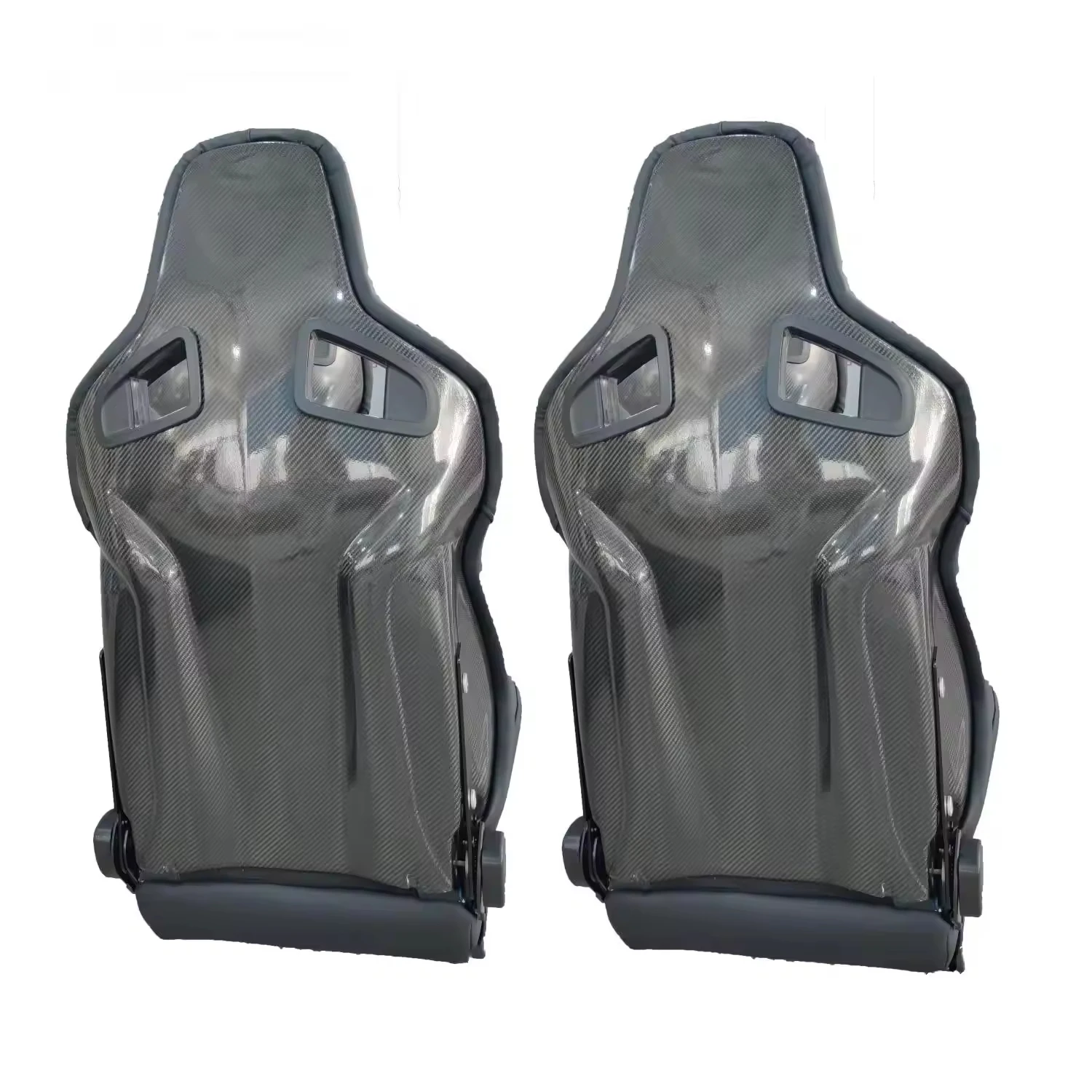
Carbon fiber car seats and seat structures are used in automotive interiors to achieve lightweight construction with sufficient structural support.
These components help reduce overall vehicle mass while meeting strength and durability requirements for interior automotive applications.
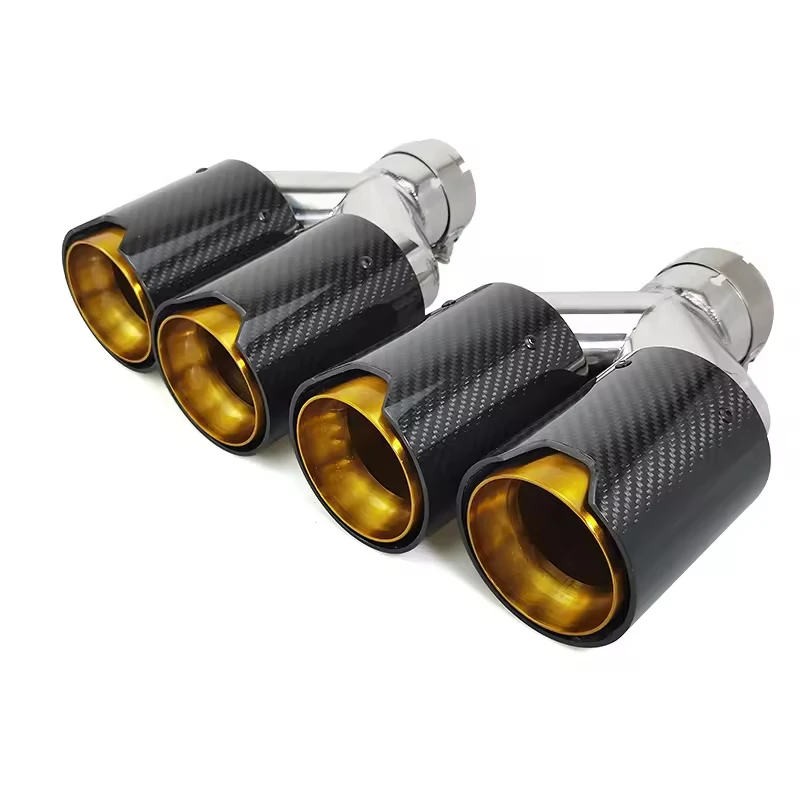
Carbon fiber exhaust tips are used in automotive exhaust systems where lightweight construction and structural integrity are prioritized.
They are commonly applied as tail-end exhaust components in performance and lightweight vehicle configurations.

Carbon fiber PDR tools are lightweight automotive repair tools designed for paintless dent repair operations.
Their high stiffness and reduced weight improve handling precision and help reduce operator fatigue during automotive body repair processes.
Automotive carbon fiber products are engineered around specific mechanical, thermal, and dimensional requirements rather than generic material properties.
| Variable de diseño | Typical Automotive Reference | Why It Matters |
| Carbon Fiber Grade | T300–T800 carbon fiber commonly used in automotive parts | Balances tensile strength, stiffness, and cost for car components |
| Módulo de tracción | ~230–294 GPa (automotive-grade CFRP) | Determines stiffness in car hoods, seats, and structural parts |
| Densidad | ~1.55–1.60 g/cm³ for carbon fiber automotive laminates | Enables significant vehicle weight reduction |
| Resin System (Epoxy) | Tg typically 120–180 °C for automotive applications | Ensures durability near exhausts and under-hood environments |
| Layup Strategy | Quasi-isotropic or torsion-optimized laminate design | Critical for driveshafts, seats, and load-bearing car parts |
| Tolerancia dimensional | ±0.2–0.5 mm in automotive assemblies | Required for reliable fitment in vehicle systems |
Automotive carbon fiber products are typically manufactured using different composite material forms, selected based on structural function, geometry, and performance requirements.
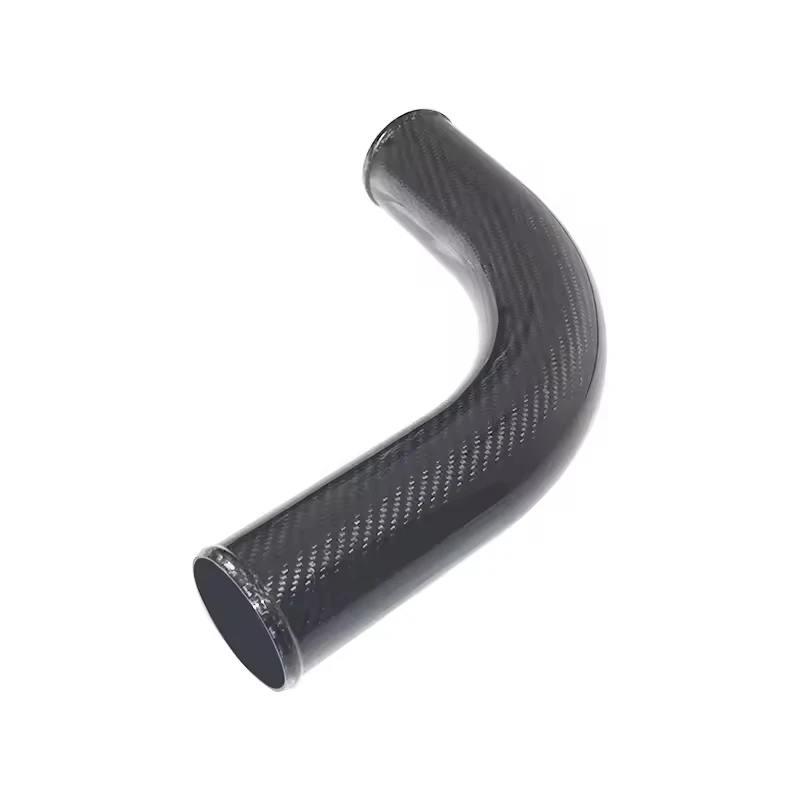
Carbon fiber tubes are commonly used in automotive components requiring high torsional stiffness and low rotational mass.
They are widely applied in products such as driveshafts, structural supports, and selected automotive frameworks.
→ Más información sobre los tubos de fibra de carbono
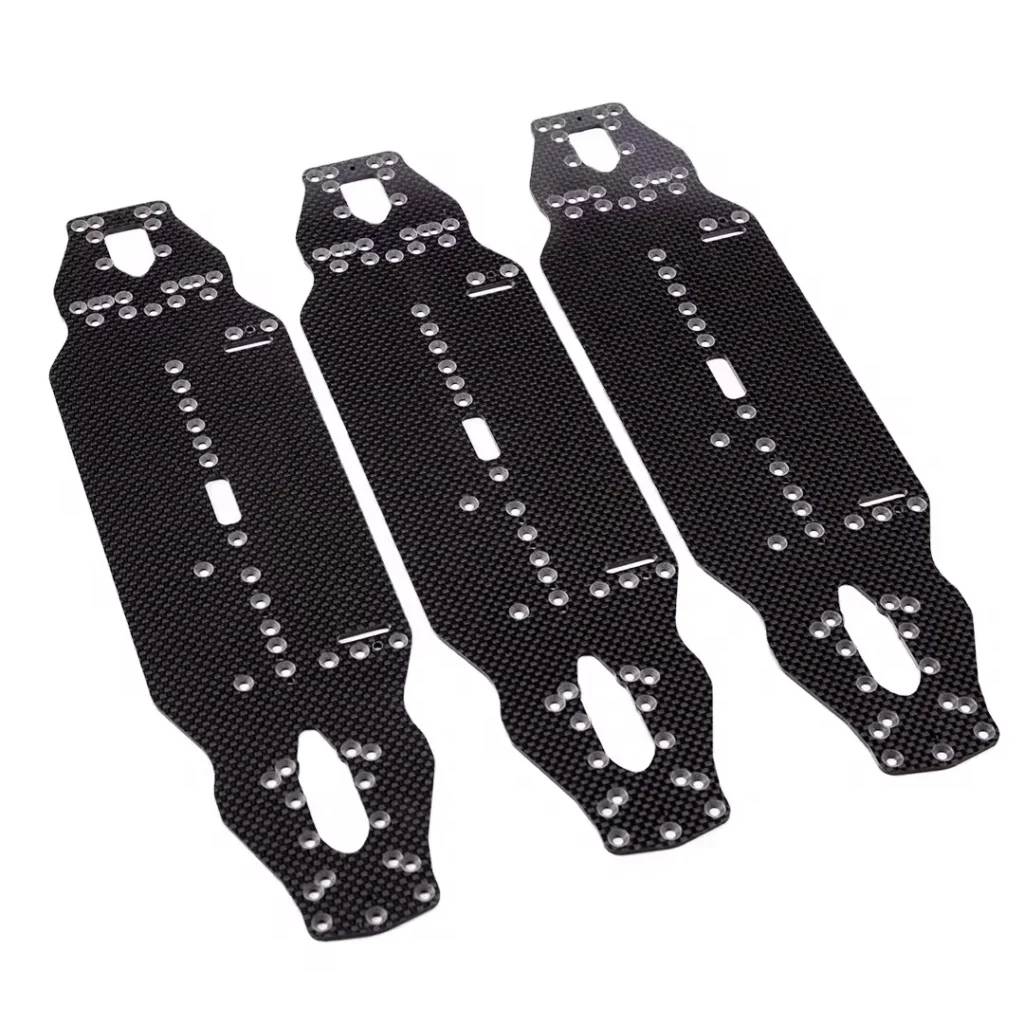
Carbon fiber sheets and panels are used in automotive body parts, hoods, interior components, and covers where controlled thickness and surface stability are required.
These materials support CNC machining and precise fitment in vehicle assemblies.
→ Más información sobre asientos y placas de fibra de carbono

Carbon fiber rods are applied in selected automotive components and service tools where stiffness and straightness are important.
They are often used in lightweight supports and automotive repair tools, including PDR-related applications.
→ Learn more about Carbon Fiber Rods
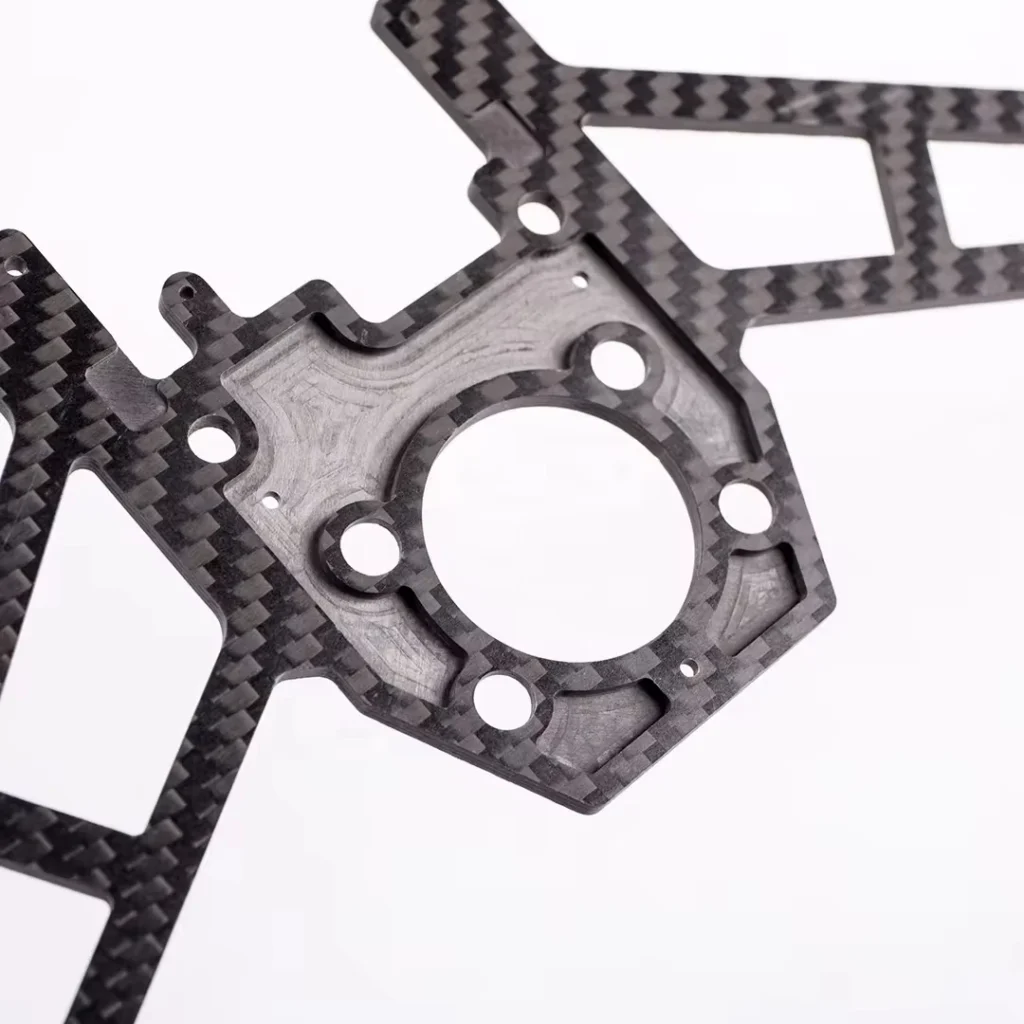
Carbon fiber profiles and custom composite parts are used in automotive applications with non-standard geometry or integration requirements.
These materials support OEM components, aftermarket parts, and application-specific automotive solutions.
→ Learn more about Carbon Fiber Profiles
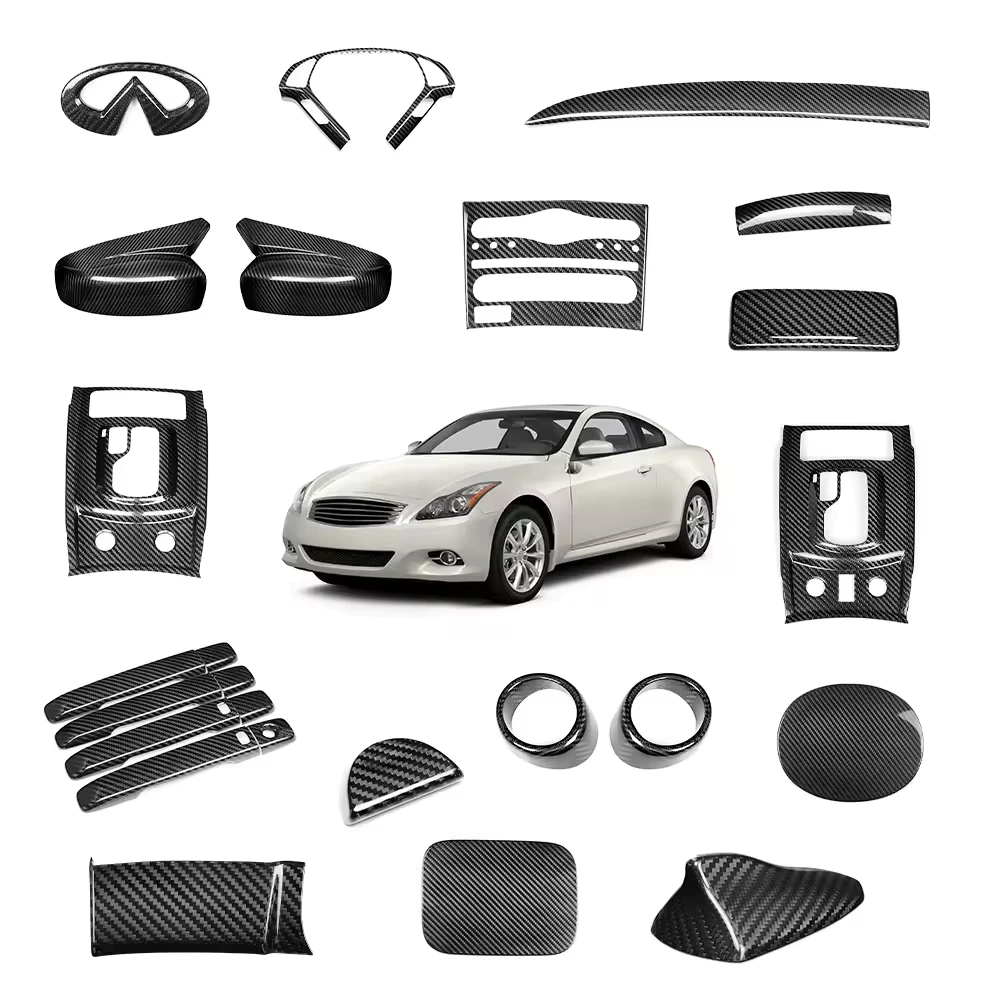
Carbon fiber is used in automotive applications where weight reduction, structural efficiency, and durability provide measurable performance benefits at the vehicle system level.
Carbon fiber automotive parts typically achieve 30–60% weight reduction compared with steel or aluminum while maintaining comparable structural performance, improving overall vehicle efficiency.
With tensile modulus values around 230–294 GPa, automotive carbon fiber products provide high stiffness without adding mass, supporting bending- and torsion-critical car components.
Carbon fiber automotive components do not rust or corrode, making them suitable for long-term use in body parts, interior structures, and automotive service tools.
Carbon fiber laminate design allows fiber orientation and thickness to be tailored to load paths, enabling custom carbon fiber car parts with complex geometry and optimized performance.
Automotive-grade carbon fiber systems typically operate at continuous service temperatures of 120–150 °C, with higher Tg systems used near exhaust and under-hood areas.
Antecedentes de la aplicación
A vehicle manufacturer required lightweight carbon fiber components for a performance-oriented automotive platform, targeting improved weight efficiency while maintaining structural reliability in selected vehicle systems.
Solución de fibra de carbono
Carbon fiber was selected for key automotive parts, including body-related components, seat structures, and exhaust-adjacent parts.
Automotive-grade carbon fiber materials were used with application-specific laminate design to meet stiffness, durability, and temperature requirements.
Engineering Considerations
Result
The carbon fiber automotive components contributed to measurable vehicle weight reduction and improved structural efficiency, supporting the project’s lightweight and performance objectives.

Antecedentes de la aplicación
An automotive repair service provider required lightweight and rigid tools for paintless dent repair (PDR) operations, aiming to improve handling precision and reduce operator fatigue during repetitive repair tasks.
Solución de fibra de carbono
Carbon fiber was selected for PDR tools due to its high stiffness-to-weight ratio and excellent fatigue resistance.
Compared with traditional steel tools, carbon fiber PDR tools provided improved maneuverability while maintaining sufficient strength for controlled force application.
Engineering Considerations
Result
The carbon fiber PDR tools improved handling efficiency and user comfort during automotive dent repair, supporting consistent performance in professional automotive service operations.

Yes. Carbon fiber is widely used in automotive applications to reduce vehicle weight while maintaining stiffness and durability in structural and functional car parts.
Common carbon fiber car parts include car hoods, body panels, seat structures, exhaust tips, and selected structural automotive components.
Carbon fiber automotive parts are used to improve stiffness-to-weight efficiency, reduce overall vehicle mass, and enable complex automotive component designs.
Yes. Carbon fiber exhaust components, such as carbon fiber exhaust tips, are used in exhaust-adjacent automotive areas where lightweight construction and dimensional stability are required.
Yes. Custom carbon fiber car parts are commonly used in OEM and low-volume automotive projects where standard parts cannot meet specific design or integration requirements.
Yes. Carbon fiber PDR tools are widely used in automotive repair because their low weight and high stiffness help improve handling precision and reduce operator fatigue.
Automotive manufacturers use carbon fiber automotive materials because they offer a higher stiffness-to-weight ratio and corrosion resistance compared with steel or aluminum.
Yes. Carbon fiber automotive components provide long-term durability due to their corrosion resistance, fatigue performance, and dimensional stability in vehicle environments.
We supply a comprehensive range of composite products designed for car and automotive applications.