
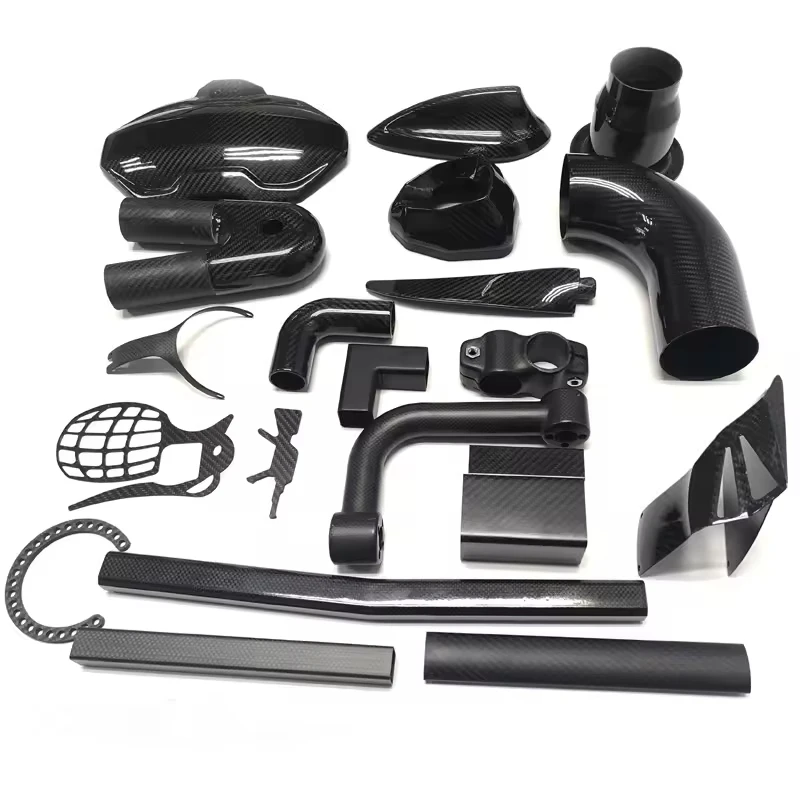
Real-World Applications Across Industries
Carbon Fiber Applications Overview
| Application Area | Typical Carbon Fiber Products | Key Performance Benefits |
|---|---|---|
| Sportovní vybavení | Shafts, frames, tubes, plates, rods | Lightweight, stiffness control, vibration damping |
| Venkovní nářadí | Telescopic poles, extension tubes | Long reach, reduced fatigue, corrosion resistance |
| Drony a bezpilotní letadla | Frames, arms, tubes, CNC plates | Weight reduction, vibration stability, flight efficiency |
| Robotika a automatizace | Robot arms, gantry beams, structural plates | Low inertia, high stiffness, positional accuracy |
| Automobily a automobilový průmysl | Body parts, hoods, seats, PDR tools | Weight reduction, structural efficiency, durability |
| Průmyslové a užitkové služby | Inspection poles, support arms, composite tubes | Safe handling, corrosion resistance, long service life |
| Ochrana a bezpečnost | Guards, covers, handles, panels | Impact resistance, structural reliability |
Carbon Fiber in Sports Equipment
Carbon fiber is extensively used in sports equipment because performance depends on strength-to-weight ratio, stiffness control, straightness, and vibration behavior. In most cases, carbon fiber is the primary load-bearing structure rather than a cosmetic layer.
Common sports equipment that uses carbon fiber
Carbon fiber is widely used in:
Shafts and tubes for golf, hockey, lacrosse, and cue sports
Archery components such as hřídele šípů and stabilizer rods
Racket frames for tennis, badminton, squash, and padel
Paddle sports equipment including SUP paddles and kayak paddles
Water sports components such as stěžně pro windsurfing, booms, and hydrofoil structures
Marine and training equipment including výložníkové tyče and slalom poles
Why carbon fiber is used in sports
Designers use carbon fiber to:
Tune stiffness and flex profiles for specific disciplines
Reduce weight without sacrificing strength
Improve vibration damping and control
Maintain straightness and consistency over repeated use
Typical carbon fiber forms used in sports
Tubes for frames, shafts, and structural members
Sheets and plates for boards, panels, and CNC-machined parts
Rods for axial stiffness and controlled flex
Custom parts and profiles for OEM integration
Carbon Fiber for Outdoor Tools
Outdoor tools are one of the most practical uses of carbon fiber, especially where long reach and low operator fatigue are essential. Carbon fiber is commonly used as telescopic tubing in tools designed for cleaning, inspection, rescue, and field operations.
Outdoor tools commonly made with carbon fiber
Water fed poles and high-reach cleaning poles
Gutter, roof, and solar panel cleaning tools
Fruit picking, pruning, and pole saw systems
Survey poles and GPS / GNSS measuring rods
Rescue and safety reach poles
Inspection camera poles for roofs, bridges, and structures
Key design requirements for outdoor tools
High stiffness at full extension
Low weight for overhead or prolonged use
Secure locking systems such as clamps, twist locks, or spring buttons
Corrosion resistance in wet or outdoor environments
Why carbon fiber is preferred
Compared with aluminum or steel, carbon fiber poles offer:
Lower weight for improved ergonomics
Better stiffness-to-weight ratio at long lengths
Improved durability in harsh environments
Carbon Fiber in Drones & UAV Systems
Carbon fiber is a core structural material in drones and UAV platforms because it allows designers to reduce mass while maintaining frame rigidity, alignment accuracy, and vibration stability.
Common carbon fiber UAV components
Drone frames and airframe plates
Structural arms, booms, and tubes
Mounting plates and reinforcement panels
CNC-machined components for motors, cameras, and gimbals
Parts used in DIY and custom UAV builds
Why carbon fiber is used in UAVs
Carbon fiber helps improve:
Flight time and payload capacity
Structural stiffness with minimal weight
Vibration control for sensors and imaging systems
Dimensional stability under dynamic loads
Typical carbon fiber forms in UAVs
Tubes for arms, booms, and landing structures
Sheets and plates for CNC-cut frame components
Bonded or integrated assemblies for platform-level systems
Carbon Fiber for Robotics & Automation
In robotics and automation, carbon fiber is used to improve speed, accuracy, and energy efficiency. Reducing moving mass while maintaining stiffness allows robotic systems to operate faster and more precisely.
Robotics applications using carbon fiber
Robot arms and long-reach links
Gantry beams and automation frames
Structural plates and panels
Mounting interfaces and reinforced joints
Key engineering benefits
Carbon fiber enables:
Lower inertia for faster acceleration and deceleration
Reduced deflection for improved positional accuracy
Better vibration behavior at high cycle rates
Long-term dimensional stability in industrial environments
Common carbon fiber product forms
Tubes for arms and structural members
Sheets and plates for CNC machining
Bonded assemblies with metal inserts or interfaces
Carbon Fiber in Cars & Automotive Applications
Automotive applications use carbon fiber to reduce weight while maintaining structural performance. Beyond racing, carbon fiber is increasingly used in functional components, interior structures, and specialized tools.
Automotive components made from carbon fiber
Body panels and structural parts
Hoods and exterior components
Seat structures and interior reinforcements
Exhaust tips and trim components
Paintless dent repair (PDR) tools
Why carbon fiber is used in automotive design
Weight reduction improves handling and efficiency
High stiffness supports structural integrity
Fatigue resistance improves long-term reliability
Complex shapes can be produced for low-volume OEM projects
In many automotive applications, carbon fiber components can reduce weight by 30–60% compared to steel or aluminum while maintaining comparable structural performance.
Carbon Fiber for Industrial & Utility Use
In industrial and utility environments, carbon fiber is selected for safe handling, corrosion resistance, and structural reliability, especially in portable or long-reach equipment.
Typical industrial and utility applications
Inspection poles and camera positioning systems
Support arms and mounting structures
Portable poles for field operations
Composite tubes and rods for structural use
Carbon fiber vs fiberglass in utility applications
Carbon fiber offers higher stiffness and lower weight
Fiberglass is used when electrical insulation is required
Material selection depends on safety, environment, and load requirements
Carbon Fiber in Protective & Safety Products
Protective and safety applications use carbon fiber as a functional structural material, not merely for appearance. Performance, reliability, and consistency over time are critical.
Common protective and safety products
Impact and abrasion guards
Structural covers and housings
Reinforced handles and grips
Protective panels for equipment and users
Why carbon fiber is used
High strength with controlled weight
Dimensional stability under load
Reliable performance over long service life
Choosing the Right Carbon Fiber Form
Selecting the correct carbon fiber form depends on the structural role, not just the product name:
Tubes: bending and torsion structures such as arms, poles, and frames
Sheets & plates: flat stiffness and CNC-machined components
Tyče: axial stiffness, straightness, and reinforcement
Custom parts & assemblies: complex geometry and OEM integration
OEM & Manufacturing Perspective
The applications described above reflect how carbon fiber is used in real-world OEM manufacturing, where material selection is driven by performance requirements, structural reliability, and long-term service life—not appearance alone.
In practical production, factors such as fiber orientation, laminate design, wall thickness, and interface integration directly affect stiffness, fatigue behavior, and dimensional stability. These considerations are especially critical in applications involving long reach, high cycle rates, or dynamic loading.
Understanding carbon fiber by application—not just by material properties—helps engineers, buyers, and product teams make more informed decisions when developing lightweight structural components for demanding environments.
You may also like

Kompozitní trubky
Zaměření na vysokou tuhost a nízkou hmotnost pro konstrukce zaměřené na výkon.
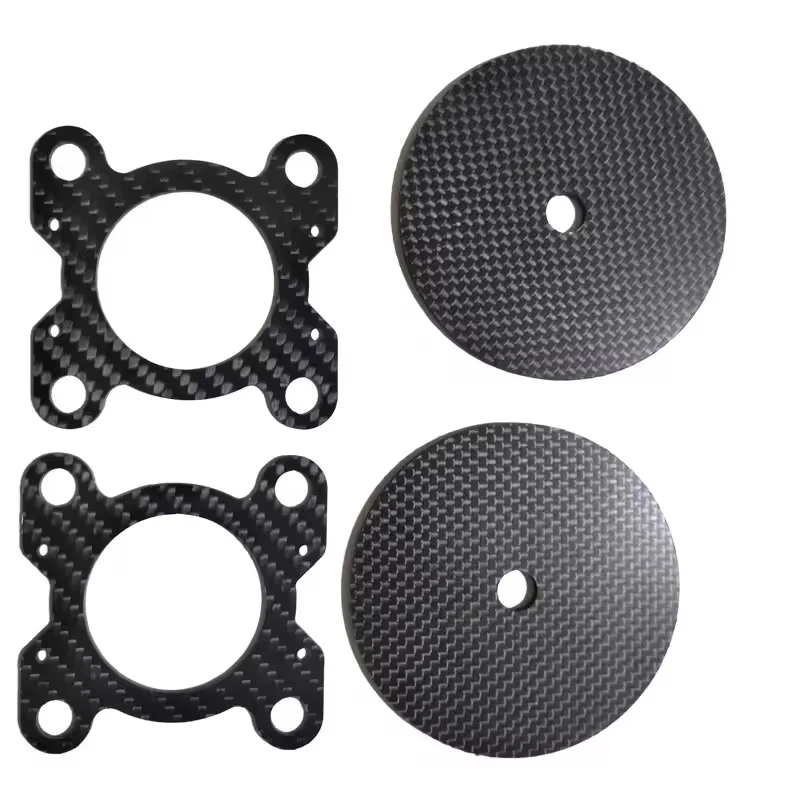
Carbon Fiber Sheets & Plates
Flat laminate stock for CNC cutting and lightweight structural components.
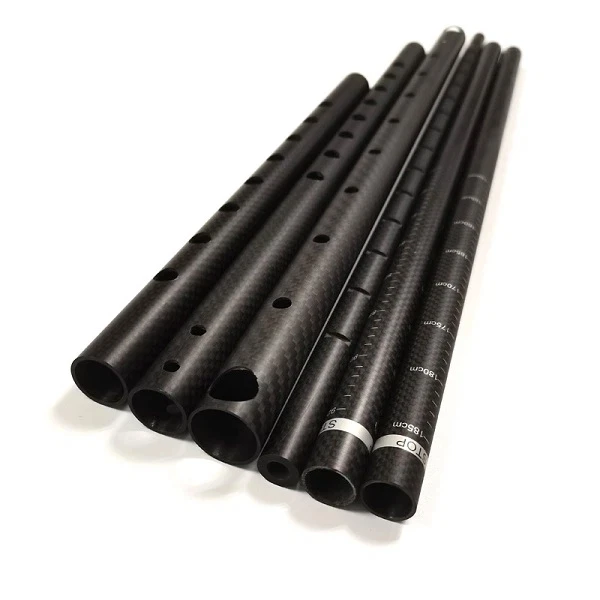
Kompozitní tyče
Rod-shaped composite products supplied for industrial and OEM assemblies.
Kompozitní výrobky
Nabízíme kompletní portfolio kompozitních výrobků:
