
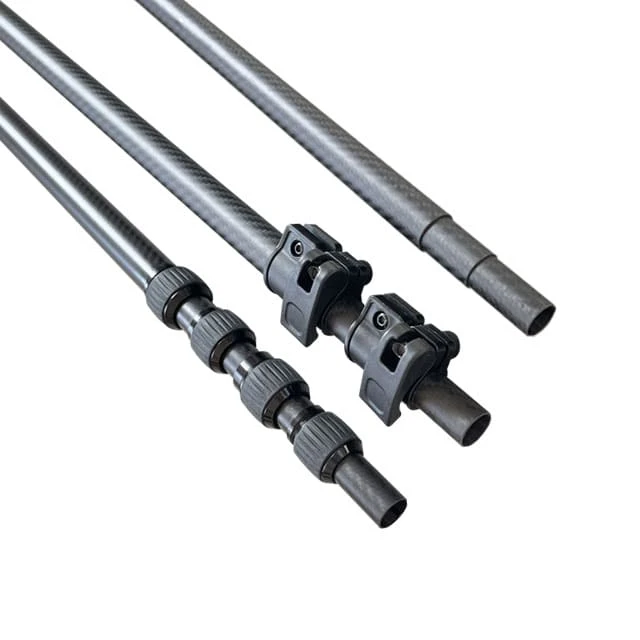
How to Connect Carbon Fiber Tubes: Methods, Joints & Design Tips
Carbon fiber tubes are widely used in lightweight structures, telescopic poles, robotics, camera systems, drones, industrial tools, and custom OEM assemblies. In many of these products, the performance of the final structure depends not only on the tube itself, but also on how the tubes are joined.
That is where many projects run into trouble. A tube may have the right diameter, wall thickness, and stiffness, but the wrong joint design can still lead to crushing, slipping, misalignment, premature wear, or failure in service.
There is no single universal method for connecting carbon fiber tubes. Some assemblies require permanent bonded joints. Others need removable clamps, threaded fittings, internal sleeves, or quick-release mechanisms. The right choice depends on the tube size, wall thickness, loading direction, working environment, and whether the assembly needs to be adjusted or disassembled later.
Why the Joint Matters in a Carbon Fiber Tube Assembly
Many buyers focus first on the tube material, fiber grade, or surface finish. Those details matter, but the joint often determines whether the full assembly performs well in practice.
A well-designed carbon fiber joint should do more than simply hold two parts together. It should also:
maintain alignment
transfer load efficiently
avoid local crushing of the tube wall
support repeatable assembly when needed
match the application’s weight and durability targets
This is especially important because carbon fiber behaves differently from metal. It offers excellent stiffness-to-weight performance, but it does not respond well to poor clamping pressure, unsupported drilling, or connector designs that create concentrated stress.
For that reason, joining carbon fiber tubes should be treated as an engineering decision, not just a hardware selection.
Main Methods for Connecting Carbon Fiber Tubes
There are several proven ways to join carbon fiber tubes. The best option depends on whether the structure is permanent or removable, how much load the joint must carry, and whether appearance, adjustment, or maintenance matters.
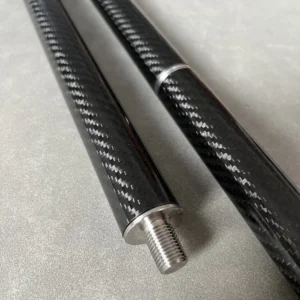
1. Internal Sleeve Joints
An internal sleeve joint uses a smaller insert or sleeve placed inside the carbon fiber tube to connect two sections. This method is commonly used in straight tube-to-tube assemblies where a clean outer profile is preferred.
Internal sleeves are often bonded into place with structural adhesive, although in some designs they can also work with mechanical retention features.
Best for:
end-to-end tube joining
clean external appearance
lightweight structural assemblies
permanent or semi-permanent joints
Advantages:
good alignment
smooth outer surface
compact design
suitable for many round tube assemblies
Limitations:
requires good fit control
usually not ideal for frequent disassembly
bond quality and surface preparation are critical
This is often one of the most efficient solutions when a customer wants to connect carbon fiber tubes without adding bulky external hardware.
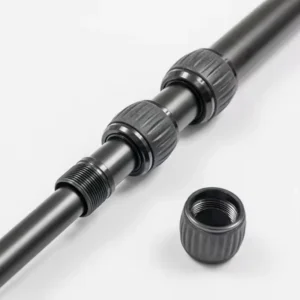
2. External Clamps
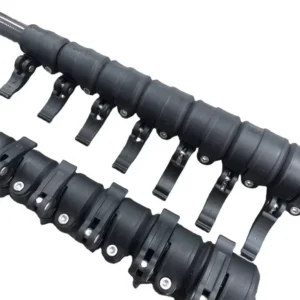
External clamps are one of the most practical options when adjustability or removability is required. A clamp wraps around the tube and applies controlled compression to hold it in position.
This method is common in telescopic systems, adjustable poles, portable structures, and products that need field service or repeated length changes.
Best for:
telescopic poles
adjustable assemblies
removable joints
applications requiring maintenance access
Advantages:
easy to assemble and adjust
reusable
ideal for variable length systems
no adhesive curing time
Limitations:
poor clamp design can crush thin-wall tubes
adds external bulk
not always the best solution for very high structural loads
When using carbon fiber tube clamps, the clamp geometry matters just as much as the clamp material. A well-designed clamp should spread pressure evenly and match the tube wall thickness. A poorly designed clamp may hold initially, but can damage the tube over time.
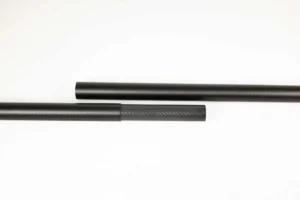
3. Bonded Inserts and End Fittings
Bonded inserts are one of the most widely used methods in OEM assemblies. An insert is placed into the tube end and bonded with adhesive, allowing the assembly to connect to another part, bracket, threaded stud, rod end, or custom fitting.
The insert material may be aluminum, stainless steel, titanium, composite, or engineered plastic, depending on the application.
Best for:
tube-to-metal connections
custom end connections
modular components
products that need threaded mounting points
Advantages:
strong and compact
highly customizable
compatible with many hardware systems
good for repeat production
Limitations:
requires careful adhesive selection
differential expansion between materials should be considered
poor bond prep can reduce reliability
This is often the preferred method when customers need a carbon fiber tube to connect to a bracket, hinge, threaded fastener, or machine component.
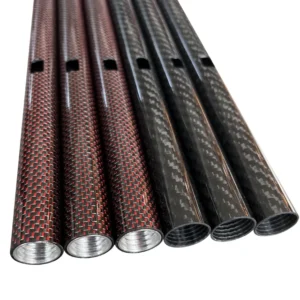
4. Threaded Fittings
Threaded fittings are used when the assembly needs fast installation, removal, or replacement. In most cases, the threads are not cut directly into the carbon fiber tube itself. Instead, a bonded or molded insert provides the threaded interface.
Best for:
detachable assemblies
accessories and modular systems
custom mechanical interfaces
serviceable products
Advantages:
easy assembly and replacement
repeatable connection
works well with many standard hardware systems
Limitations:
thread size must match the load requirement
poor insert design can loosen under vibration
not all tube walls support the same fitting style
For many OEM applications, threaded fittings offer a good balance between strength and serviceability.
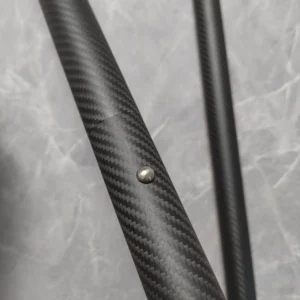
5. Quick-Release or Push-Button Joints
Quick-release joints are useful when the assembly must be deployed and packed away frequently. Push-button locks, spring buttons, and related mechanisms are often used in portable structures, poles, and transportable equipment.
Best for:
portable products
multi-section poles
field equipment
assemblies that need fast manual setup
Advantages:
very fast assembly
convenient in the field
suitable for repeated use
Limitations:
usually not the strongest structural option
requires careful tolerance control
better for convenience-driven designs than extreme load cases
This type of joint is often selected when ease of use is more important than maximum load capacity.
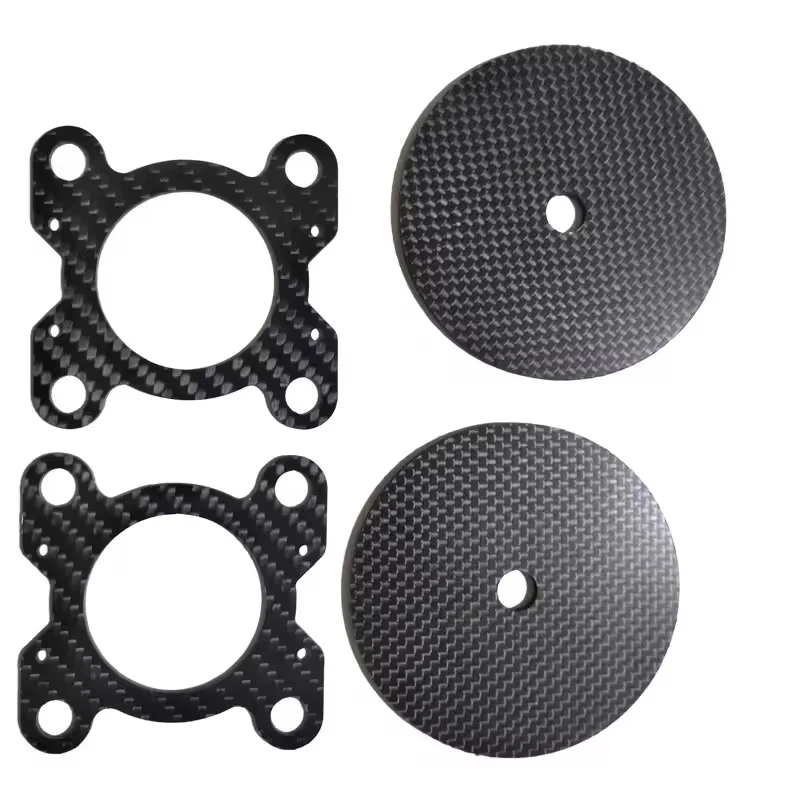
6. Plate or Gusset Joints
For square or rectangular tube assemblies, a gusset plate or connecting plate may be used to join multiple members into a frame. These joints can be bonded, mechanically fastened, or designed as hybrid structures.
Best for:
structural frames
square or rectangular carbon fiber tubes
multi-angle assemblies
support structures and lightweight frameworks
Advantages:
suitable for frame construction
can support more complex geometry
useful for custom projects
Limitations:
adds more parts
may increase assembly time
requires careful load-path design
This method is common when the carbon fiber tubes are part of a larger frame rather than a simple straight connection.
Comparison Table: Which Joint Type Is Best?
| Joint Type | Best Use | Removable | Main Advantage | Main Limitation |
| Internal sleeve joint | Straight tube-to-tube joining | No / Semi | Clean profile and good alignment | Usually requires adhesive |
| External clamp | Telescopic or adjustable assemblies | Yes | Easy adjustment and service | Can crush thin walls if poorly designed |
| Bonded insert | Tube-to-metal or tube-to-hardware connection | No | Compact and strong | Bond quality is critical |
| Threaded fitting | Modular assemblies | Yes | Easy replacement and repeat assembly | Needs accurate insert engineering |
| Quick-release joint | Portable products | Yes | Fast setup and take-down | Lower structural capacity in many cases |
| Plate or gusset joint | Frames and multi-angle structures | Semi | Good for complex frame layouts | Adds parts and assembly steps |
How to Choose the Right Carbon Fiber Joint
Choosing the right connection method is usually more important than choosing the most expensive hardware. In practice, the decision should be based on the real working conditions of the assembly.
Tube Diameter and Wall Thickness
The connector must match not only the tube diameter, but also the wall thickness and tolerance range. Two tubes with the same outer diameter may behave very differently if one has a thin wall and the other has a reinforced layup.
A clamp that works well on a thicker industrial tube may deform a lighter tube. An insert that fits one inside diameter may be too loose or too tight for another.
Load Direction
Ask how the joint will actually be loaded:
tension
compression
bending
torsion
vibration fatigue
A connection that holds under light axial load may fail when bending or twist is introduced. Load path matters.
Permanent or Removable Design
Some projects are assembled once and stay together for years. Others require transportation, field repair, or part replacement. That changes the joint strategy completely.
If the structure must be adjustable or serviceable, external clamps or threaded fittings are often better. If the design prioritizes stiffness and compactness, a bonded sleeve or insert may be the better choice.
Environmental Conditions
Outdoor use, humidity, salt exposure, impact, vibration, and temperature cycling all affect joint performance. Adhesives, insert materials, and clamp designs should all be chosen with the working environment in mind.
Appearance and Packaging Space
Some products need a clean visual surface or limited external diameter. In those cases, internal joints or bonded fittings may work better than large external hardware.
Connecting Carbon Fiber Tubes to Metal Parts
One of the most common engineering needs is not just joining one carbon tube to another, but connecting a carbon fiber tube to a metal bracket, hinge, base, axle, threaded rod, or custom machined part.
In these cases, the most common approach is to use a bonded insert or custom end fitting. The insert creates a reliable interface between the composite tube and the metal hardware.
Key considerations include:
insert length
adhesive selection
bond area
wall support
galvanic and environmental considerations where relevant
tolerance control for repeat production
This type of carbon fiber connector is widely used in industrial tools, support arms, camera systems, telescopic products, and robotics applications.
Common Mistakes When Connecting Carbon Fiber Tubes
Even a high-quality carbon tube can underperform if the joint design is wrong. These are some of the most common problems seen in development and sourcing projects.
Choosing by Diameter Only
Many buyers focus only on outer diameter. In reality, inside diameter, wall thickness, layup, and tolerance are equally important when selecting a fitting or insert.
Over-Clamping the Tube
Too much clamping force can damage the laminate, especially on thin-wall tubes. The joint should hold the tube without creating local crushing.
Using the Wrong Adhesive
Not all adhesives are suitable for carbon fiber assemblies. Joint performance depends on adhesive type, surface preparation, cure control, and bond area design.
Ignoring Alignment
A poorly aligned sleeve or insert can introduce stress into the joint and reduce assembly performance, especially in long or precision-oriented structures.
Designing the Joint Too Late
In many projects, the tube is chosen first and the connection is treated as an afterthought. That often leads to avoidable redesigns. The connector strategy should be considered early in the product design process.
Typical Applications for Carbon Fiber Tube Connectors
Carbon fiber tube joints are used across many lightweight OEM products. Common examples include:
Telescopic Poles
Used in inspection, camera support, cleaning tools, and outdoor field equipment where adjustability matters.
Robotics and Automation
Used where lightweight moving arms and support structures benefit from stiffness and low inertia.
Camera and Imaging Systems
Used in booms, support poles, rig structures, and portable equipment where vibration control and portability are important.
UAV and Drone Structures
Used in frame elements, landing structures, and support members that need low weight and good rigidity.
Industrial Equipment
Used in custom tools, portable assemblies, sensor mounts, and structural components that require repeatable performance.
Outdoor Products
Used where weight reduction and corrosion resistance can improve handling and durability.
When to Use a Standard Connector vs a Custom Connector
Standard hardware can work well for simple assemblies, especially when dimensions are common and performance demands are moderate. But in many OEM applications, a custom connector is the better long-term solution.
A custom carbon fiber tube connector may be the right choice when:
the tube diameter is non-standard
the wall thickness is unusual
the joint must connect to a specific customer part
the structure needs a low-profile design
higher load, repeatability, or better fit is required
appearance matters
prototype performance must transition into batch production
Custom fittings also make more sense when the supplier can support both the carbon fiber tube and the matching connector as one engineered system.
FAQs
How do you connect two carbon fiber tubes together?
The most common ways are internal sleeve joints, bonded inserts, external clamps, threaded fittings, and quick-release joints. The best choice depends on whether the connection needs to be permanent, removable, adjustable, or load-bearing.
What is the best way to join carbon fiber tubes?
There is no single best method for every project. Bonded inserts and sleeve joints are often best for permanent structural assemblies, while clamps and threaded fittings are better for adjustable or serviceable products.
Can you drill carbon fiber tubes?
Yes, but it should be done carefully and only when the joint design supports it. Uncontrolled drilling can weaken the laminate, create stress concentration, and reduce long-term durability.
Are carbon fiber tube clamps reusable?
Yes. Many clamp-based connections are reusable and are especially useful in telescopic or adjustable assemblies. The clamp design must match the tube wall thickness to avoid damage.
What is the difference between carbon fiber tube connectors and fittings?
In practice, the terms often overlap. “Connector” is a broader term, while “fitting” often refers more specifically to an interface component such as an insert, end fitting, or threaded attachment.
Can carbon fiber tubes be connected to metal parts?
Yes. This is commonly done with bonded inserts, threaded end fittings, and custom machined connector systems designed to match the tube dimensions and application load.
Závěr
Connecting carbon fiber tubes correctly is not just a matter of finding a part that fits. The joint must match the tube dimensions, load path, assembly method, and service conditions of the final product.
For lightweight structures, portable equipment, telescopic systems, and OEM assemblies, the right carbon fiber joint can improve reliability, appearance, serviceability, and long-term performance. The wrong joint can create problems even when the tube itself is made well.
If your project requires reliable carbon fiber joints, clamps, bonded fittings, or custom tube-to-metal connections, it is usually better to evaluate the tube and connector as one complete system rather than sourcing them separately.
Need custom carbon fiber tube connectors or matching fittings for your project?
Explore our Carbon Fiber Tube Connectors page to review custom connector options, fitting styles, and OEM support for engineered assemblies.
You may also like

Kompozitní trubky
Zaměření na vysokou tuhost a nízkou hmotnost pro konstrukce zaměřené na výkon.
Carbon Fiber Sheets & Plates
Flat laminate stock for CNC cutting and lightweight structural components.
Kompozitní tyče
Rod-shaped composite products supplied for industrial and OEM assemblies.
