
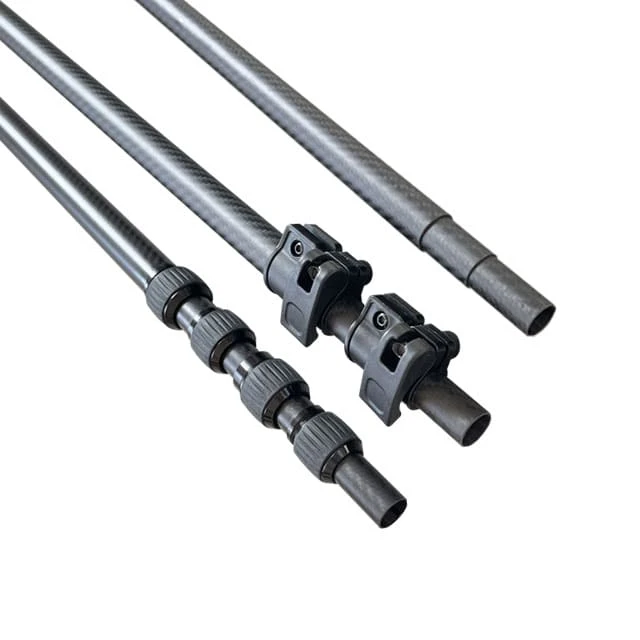
When buyers start searching for a carbon fiber telescopic pole, they are often not looking for a simple off-the-shelf product. In many cases, they are sourcing a component for a larger system: a camera setup, an inspection tool, a window cleaning solution, a GPS RTK application, or a custom field device.
From a procurement perspective, the real question is not just where to buy a telescopic pole. The more important question is whether the supplier can deliver the right structure, stiffness, locking performance, and repeat quality for the intended use.
Why More Buyers Choose Carbon Fiber Over Traditional Pole Materials
Carbon fiber is increasingly preferred for telescopic pole systems because it combines low weight with high rigidity. Compared with aluminum, it is easier to handle over long working periods. Compared with heavier or less rigid alternatives, it usually offers better control, less user fatigue, and improved field performance.
For buyers, this matters in practical terms. If the product will be lifted repeatedly, carried over distance, or used at full extension, material choice directly affects operator comfort and system stability.
This is why demand continues to grow across applications such as:
carbon fiber telescopic camera pole
carbon fiber telescopic inspection pole
carbon fiber telescopic pole for window cleaning
carbon fiber GPS pole telescopic
wireless WiFi telescopic carbon fiber pole
Although these uses are different, purchasing priorities are often similar: lower weight, better stiffness, easier handling, and more reliable long-term performance.
Common Application Types and What Buyers Should Focus On
Not all telescopic poles should be sourced the same way. Most telescopic poles are used for outdoor tools.
Camera and Imaging Systems
A carbon fiber telescopic camera pole or carbon fiber telescoping camera pole is usually selected for lightweight reach and reduced vibration. In this category, stiffness is often more important than raw load capacity. Buyers should pay close attention to section fit, clamp security, and deflection at full extension.
If the system will carry imaging equipment, even small structural instability can reduce usability. That is why these projects often require more than a standard consumer-grade solution.
Surveying and RTK Use
A telescopic carbon fiber pole for GPS RTK or telescopic RTK carbon fiber pole is a more technical purchase. These poles need consistent straightness, predictable handling, and reliable dimensional control. Survey buyers are usually less concerned with appearance and more concerned with functional accuracy in the field.
Cleaning and Maintenance Work
For a carbon fiber telescopic window cleaning pole or carbon fiber telescopic cleaning pole, the priority is usually reducing user fatigue while maintaining enough rigidity for control. Weight distribution, grip comfort, and clamp durability become major purchasing factors.
Inspection and Utility Applications
A carbon fiber telescopic inspection pole may be used in demanding environments, including outdoor or wet conditions. In some cases, buyers are looking for an underwater carbon fiber telescopic inspection pole or a design suited to industrial access tasks. In these scenarios, joint performance, surface protection, and long-term durability are especially important.
Long-Reach and Heavy-Duty Projects
When buyers search terms like 15m carbon fiber telescoping pole, 20m carbon fiber telescopic pole, 40 ft carbon fiber telescopic pole, or heavy duty carbon fiber telescoping poles, they are no longer looking for a generic item. They are looking for engineered structure.
Longer reach increases the demand on tube layup, section taper, locking method, and overall structural balance. A long pole that is poorly designed may feel unstable even if it looks correct on paper.
What Procurement Teams Should Confirm Before Requesting a Quote
A good quotation starts with a good inquiry. One of the most common sourcing problems is that the buyer sends too little information, receives a generic offer, and then loses time correcting basic assumptions.
Before contacting a carbon fiber telescopic pole manufacturer or supplier, buyers should prepare the following details.
Essential RFQ Information
Required extended length
Closed length
Number of sections
Expected payload at full extension
Preferred locking style
Tube diameter range
Surface finish preference
End fitting or adapter requirement
Application scenario
Estimated sample and production quantity
This is the minimum level of detail that helps a supplier quote the right construction instead of only offering a standard catalog item.
Questions Serious Buyers Should Ask
A reliable supplier should be able to answer these questions clearly:
Can you support OEM length and section configuration?
Do you offer anti-rotation or anti-spin structure?
Can you recommend a suitable wall thickness for the load?
What quality checks are used for straightness and fit?
Can you provide samples before bulk production?
Do you support custom accessories, threads, or mounting interfaces?
Can you maintain consistency across repeat orders?
These questions are especially important when the goal is not one sample, but long-term sourcing.
How to Evaluate a Carbon Fiber Telescopic Pole Supplier
From a purchasing angle, supplier selection should never be based on price alone. The lowest quote is not always the lowest total cost once rework, delay, or field failure are considered.
| Evaluation Area | What to Check | Proč na tom záleží |
|---|---|---|
| Manufacturing capability | In-house tube forming, assembly, tooling, process control | Shows whether the supplier is a real manufacturer or mainly a trading source |
| Customization ability | Length, section count, lock style, fittings, surface finish | Important for OEM and project-specific designs |
| Engineering support | Load guidance, stiffness recommendations, structural suggestions | Helps reduce design risk before production |
| Quality control | Straightness, dimensional consistency, clamp fit, surface inspection | Directly affects repeat order reliability |
| Export experience | Packaging, documentation, communication speed | Important for overseas procurement teams |
| MOQ and scalability | Sample support, pilot quantity, production expansion | Useful for both testing and long-term sourcing |
| Commercial clarity | Lead time, tooling charges, payment terms, quotation detail | Reduces misunderstanding after order confirmation |
A good supplier should be able to discuss performance, not just pricing.
Retail Purchase vs OEM Sourcing from China
Some buyers only need a simple product for immediate use. Others are developing a product line, sourcing for a brand, or managing a repeat purchasing program. These are very different situations.
When a Standard Product Is Enough
Retail purchase may be suitable when:
the application is simple
customization is not required
the quantity is low
the project is only for early validation
When Manufacturer Sourcing Makes More Sense
Direct sourcing is usually a better option when:
the dimensions are project-specific
the pole needs custom fittings
anti-rotation or higher stiffness is required
you need private label or OEM packaging
repeat production quality matters
you want better control over cost at volume
This is why searches such as carbon fiber telescopic poles wholesale, carbon fiber telescopic poles supplier in China, a china carbon fiber telescopic poles manufacturer often come from more serious buyers. They are not only looking for a product. They are looking for a stable supply solution.
Typical Sourcing Mistakes Buyers Should Avoid
Even experienced buyers sometimes underestimate how different one telescopic pole project can be from another. The most common issues are usually preventable.
Focusing Only on Length
A buyer may ask for a 10-meter or 15-meter pole without defining the payload or stiffness expectation. But extended length alone does not determine suitability. The real-world usability depends on structural design.
Ignoring Torsional Stability
For mounted devices, cameras, antennas, and inspection tools, torsional performance matters. This is where anti rotation carbon fiber telescopic pole or anti-spin carbon fiber telescopic pole requirements become important.
Comparing Consumer Listings with OEM Quotes
Custom carbon fiber poles should not be compared directly with low-cost retail items that use different materials, different joint tolerances, and different QC standards.
Sending Incomplete Inquiries
A vague message like “need telescoping carbon fiber pole” will rarely produce an accurate quote. A supplier can only quote properly when the application, length, load, fitting, and quantity are reasonably clear.
How to Write an Inquiry That Gets Better Responses
If the goal is to receive useful and comparable quotations, buyers should make the inquiry easier for the supplier to evaluate.
A stronger inquiry usually includes:
the end-use application
target extension and collapsed size
required load
preferred locking structure
accessory or mounting details
expected order volume
project stage, such as prototype or production
For example, instead of writing:
“Need carbon fiber telescoping pole price”
it is better to write:
“We are sourcing a telescopic carbon fiber pole for a camera system. Required extended length is 8 m, closed length below 1.8 m, payload around 1.5 kg, with stable locking and threaded camera mount. Please quote sample cost, MOQ, and lead time.”
That kind of inquiry gives the supplier enough information to respond meaningfully and makes it easier for you to compare offers.
Why Early Supplier Communication Often Reduces Purchasing Risk
Many buyers wait until every detail is fixed before contacting suppliers. In practice, that is not always the most efficient approach.
An experienced manufacturer can often help optimize:
section count
diameter progression
wall thickness
locking style
connector design
packaging method
cost-performance balance
This is particularly useful in less standard projects such as a carbon fiber telescopic rescue pole, carbon fiber telescopic flag pole, high strength carbon fiber telescopic photography pole, or other application-specific systems.
For procurement teams, early communication often reduces the risk of over-design, under-design, or choosing a structure that becomes difficult to mass produce later.
Final Thoughts
A carbon fiber telescopic pole is not just a simple tube assembly. For many projects, it is a functional structural component that affects usability, safety, and product performance. That is why the right supplier should be evaluated on manufacturing capability, engineering understanding, customization support, and repeat-order reliability, not only on unit price.
If your project requires consistent quality, custom dimensions, application-specific fittings, or scalable production, working directly with a capable manufacturer is usually the better path. The stronger your RFQ, the better your quotation quality will be, and the easier it will be to identify the supplier that fits your project.
For serious buyers, the goal is not just to find a carbon fiber pole. The goal is to find a supplier that can support the project from sample stage to repeat production with fewer surprises and lower sourcing risk.
FAQ
What is the main benefit of a carbon fiber telescopic pole?
The main benefit is the combination of light weight and high rigidity. This helps reduce operator fatigue while keeping the pole easier to control at extension.
Are carbon fiber telescoping poles suitable for industrial use?
Yes. They are widely used in inspection, surveying, camera support, maintenance, and cleaning applications where weight and stiffness both matter.
What should I include when requesting a quote?
Include the application, extended length, closed length, payload, locking style, fitting details, and expected quantity. These details help the supplier recommend the right design.
Can I source carbon fiber telescopic poles from China for OEM projects?
Yes. Many buyers work with China-based manufacturers for custom dimensions, private label supply, and volume production, especially when repeat sourcing is required.
What is the difference between a standard pole and a custom OEM pole?
A standard pole usually follows fixed dimensions and limited options. An OEM pole is designed around your project requirements, such as length, stiffness, fittings, clamps, and branding.
You may also like

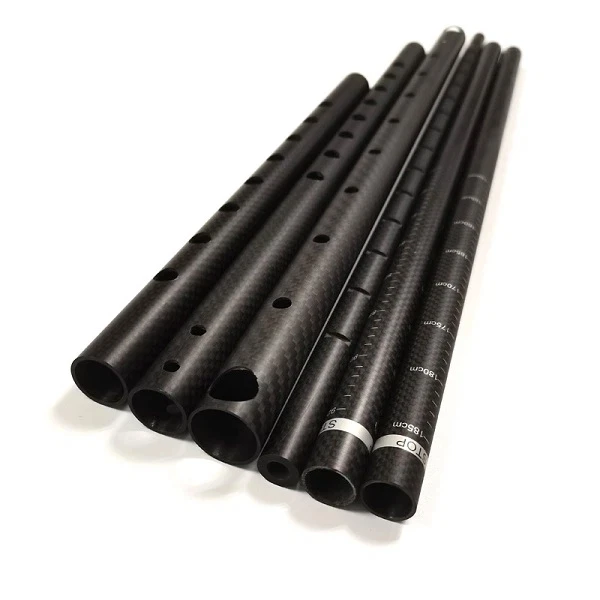
Kompozitní trubky
Zaměření na vysokou tuhost a nízkou hmotnost pro konstrukce zaměřené na výkon.
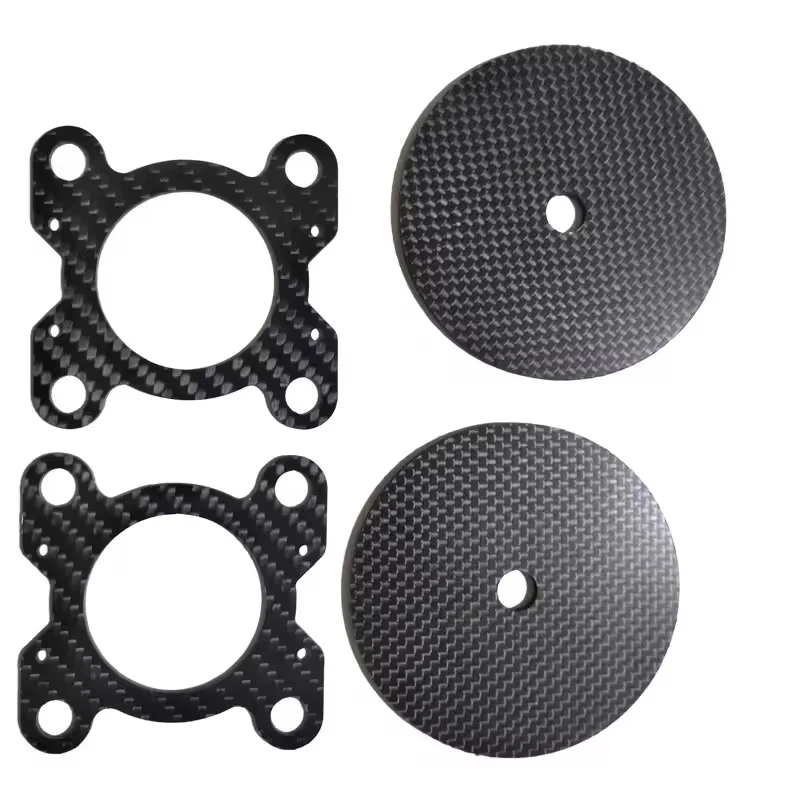
Carbon Fiber Sheets & Plates
Flat laminate stock for CNC cutting and lightweight structural components.
Kompozitní tyče
Rod-shaped composite products supplied for industrial and OEM assemblies.
