Why Customers Choose Us :
- Manufacturer-Direct Control
- Engineering Support
- Consistent Quality
- Reliable Lead Time
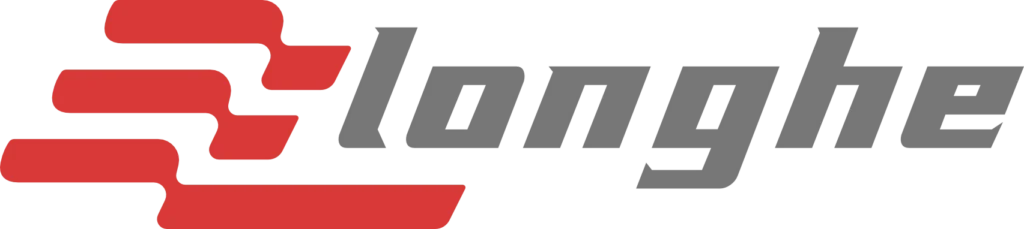
A custom carbon fiber survey pole provides a lightweight and rigid mounting structure for positioning receivers, prisms, antennas and field measuring accessories.
We manufacture fixed-length, telescopic and sectional poles for surveying equipment brands, geospatial instrument suppliers and OEM product developers. Tube diameter, wall thickness, carbon fiber layup and connection details can be adjusted around the required working height, equipment weight and transport length.
Available manufacturing services include carbon fiber tube production, precision cutting, insert bonding, scale printing, locking-system installation and complete pole assembly.
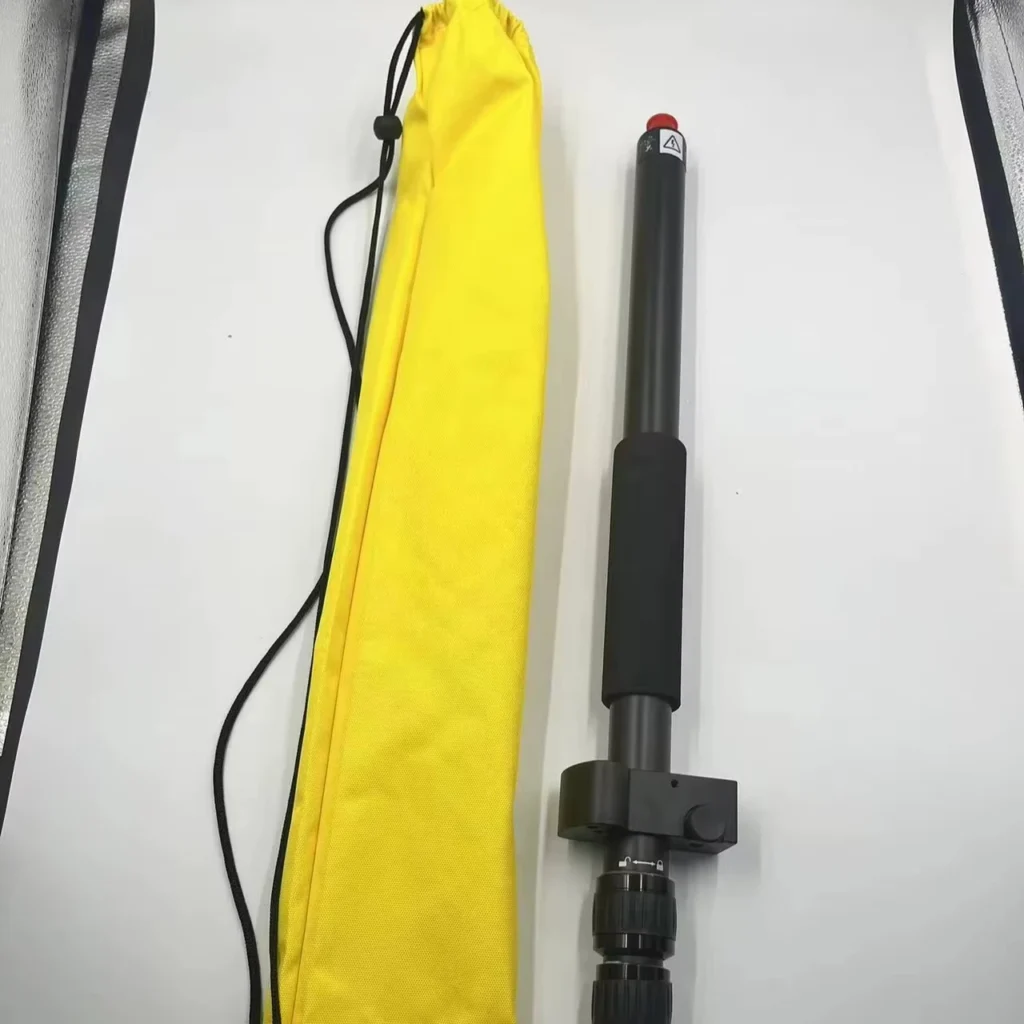
Choose a fixed, telescopic or sectional pole structure according to the mounted instrument, working height and field application.
Lightweight carbon fiber poles for mounting GPS and RTK receivers during surveying, mapping and construction layout.
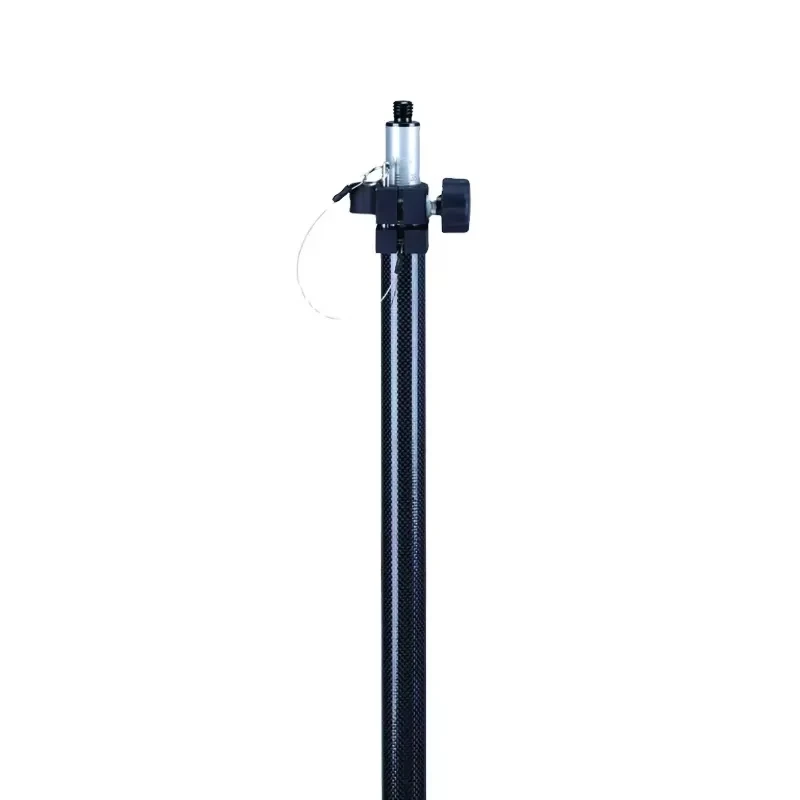
Custom GNSS poles with fixed or adjustable heights, threaded mounts, bubble levels and optional measuring graduations.
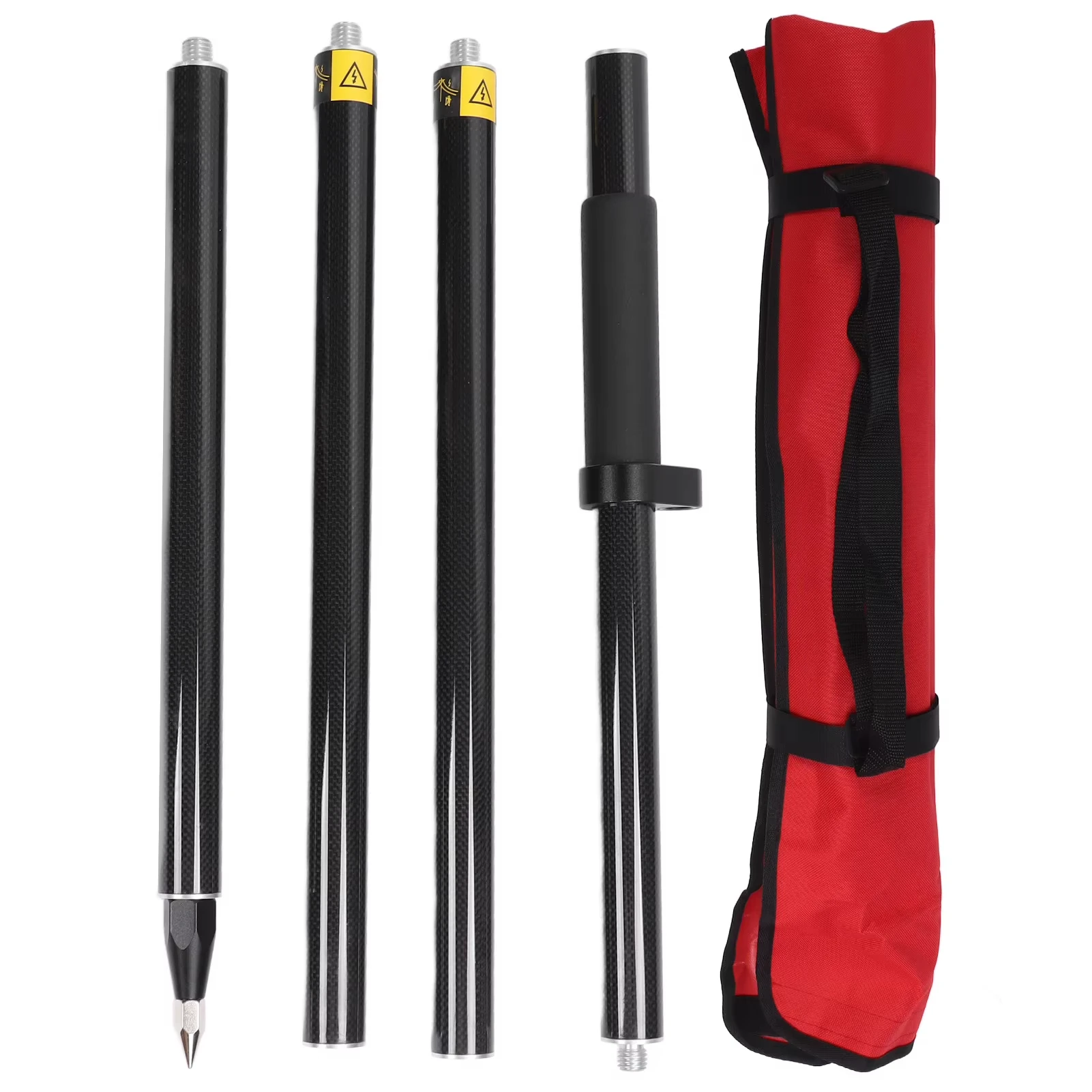
Rigid prism poles for total station measurement, available with adjustable sections, scales, ground tips and leveling accessories.
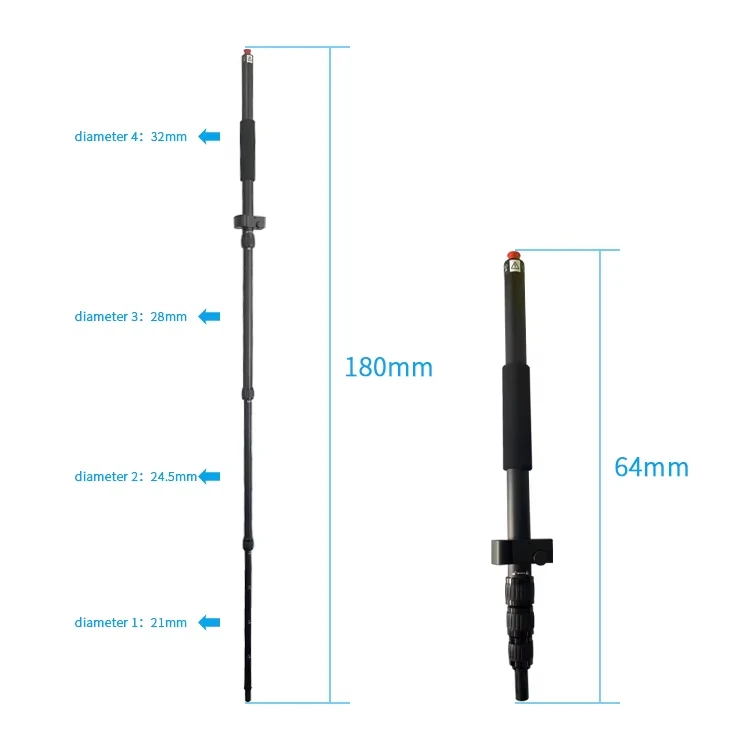
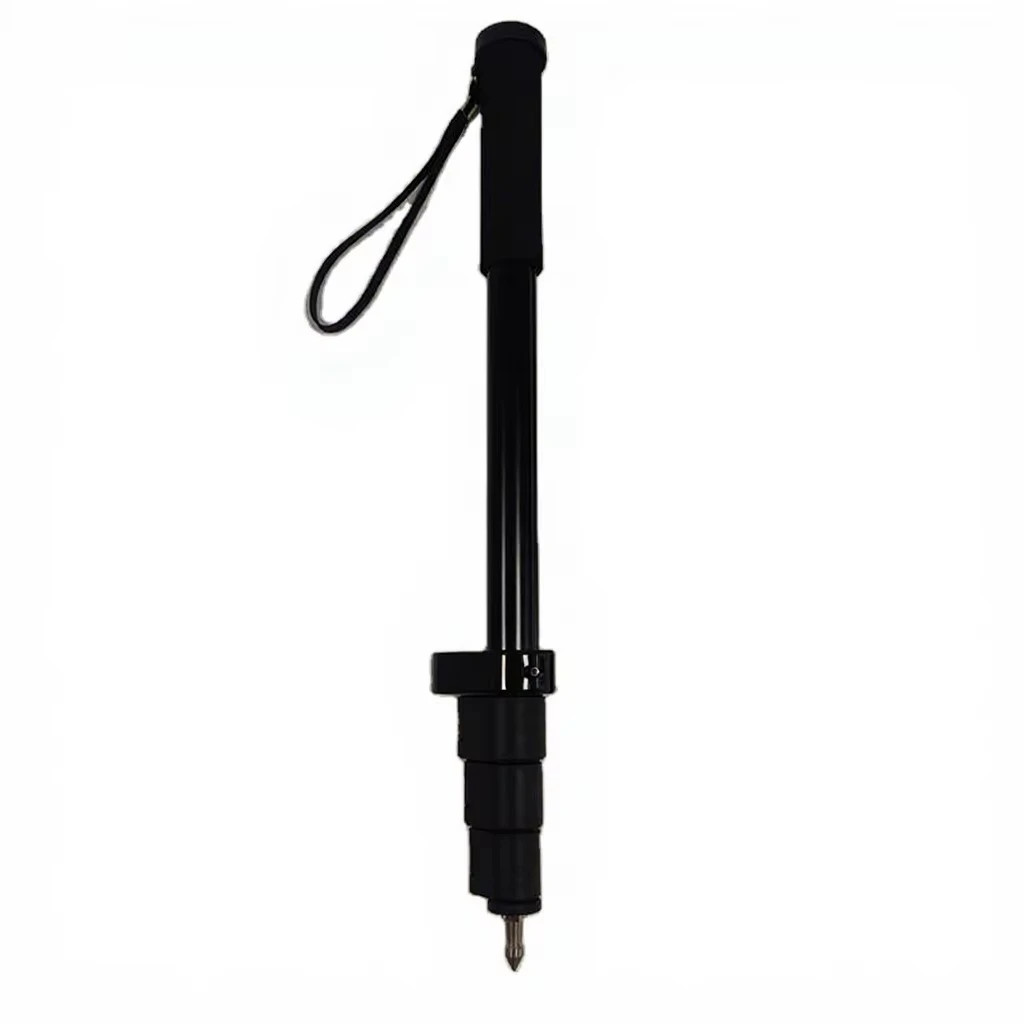
Multi-section survey poles with adjustable working heights, compact closed lengths and optional anti-rotation locking systems.
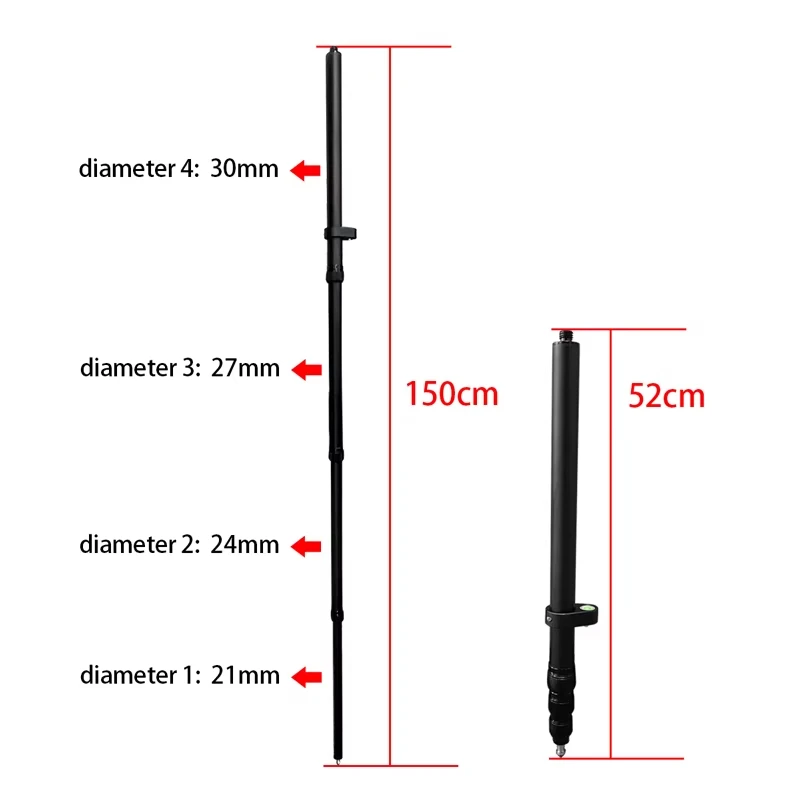
Extendable measuring poles for height measurement, clearance inspection and construction work, with metric or imperial scales.
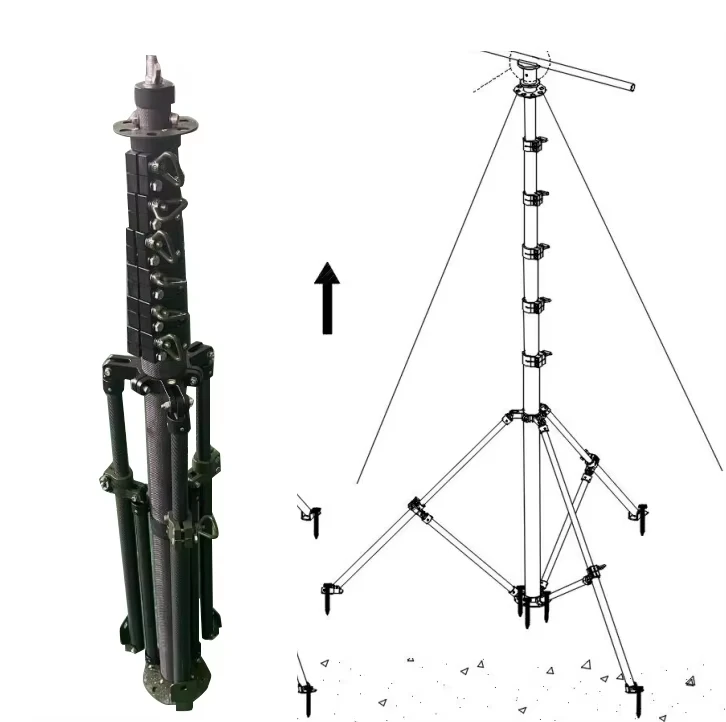
Lightweight ranging poles for alignment, point marking and field positioning, with custom colors and replaceable tips.
Carbon fiber pole bodies can be customized for surveying, positioning, mapping and field measurement equipment.
Lightweight carbon fiber poles for boundary surveys, topographic measurement and field data collection.
Rigid GPS rover pole bodies for RTK positioning, point staking and construction layout.
Custom GNSS pole tubes for infrastructure mapping, utilities, agriculture and GIS data collection.
Carbon fiber prism pole bodies for reflector positioning and total station surveying.
Fixed or telescopic surveying poles for foundations, roads, utilities and structural positioning.
Telescoping carbon fiber measuring poles for overhead clearance, equipment height and site inspection.
Each survey pole is developed around the required length, mounted equipment, adjustment method and working environment.
| Specification | Custom Options |
|---|---|
| Pole Application | Survey, GPS, GNSS, RTK, prism, range or measuring pole |
| Pole Structure | Fixed-length, telescopic, sectional or modular |
| Tube Material | Carbon fiber, fiberglass or hybrid composite |
| Tube Process | Roll-wrapped, filament-wound, pultruded or hybrid construction |
| Number of Sections | Single tube or multi-stage telescopic structure |
| Extended Length | Customized according to working requirements |
| Closed Length | Customized according to storage and transport limits |
| Tube Diameter | Custom outer and inner diameters |
| Wall Thickness | Selected according to stiffness and equipment load |
| Fiber Layup | Axial, hoop and angle-ply reinforcement |
| Upper Thread | 5/8-11 survey thread or custom connection |
| Locking System | Clamp lock, twist lock, pin lock or custom mechanism |
| Anti-Rotation System | Keyed bushing, guide rail or shaped insert |
| Measuring Scale | Metric, imperial or dual graduations |
| Bubble Level | Circular level, tubular vial or customer-supplied component |
| Ground Tip | Fixed, replaceable, threaded or pointed tip |
| Surface Finish | 3K twill, plain weave, UD, matte, glossy or painted |
| Product Marking | Logo, scale, serial number, warning label or model number |
| Accessories | Bipod, tripod, holder, clamp, adapter or carrying bag |
| Production Service | Prototype, machining, bonding, assembly and batch production |
Final dimensions and tolerances are confirmed through approved drawings or prototype testing before volume production.
Choose the pole length, number of sections and locking method according to the required working height, transport size and mounted equipment.
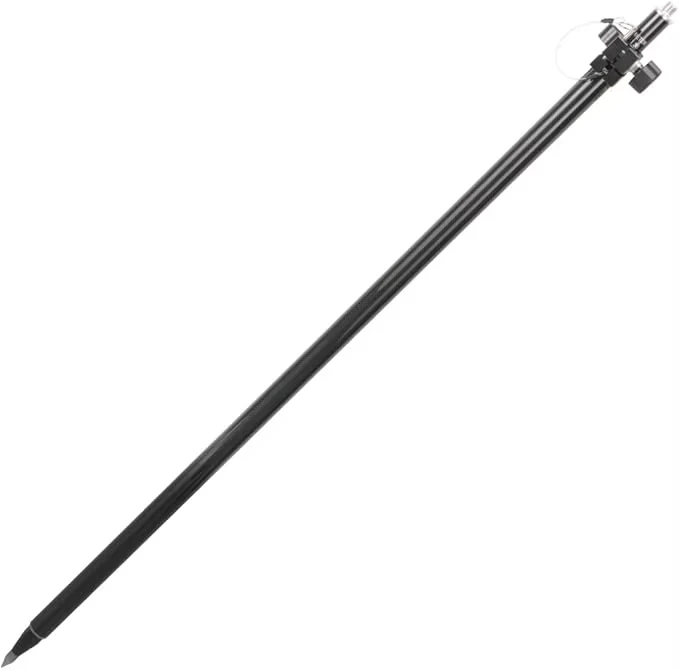
A fixed-length survey pole provides a consistent instrument height with no movement between sections, making it suitable for repeatable GPS, GNSS and prism measurements.
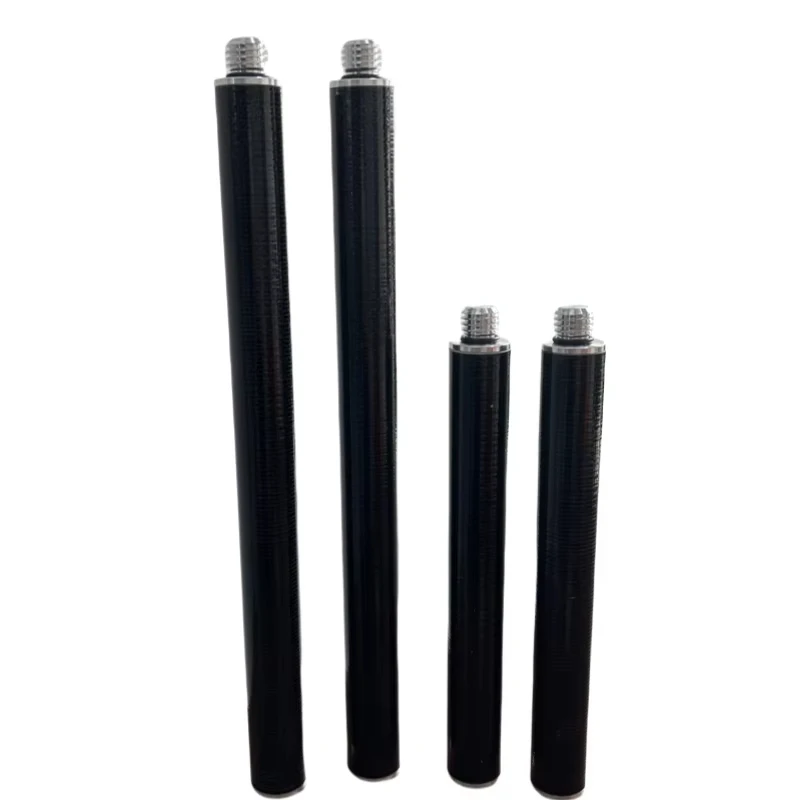
A GPS pole extension increases receiver height or mounting clearance using threaded connectors, quick adapters or custom male-to-female interfaces.
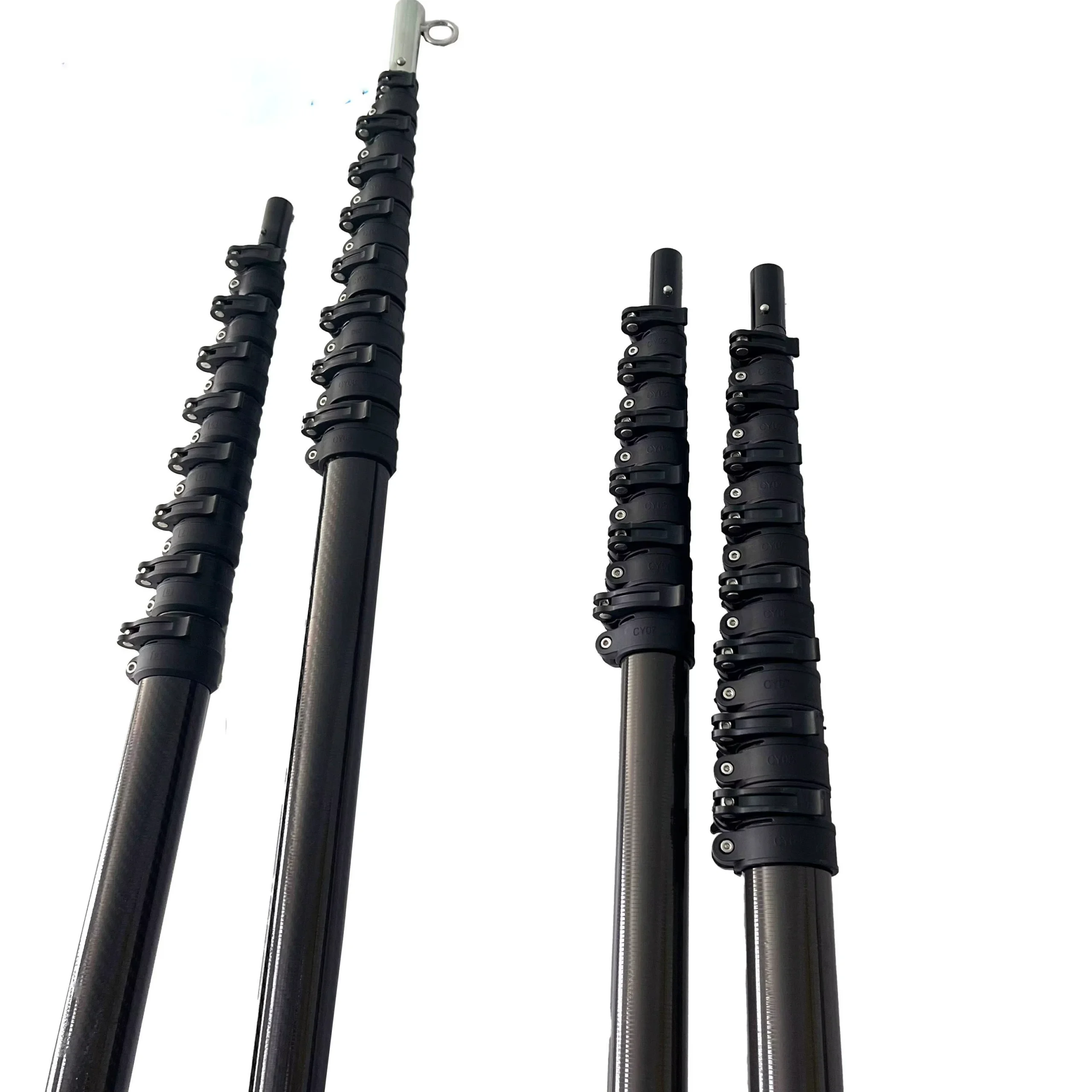
Keyed bushings or shaped guides prevent telescopic sections from rotating, helping maintain the alignment of scales, receivers and attached accessories.
We manufacture custom carbon fiber pole bodies for survey equipment brands, suppliers and OEM projects.
Tube diameter, wall thickness and fiber layup can be customized for different pole lengths and loads.
Nested carbon fiber tubes are manufactured with controlled diameters and sliding clearances.
Clamp areas, threaded inserts, holes and tube ends can receive additional carbon fiber reinforcement.
Carbon fiber poles can be cut, drilled, slotted and machined according to approved drawings.
Prototype pole bodies help verify dimensions, telescopic fit, straightness and hardware compatibility.
Available finishes include woven carbon fiber, unidirectional carbon, matte, glossy and custom branding.
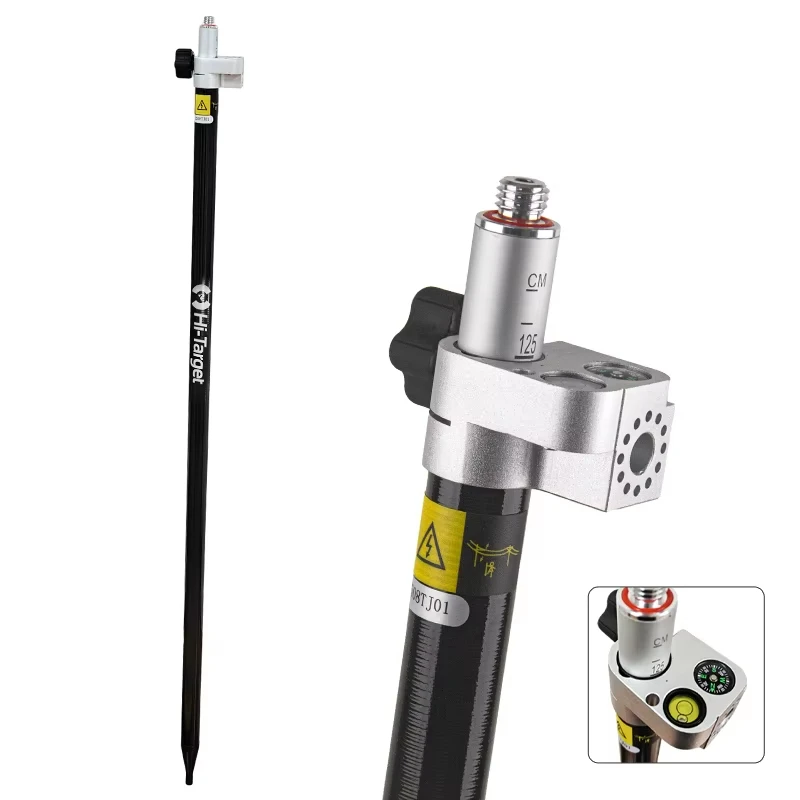
Carbon fiber provides low weight, high stiffness and flexible customization for professional surveying and positioning equipment.
Reduces carrying fatigue during long periods of field surveying and RTK data collection.
Provides high stiffness to help control bending under mounted GNSS receivers.
Limits pole movement during total station measurements and construction layout.
Helps maintain more consistent pole dimensions under changing outdoor temperatures.
Carbon fiber tubes do not rust in wet, coastal or outdoor environments.
Tube size, wall thickness and fiber layup can be customized for different equipment loads.
This representative OEM project shows how a telescopic carbon fiber pole can be developed around receiver weight, transport size and field stability.
The customer required a three-section pole for an RTK GNSS receiver, with a compact closed length, adjustable working height and standard 5/8-11 mounting thread.
The pole also needed metric graduations, a bubble level, a replaceable ground tip and reliable section locking for repeated field use.
The main challenge was balancing smooth extension with sufficient rigidity. Excessive tube clearance could cause movement and rotation, while an overly tight fit could make adjustment difficult in dusty outdoor conditions.
The mounted receiver also created bending load at the top of the fully extended pole.
Roll-wrapped carbon fiber tubes were selected with axial fibers for bending stiffness and additional circumferential reinforcement around the clamps and threaded inserts.
Polymer guide bushings controlled the sliding clearance, while an anti-rotation guide kept the sections aligned. Reinforced tube ends supported the upper mount and replaceable lower tip.
The assembled prototype was evaluated for:
Extended and closed length
Tube straightness and section alignment
Locking force and axial slip
Rotation between telescopic sections
Deflection under receiver load
Thread and ground-tip concentricity
Bubble-level and graduation accuracy
Compatibility with the receiver and bipod
Final tube dimensions, bushing clearance and production tolerances are confirmed after the customer approves the functional prototype.
Carbon fiber, aluminum and fiberglass survey poles differ in carrying weight, bending stiffness, thermal behavior and field durability. The best material depends on pole length, mounted equipment and working environment.
| Comparison | Carbon Fiber Survey Pole | Aluminum Survey Pole | Fiberglass Survey Pole |
|---|---|---|---|
| Carrying Weight | Lightweight for long GPS and GNSS poles, reducing fatigue during repeated field movement | Heavier than an equivalent carbon fiber structure but practical for standard-length poles | Usually requires thicker walls, increasing weight at longer lengths |
| Bending Stiffness | High stiffness-to-weight helps control movement under receivers, antennas and prisms | Adequate for short and medium pole lengths but may require a larger tube section | More flexible under the same top load, especially at greater extension |
| Telescopic Stability | Suitable for rigid multi-section poles when tube clearance and overlap are correctly controlled | Stable and economical, but long telescopic assemblies become heavier | Good impact tolerance, although section deflection may increase when extended |
| Temperature Response | Carbon layup can be engineered for low axial thermal expansion | Expands and contracts more noticeably as field temperature changes | Generally more thermally stable than aluminum |
| Impact Behavior | Resists permanent bending but can suffer hidden laminate damage after severe impact | May dent or remain permanently bent after impact | Better tolerance to knocks, but lower structural rigidity |
| Corrosion Performance | Does not rust; metal inserts must be properly isolated from the carbon fiber | May oxidize or corrode in wet, coastal and chemical environments | Does not rust and performs well in wet conditions |
| Electrical Properties | Electrically conductive and unsuitable as an insulated safety pole | Electrically conductive | Can provide electrical insulation when the complete pole is correctly designed and tested |
| Custom Engineering | Fiber orientation, wall thickness and local reinforcement can be optimized around loads and locks | Customization mainly depends on alloy, diameter and wall thickness | Fiber structure and wall thickness can be adjusted, but stiffness remains lower |
| Relative Cost | Higher material and manufacturing cost, best suited to performance-focused products | Lower initial cost and widely available | Usually between aluminum and carbon fiber, depending on construction |
| Best Application | Premium GPS rover poles, GNSS poles, prism poles and long telescopic systems | Standard surveying poles where budget is the main concern | Measuring poles and applications requiring non-metallic or insulating structures |
Choose carbon fiber for lightweight, rigid GPS, GNSS and prism pole structures. Aluminum is more suitable for cost-sensitive standard poles, while fiberglass may be considered where electrical insulation is required. Carbon fiber and aluminum are conductive and should not be treated as insulated safety poles.
A carbon fiber survey pole is a lightweight structural pole used to mount GPS receivers, GNSS antennas, prisms and measuring equipment. We manufacture fixed-length, telescopic and sectional carbon fiber poles according to the required height, tube diameter, equipment load and connection design.
GPS pole and GNSS pole often describe similar survey rover pole structures, although GNSS is the broader technical term for equipment using multiple satellite navigation systems. We can customize the carbon fiber tube, receiver mount, pole length and locking system for either GPS or GNSS surveying equipment.
Yes. We manufacture custom carbon fiber GPS rover poles with fixed or adjustable lengths, 5/8-11 threaded mounts, bubble levels, measuring scales and replaceable ground tips. Tube stiffness and wall thickness are selected according to the receiver weight and required working height.
Yes. Custom telescopic survey poles can be manufactured with two or more carbon fiber tube sections, guide bushings, compression clamps, twist locks or pin locks. The section overlap and sliding clearance are designed to balance smooth adjustment, rigidity and compact transportation.
Yes. We can produce carbon fiber survey prism poles for total station measurement, with custom lengths, graduations, bubble levels, threaded mounts and pointed tips. The carbon fiber structure helps reduce carrying weight while maintaining suitable rigidity for field positioning.
Yes. The extended length, closed length and number of sections can all be customized. We select the carbon fiber tube diameter, wall thickness and laminate structure according to the required pole height, equipment load, transport size and expected field conditions.
Yes. A 5/8-11 threaded aluminum or stainless-steel insert can be bonded into a locally reinforced carbon fiber tube end. Custom threads, quick-release adapters and customer-supplied mounting parts can also be integrated after dimensional and load review.
Yes. Metric, imperial or dual-scale graduations can be printed or marked on fixed and telescoping measuring poles. The scale position is confirmed according to the completed pole assembly, ground tip and equipment mounting reference rather than the carbon fiber tube length alone.
We provide a complete portfolio of composite products :